


- Home
- Product
- GOST standard motor
- IEC standard motor
 MC Series single phase capacitor start asynchronous motor
- MY MYT series single phase capacitor running asynchronous motor
- ML Series single phase dual-capacitor asynchronous motor
- ME2 series three phase high efficiency aluminum housing motor(IE2)
- ME3 series three phase high efficiency aluminum housing motor(IE3)
- MS series three-phase aluminum housing motor (IE1)
- Y2 series three phase cast iron motor (IE1)
- YE2 series three phase high efficiency cast iron motor (IE2)
- YE3 series three phase high efficiency cast iron motor (IE3)
- Special application motor
- Rolling door motor
- Industry application
- News
- About us
- Contact us
- Certifications
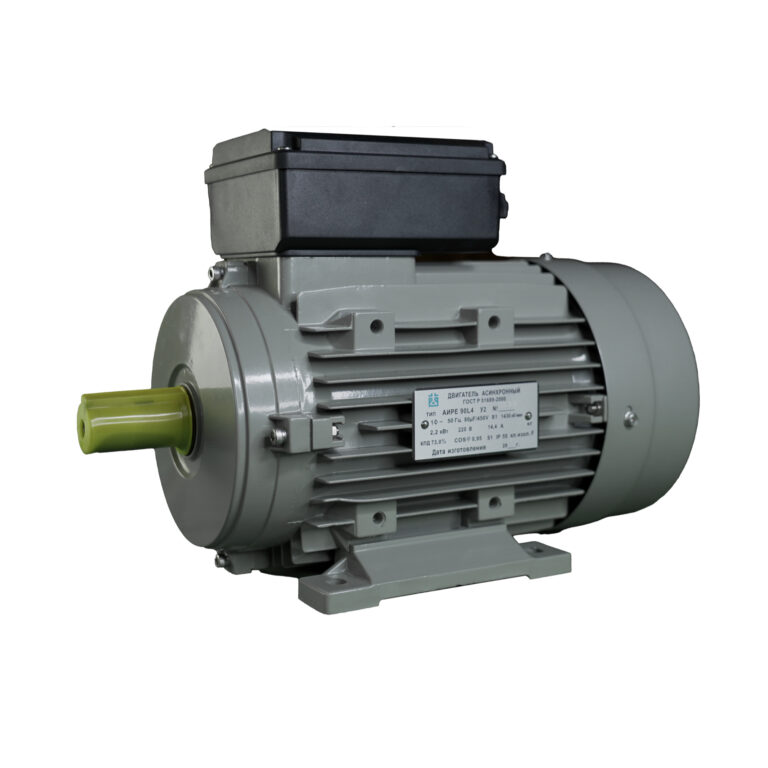
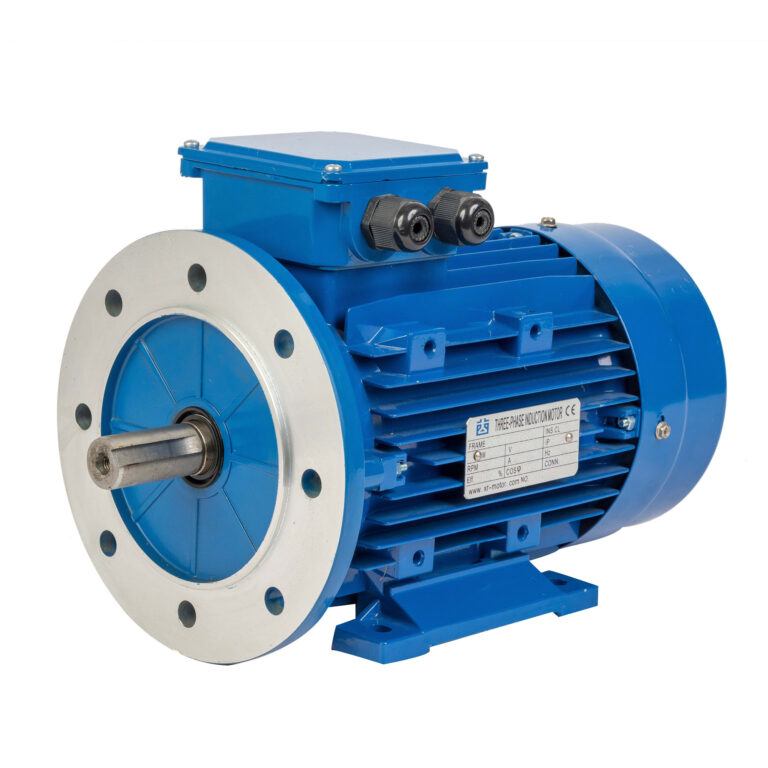
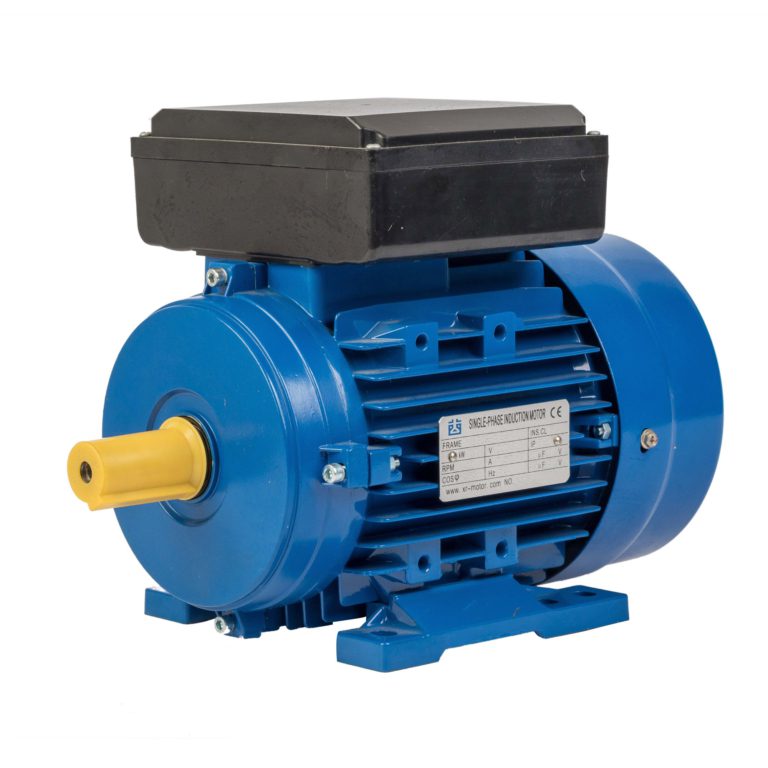
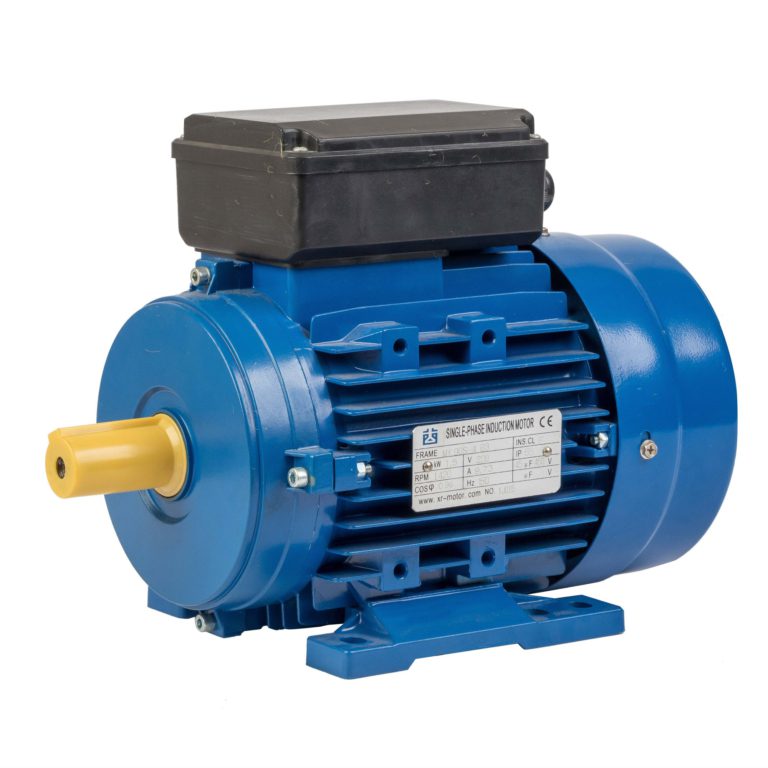
How to Select Motors for Pumps, Fans and Compressors
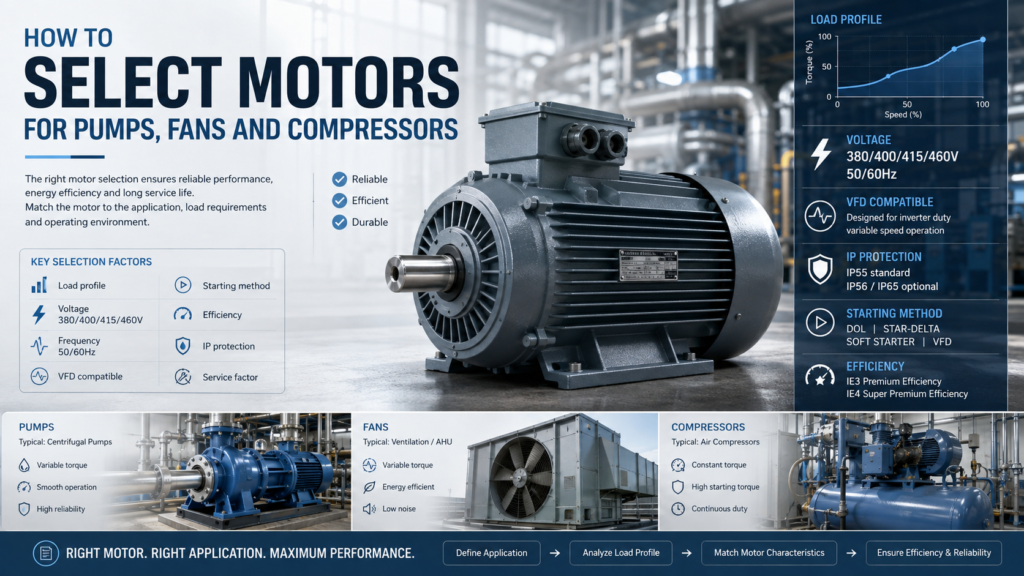
Pumps, fans, and compressors are found in almost every industrial facility. They move water, air, gases, and process media; support production equipment; and often operate for long hours with little interruption. At the centre of each system is the electric motor.
Selecting the right motor for pump, motor for fan, or motor for compressor affects more than whether the machine starts. It influences energy consumption, reliability, maintenance intervals, noise, and the total lifetime cost of the equipment.
The best choice starts with the actual application, not simply the motor nameplate. Load profile, required speed, supply voltage, installation environment, and control method should all be considered together.
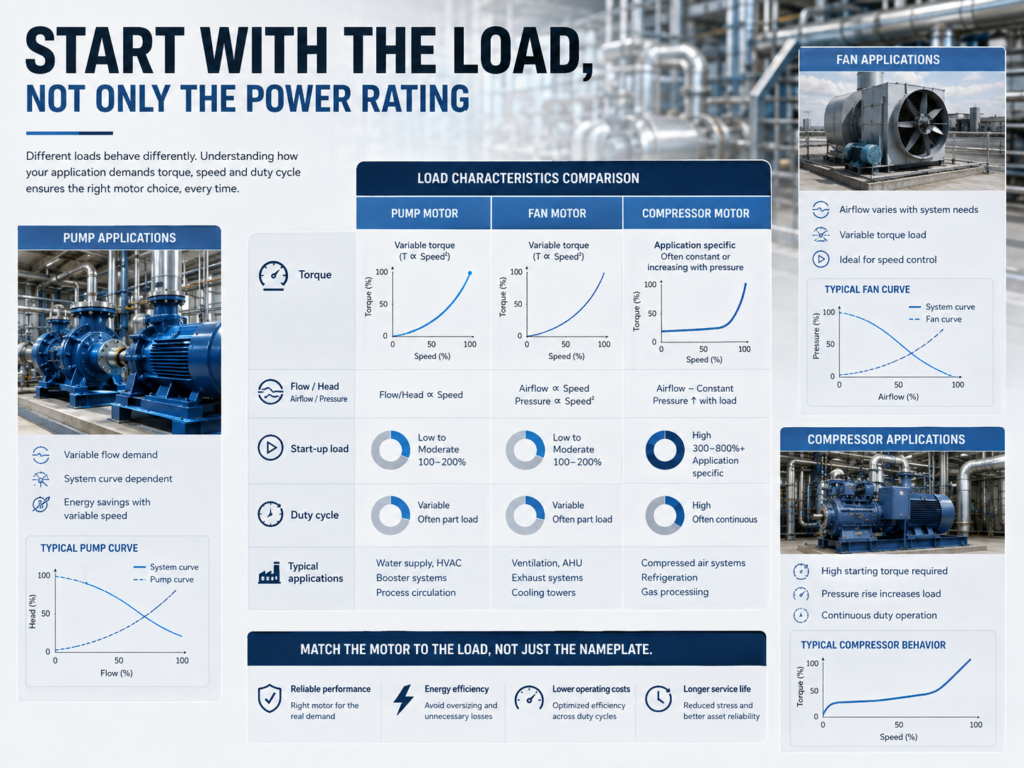
Start with the Load, Not Only the Power Rating
Rated power is essential, but it is not the only selection factor. The motor must provide sufficient torque to start the driven equipment and operate reliably at the required duty point.
For a pump motor, the required power depends on flow rate and head. It also depends on fluid properties, pump efficiency, and the operating point. For a motor for fan, pressure, airflow, impeller design, and duct-system resistance are key. A motor for compressor must also be matched to the compressor type, pressure range, start-up load, and operating cycle.
An undersized motor may overheat, trip, or fail prematurely. An oversized motor can raise purchase cost and may run poorly when the load stays far below its rated capacity. Good industrial motor selection means allowing a sensible margin for peak operating conditions without oversizing the whole system.
Match Voltage, Frequency, and Connection
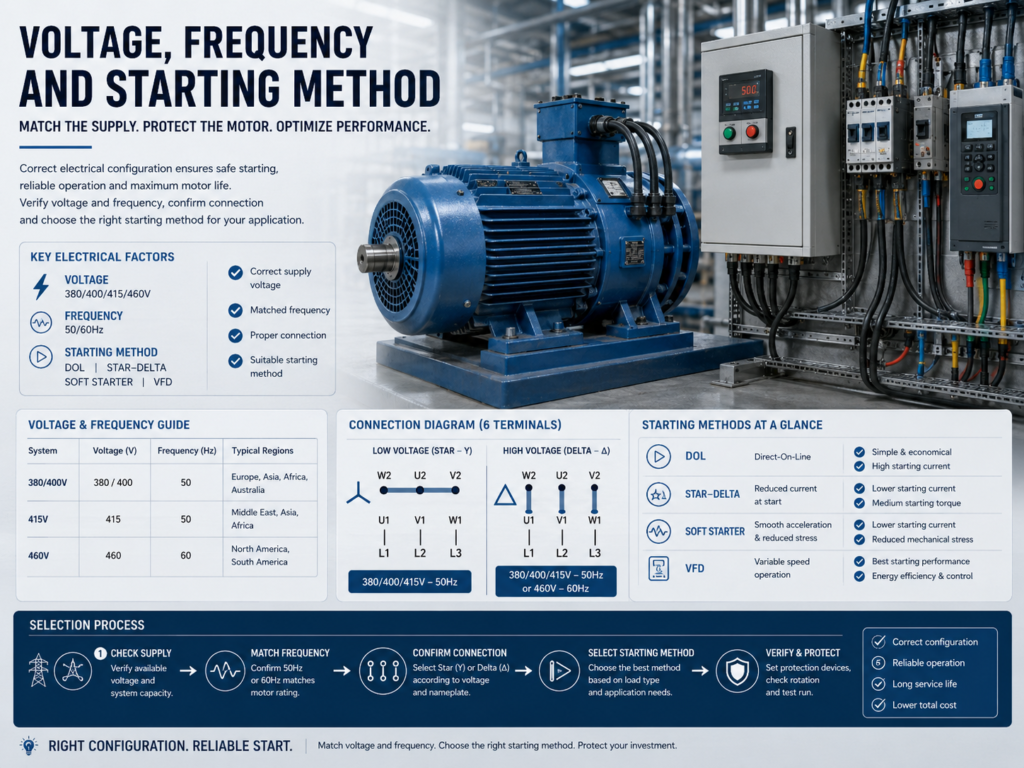
Before choosing a motor for pump, confirm the available electrical supply at the installation site. Industrial systems commonly operate at 380 V, 400 V, 415 V, or 460 V, depending on the country and facility. Frequency is equally important: many regions use 50 Hz, while others use 60 Hz.
Check the following before ordering:
- Rated voltage and frequency
- Three-phase supply availability
- Star or delta winding connection
- Direct-on-line, star-delta, soft-starter, or VFD operation
- Whether the equipment may be exported or relocated
A motor designed for the wrong supply can suffer from reduced torque, overheating, or early insulation damage. If the equipment will operate in different markets, dual-voltage or dual-frequency designs may be worth considering.
Understand the Difference Between Pump, Fan, and Compressor Loads
Pumps and fans often have variable-torque characteristics. In centrifugal applications, power demand changes significantly with speed. This makes a variable frequency drive particularly useful when flow or air volume changes throughout the day.
A properly selected electric motor for centrifugal pump can reduce wasted energy when combined with speed control. Rather than throttling flow through valves, the drive can adjust motor speed to better match the actual process demand.
A motor for fan follows similar principles in many ventilation, HVAC, cooling tower, and dust-extraction systems. Where airflow demand is variable, speed control can provide smoother operation and lower energy use.
Compressors need a more application-specific approach. Positive-displacement compressors, such as screw or reciprocating types, may have different torque and control requirements from centrifugal compressors. When selecting a motor for compressor, confirm the starting method, required pressure, load-unload cycle, and whether variable-speed operation is supported by the compressor system.
Choose the Right Efficiency Level
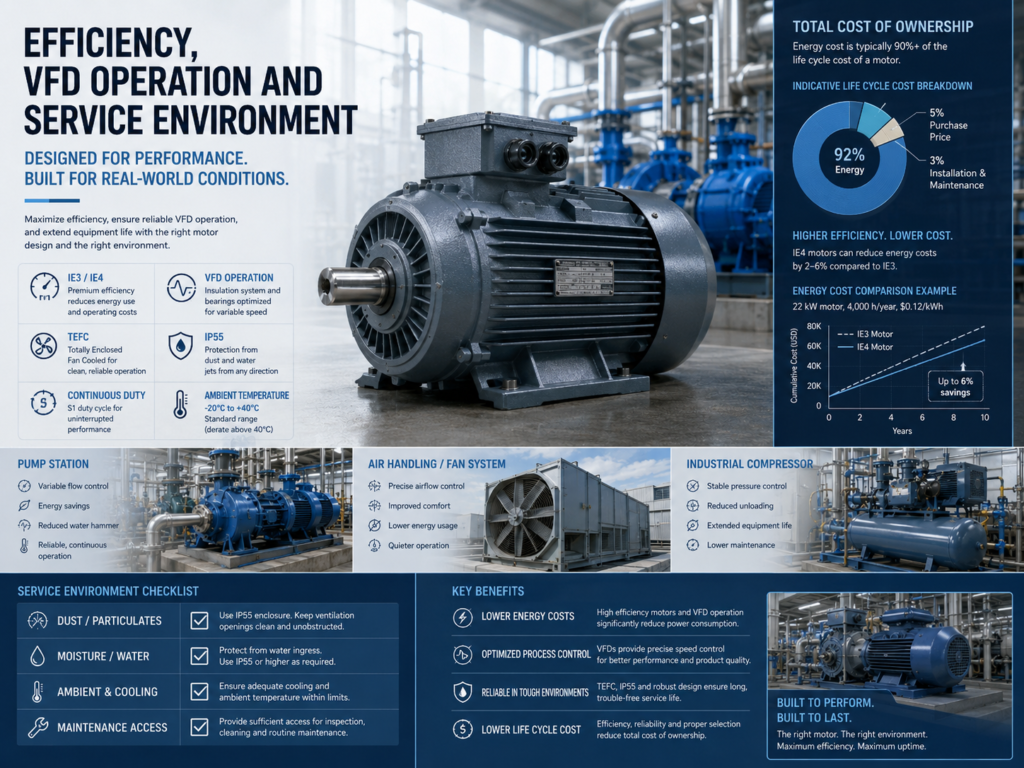
Electricity is often the largest lifetime cost of motor-driven equipment. This is especially true when a motor for pump, motor for fan, or motor for compressor runs continuously.
Higher-efficiency motors generally produce less heat and reduce operating losses. Although the initial purchase price may be higher, the energy savings can justify the investment over the motor’s service life.
When comparing motors, consider:
- Efficiency class and efficiency at expected load
- Annual operating hours
- Electricity cost
- Expected load variation
- Ambient temperature and cooling conditions
- Compatibility with a variable frequency drive
An energy efficient fan motor can be particularly valuable in systems that run for long periods, such as ventilation units, cooling towers, and air-handling equipment.
Consider Variable Frequency Drive Operation
A variable frequency drive, also called a VFD or inverter, controls motor speed by adjusting output frequency and voltage. It can reduce start-up current, provide soft acceleration, and improve process control.
A VFD motor for pump and fan is often suitable where flow or airflow changes regularly. In centrifugal pump and fan systems, reducing speed can significantly reduce power demand. However, a VFD is not automatically the best choice for every system.
For example, a constant-speed machine operating close to its design point may not gain enough benefit to justify the added drive cost. Similarly, compressor speed control must be evaluated with the compressor manufacturer’s operating limits and system controls in mind.
When a VFD is used, make sure the motor is suitable for inverter duty. Important considerations include insulation quality, bearing-current protection, low-speed cooling, cable length, and the required speed range.
Select a Suitable Starting Method
Motor starting creates an inrush current that can be several times higher than normal running current. The starting method should suit the motor size, available power supply, and driven load.
Common choices include:
- Direct-on-line starting: Simple and economical for smaller motors and strong power supplies.
- Star-delta starting: Reduces starting current, commonly used for suitable three-phase motors.
- Soft starter: Reduces mechanical shock and electrical stress during acceleration.
- VFD starting: Provides controlled acceleration and adjustable speed.
A motor for compressor may require special attention because some compressors start under load. The motor, starter, and protection settings must be matched to the actual start-up conditions.
Check Enclosure, Cooling, and Protection
The operating environment matters as much as electrical performance. A clean indoor installation has different requirements from a quarry, food-processing plant, wastewater facility, or outdoor pumping station.
For a motor for fan installed in dusty air-handling equipment, enclosure sealing and cooling airflow should be reviewed carefully. For a pump motor in humid or washdown areas, choose the right IP rating.
Also choose a corrosion-resistant finish. Ensure the cable entry is correct.
Common enclosure choices include open drip-proof designs for indoor, protected locations. TEFC (totally enclosed fan-cooled) motors suit tougher industrial environments.
Also consider:
- Ambient temperature and altitude
- Dust, moisture, chemicals, and corrosion
- Continuous or intermittent duty
- Required insulation class
- Vibration and mounting arrangement
- Noise limits
- Availability of maintenance access
Think About Serviceability and Total Cost of Ownership
The cheapest motor is not always the most economical option. Maintenance access, spare-parts availability, efficiency, and downtime risk can have a much greater effect on long-term cost.
For a motor for compressor or another critical machine, a clear nameplate, standard mounting dimensions, accessible terminal box, and reliable bearings can make maintenance faster and reduce production delays.
Before finalising the order, provide the motor supplier with practical information such as:
- Equipment type and required output
- Supply voltage and frequency
- Rated speed and number of poles
- Starting method and control system
- Duty cycle and annual running hours
- Installation environment
- Required mounting arrangement
- Required efficiency and protection level
This information allows the supplier to recommend a motor that fits the complete system rather than only meeting a minimum power value.
Select the Right Motor with DAYOU MOTOR
DAYOU MOTOR supplies industrial motor solutions for pumping, ventilation, compression, and general machinery applications. Our engineering team can help evaluate power, voltage, speed, mounting, protection, and inverter requirements before production.
Whether you need a motor for pump in a water-treatment system, a motor for fan in an industrial ventilation unit, or a motor for compressor for continuous-duty equipment, DAYOU MOTOR can support a configuration suited to your working conditions.
Conclusion
The right motor choice depends on the complete application: load requirements, electrical supply, efficiency target, starting method, speed control, cooling, and environment.
For variable-flow systems, a correctly matched motor for pump or motor for fan with VFD control may improve energy performance. For compression equipment, the motor for compressor should be selected around the compressor’s starting torque, duty cycle, and control strategy.
A well-matched motor runs more reliably, uses energy more effectively, and helps keep the entire system productive for longer.