


- Home
- Product
- GOST standard motor
- IEC standard motor
 MC Series single phase capacitor start asynchronous motor
- MY MYT series single phase capacitor running asynchronous motor
- ML Series single phase dual-capacitor asynchronous motor
- ME2 series three phase high efficiency aluminum housing motor(IE2)
- ME3 series three phase high efficiency aluminum housing motor(IE3)
- MS series three-phase aluminum housing motor (IE1)
- Y2 series three phase cast iron motor (IE1)
- YE2 series three phase high efficiency cast iron motor (IE2)
- YE3 series three phase high efficiency cast iron motor (IE3)
- Special application motor
- Rolling door motor
- Industry application
- News
- About us
- Contact us
- Certifications
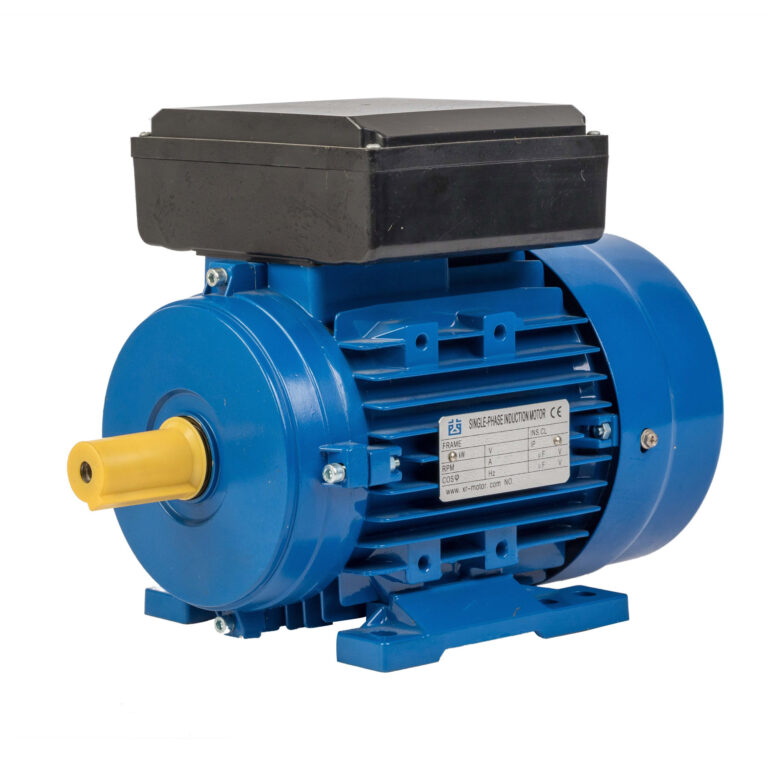
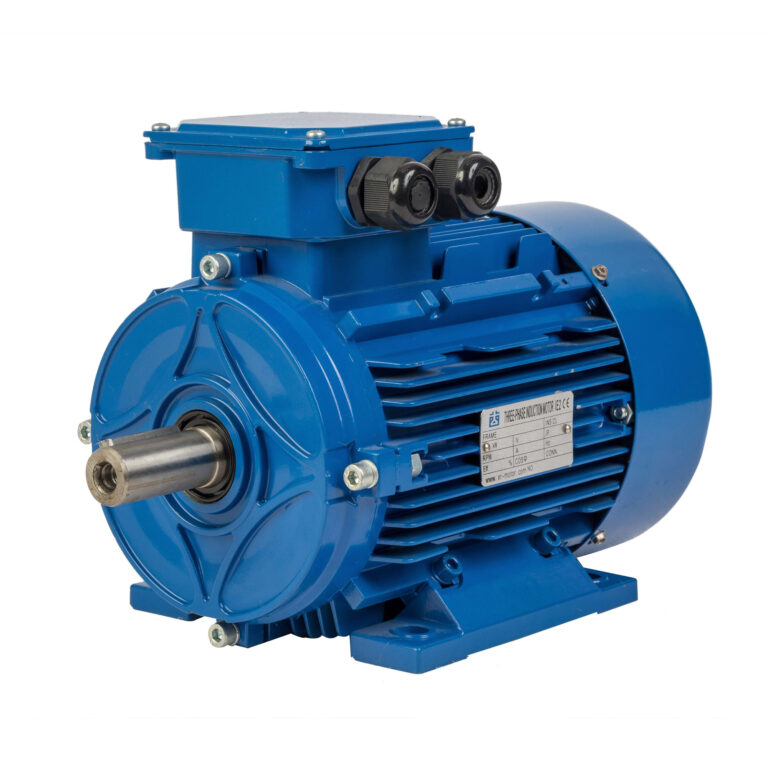
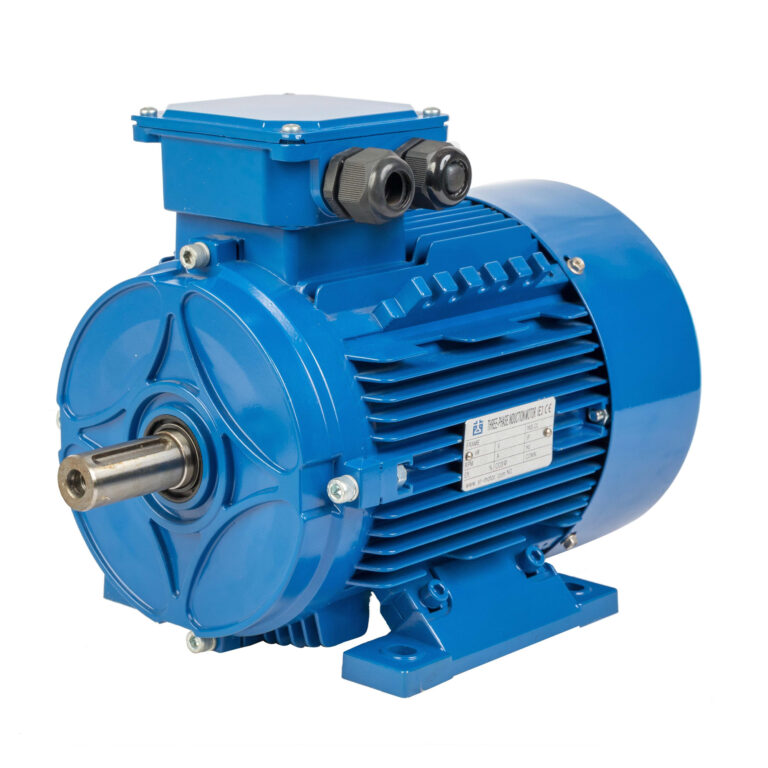
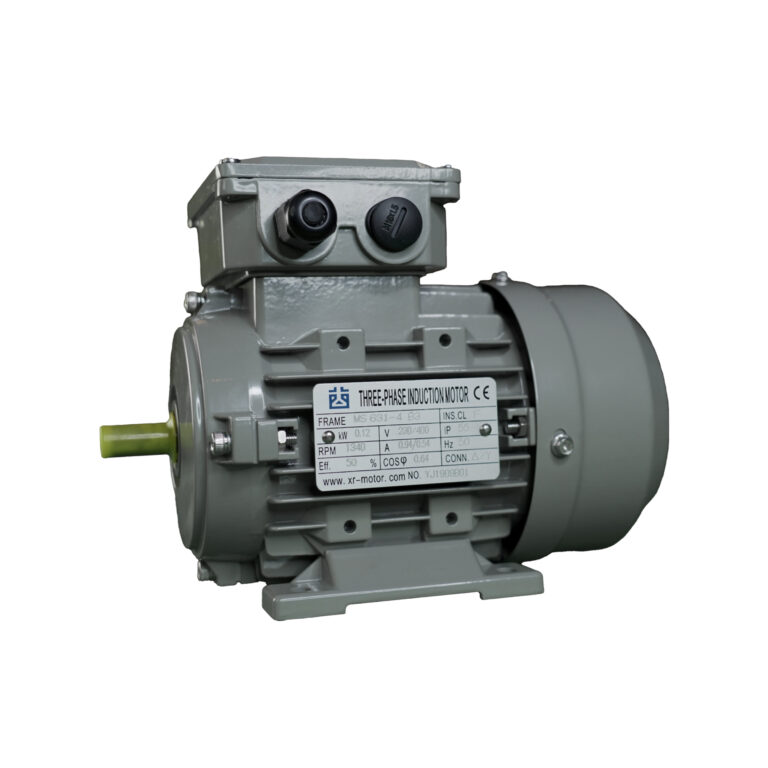
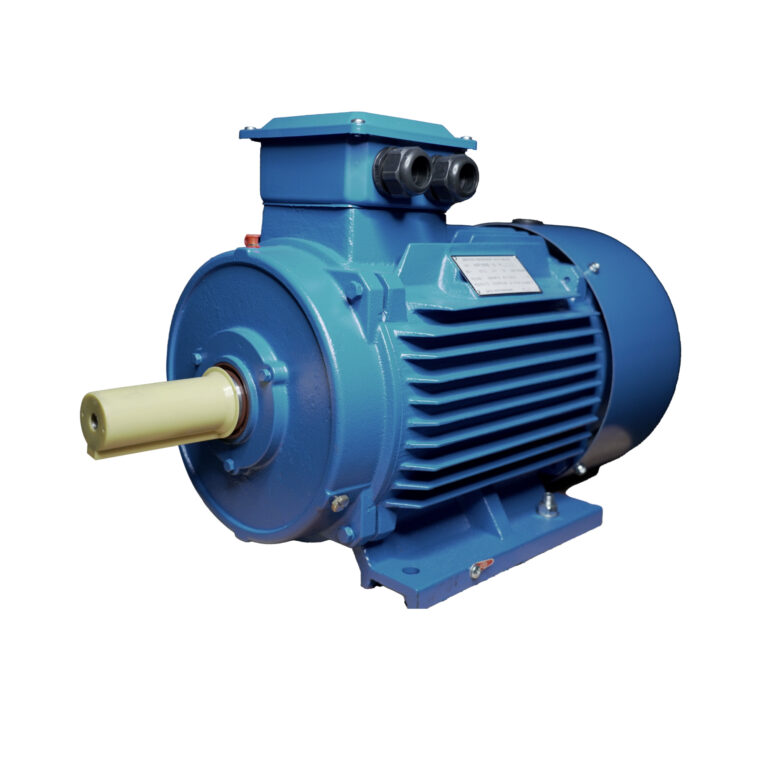
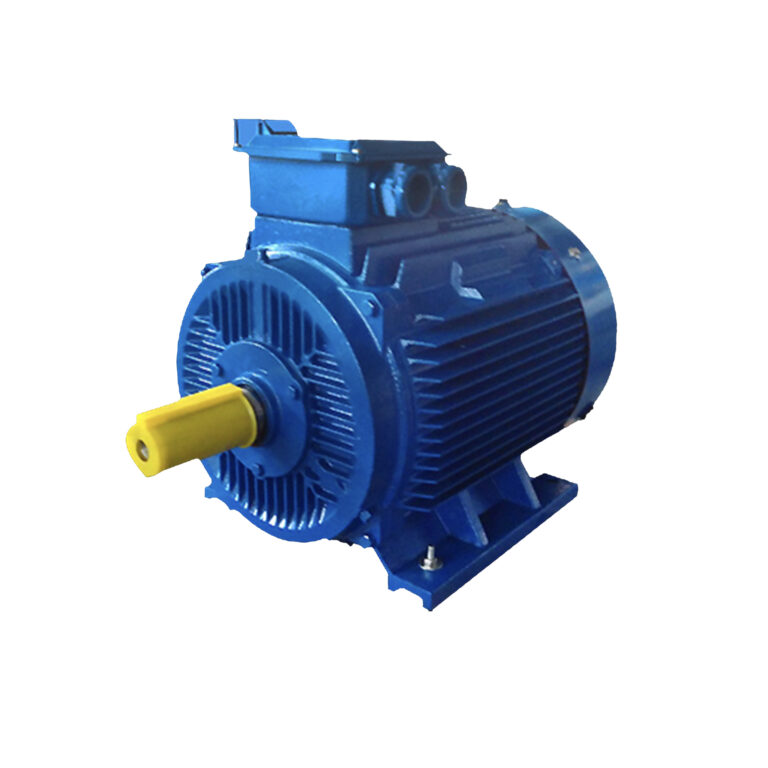
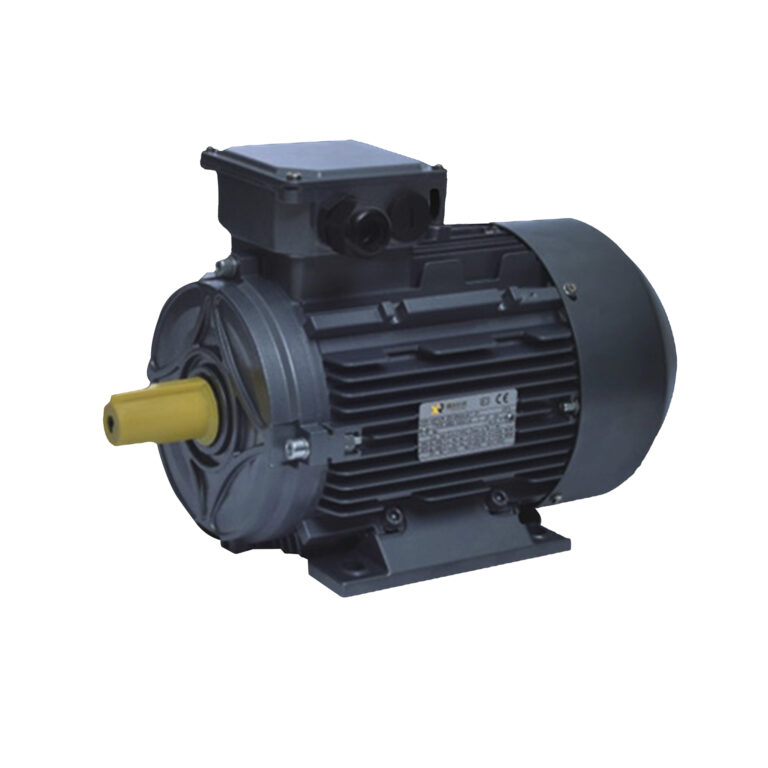
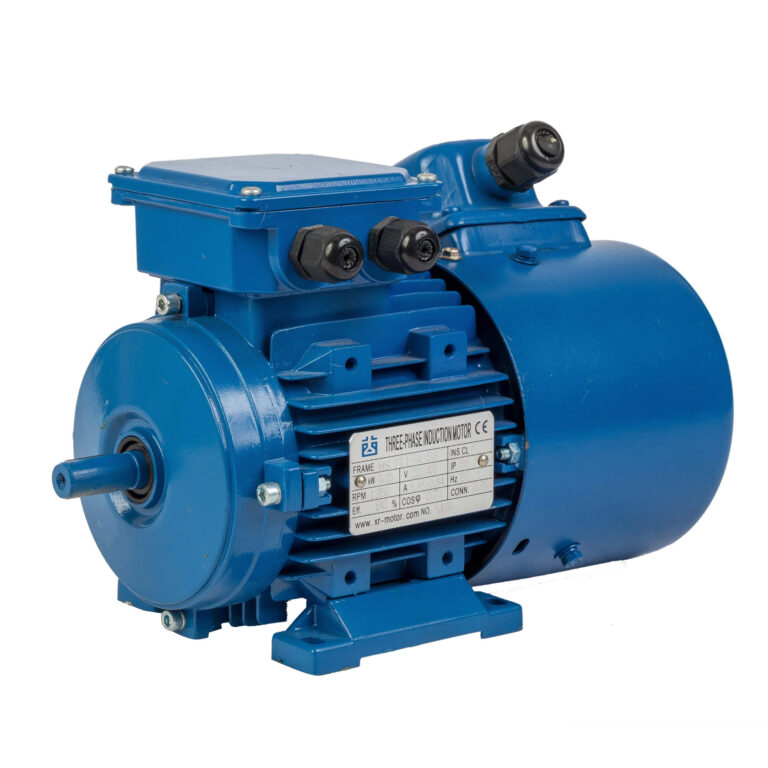
Low Voltage Three Phase Motors: Common Voltages and Selection Guide
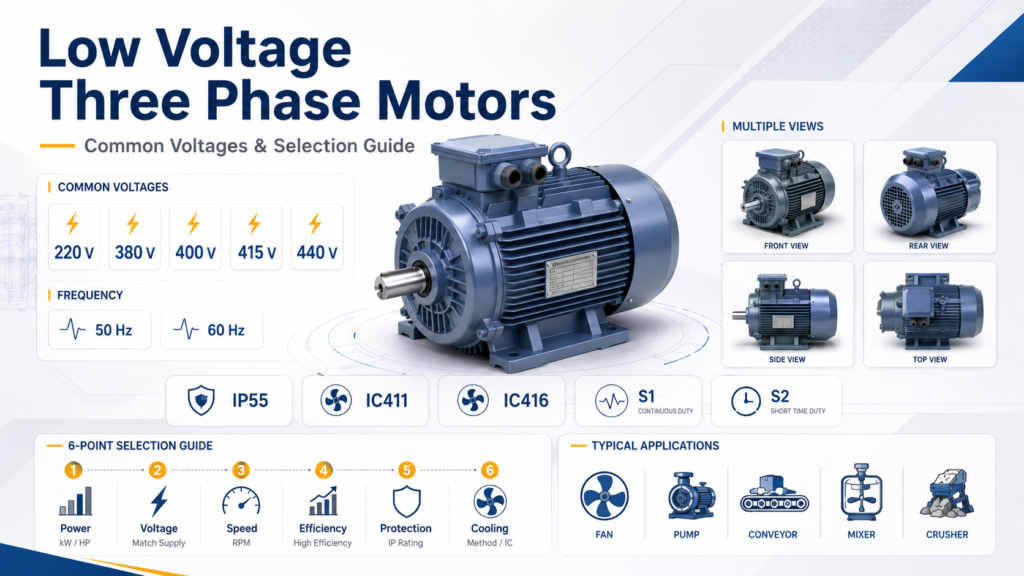
Buying a low voltage motor becomes much easier when you start with the machine’s real operating conditions instead of choosing by power rating alone. The correct three phase motor voltage, speed, efficiency class, protection level, and cooling method must all match the application.
A fan, pump, conveyor, mixer, and crusher may use motors of similar power, but they do not need the same drive system. DAYOU MOTOR recommends reviewing six core parameters before placing an order: power, voltage, speed, efficiency, protection, and cooling.
Choose Power from the Actual Load
A low voltage motor should provide enough output for the real load without being excessively oversized. A motor that is too small may run at high current and overheat, while a much larger motor can operate inefficiently at low load and increase both purchase and energy costs.
Fans and pumps usually have stable loads, but conveyors, crushers, and mixers may need stronger starting torque or extra capacity for temporary overload. In one pump application, we found that the existing low voltage motor had been oversized to “play safe,” although the pump’s actual duty point required less power. Selecting the correct rating improved the operating efficiency without reducing reliability.
Match Voltage and Connection to the Site Supply
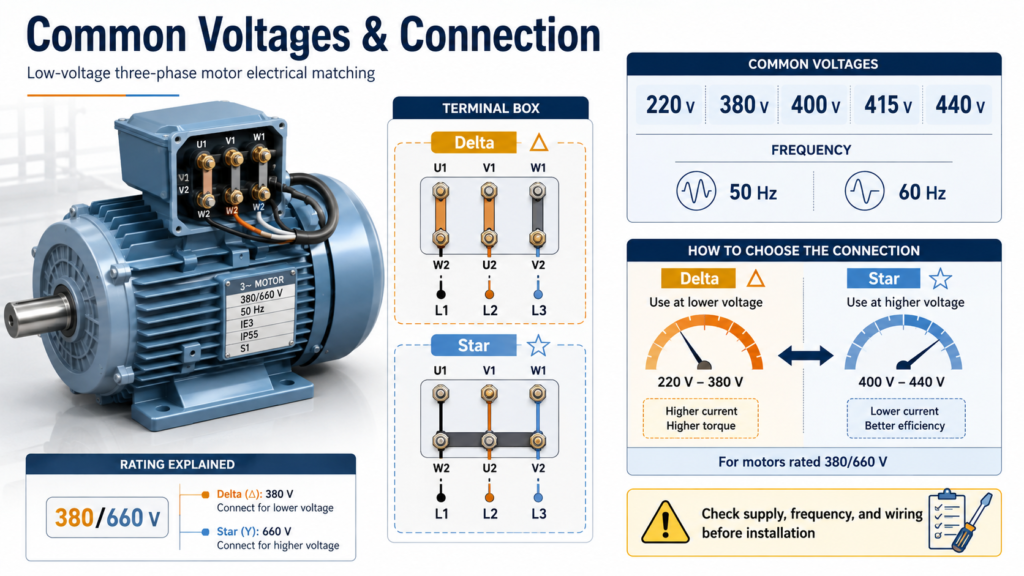
Correct three phase motor voltage selection begins with the available site supply. Common industrial options include 220 V, 380 V, 400 V, 415 V, and 440 V, usually at either 50 Hz or 60 Hz.
Some motors are designed for dual-voltage operation. A nameplate marked 380/660 V, Delta/Y generally means the motor uses delta connection at 380 V and star connection at 660 V. Always check the wiring diagram and the manufacturer’s documentation before installation. An incorrect connection can quickly damage the winding.
During export projects, I have seen customers focus on the power rating but overlook frequency. The wrong three phase motor voltage or frequency can change speed, torque, current, and cooling performance, even when the motor frame size appears correct.
Select the Speed That Fits the Driven Equipment
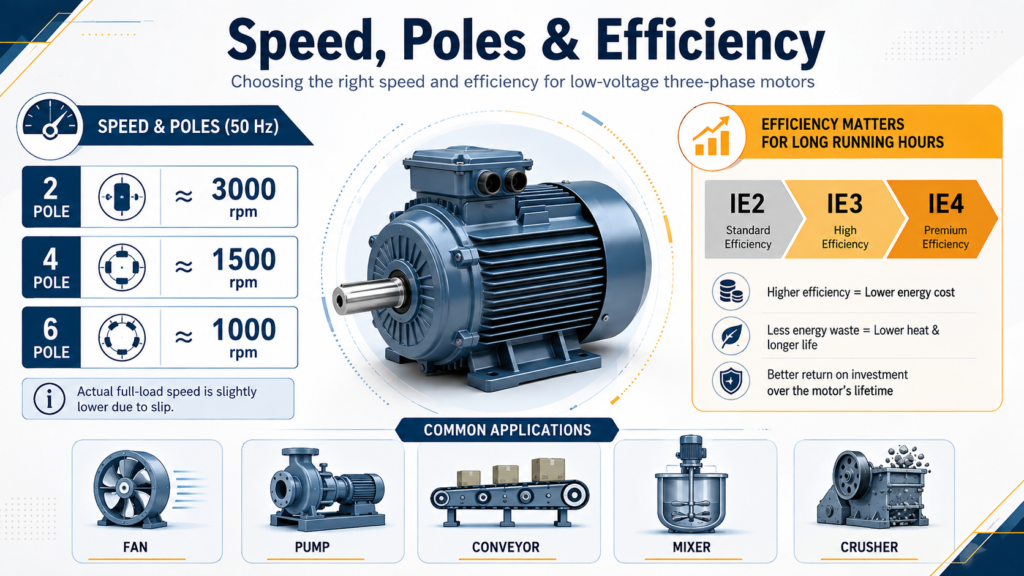
Motor speed depends mainly on supply frequency and pole number. At 50 Hz, a 2-pole motor has a synchronous speed of approximately 3,000 rpm, while a 4-pole motor is approximately 1,500 rpm; the actual full-load speed is lower because of slip.
Where possible, choose a motor speed that matches the equipment directly. This can reduce the need for complex gear reduction and improve system efficiency. If variable speed is required, a VFD is often the practical solution, although low-speed operation may require additional cooling.
Consider Efficiency as a Long-Term Operating Cost
Motor efficiency affects electricity consumption throughout the equipment’s service life. For machinery that runs many hours each day, a higher-efficiency motor can provide meaningful savings even if its initial purchase price is higher.
Efficiency requirements vary by market and application. IEC 60034-1 provides general rating and performance requirements for rotating electrical machines, while regional regulations and project specifications may add further requirements.
For continuous-duty pumps, fans, and compressors, compare expected annual operating hours and load level instead of comparing motor prices alone.
Use IP Protection That Matches the Environment
The IP code describes how well the motor enclosure resists solid objects and water. The first digit relates to dust protection, while the second digit relates to water protection.
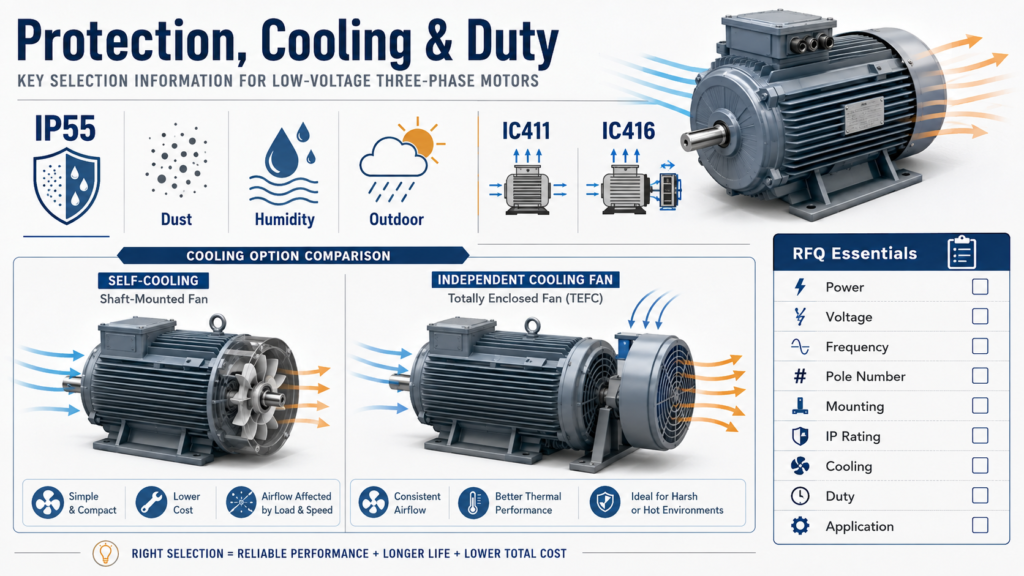
IP55 is common in industrial settings. Cleaner indoor areas may need less protection. Washdown areas may need more. Outdoor equipment may need more.
Food processing sites may need more. Dusty workshops may need more. The motor should also be suitable for the ambient temperature, humidity, and installation locati0n.
Choose Cooling and Duty Ratings for the Real Running Pattern
IC411 motors use a shaft-mounted fan for self-cooling. This design is common and reliable at normal running speed, but airflow decreases when the motor operates slowly through a VFD.
IC416 motors use an independently powered cooling fan and are often a better choice for frequent low-speed operation or constant-torque applications. Duty rating matters as well: S1 is continuous duty, while S2 is intended for short-time operation followed by a cooling period.
Using an S2-rated motor in a continuous-duty application is a common selection error and can shorten insulation and bearing life.
A Complete RFQ Prevents Avoidable Selection Errors
A low voltage motor manufacturer in China should receive a complete RFQ that includes power, voltage, frequency, pole number, speed, mounting arrangement, IP rating, insulation class, cooling method, duty type, and application details.
For three phase motor voltage for Middle East projects, buyers should confirm ambient temperature, dust conditions, local supply standards, and required certifications. A low voltage motor supplier in Southeast Asia may also need to provide suitable voltage options, humidity protection, and replacement compatibility.
Likewise, three phase motor voltage standards for European OEMs may need closer attention. Focus on efficiency, documentation, and machine interface needs. An industrial motor distributor in South America should support local supply conditions. It should also support spare parts needs.
DAYOU MOTOR helps customers review these details before production, reducing the risk of receiving a motor that is electrically correct but mechanically or operationally unsuitable.
Frequently Asked Questions
How can I confirm the right low voltage motor power?
Start with the actual load, required torque, running hours, startup conditions, and any expected overload. For stable continuous loads, a reasonable design margin is useful, but excessive oversizing should be avoided.
Can I use another three phase motor voltage if the power rating is the same?
Not without checking the full nameplate data. Voltage, frequency, connection method, speed, and control system compatibility must all be confirmed before substitution.
Is a higher IP rating always better?
Not necessarily. A higher IP rating may be useful in demanding environments, but the correct choice should match the actual dust, moisture, cleaning, and ventilation conditions.
The Right Motor Is a Complete Match
The right low voltage motor is not simply the one with the correct kW rating. It should match the load, supply, speed, efficiency target, environment, cooling method, and duty cycle.
When the correct three phase motor voltage and application requirements are confirmed early, the result is more reliable operation, lower energy waste, and fewer installation problems. DAYOU MOTOR supports OEMs, distributors, and end users with practical motor selection guidance for industrial applications.