


- Home
- Product
- GOST standard motor
- IEC standard motor
 MC Series single phase capacitor start asynchronous motor
- MY MYT series single phase capacitor running asynchronous motor
- ML Series single phase dual-capacitor asynchronous motor
- ME2 series three phase high efficiency aluminum housing motor(IE2)
- ME3 series three phase high efficiency aluminum housing motor(IE3)
- MS series three-phase aluminum housing motor (IE1)
- Y2 series three phase cast iron motor (IE1)
- YE2 series three phase high efficiency cast iron motor (IE2)
- YE3 series three phase high efficiency cast iron motor (IE3)
- Special application motor
- Rolling door motor
- Industry application
- News
- About us
- Contact us
- Certifications
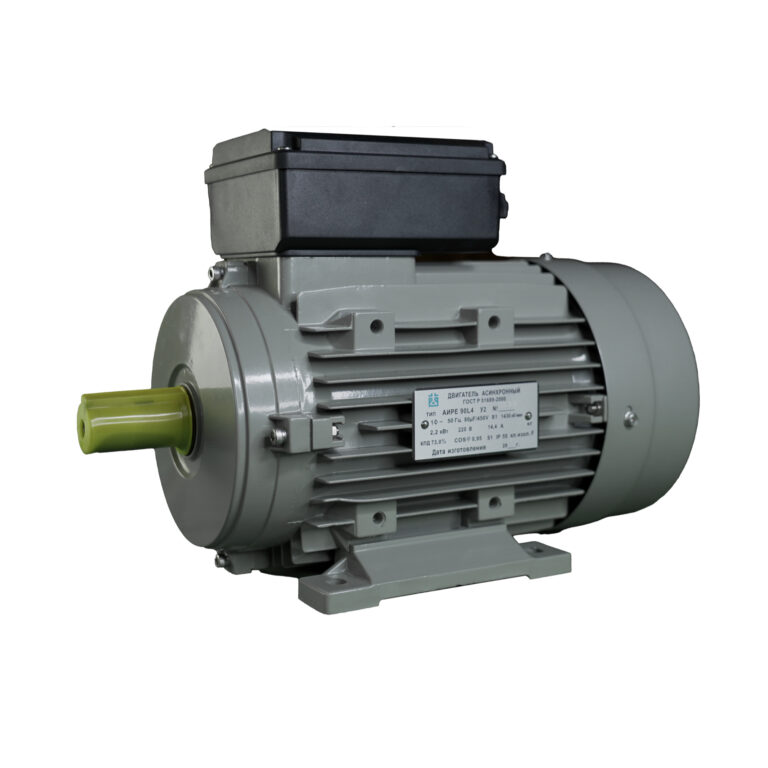
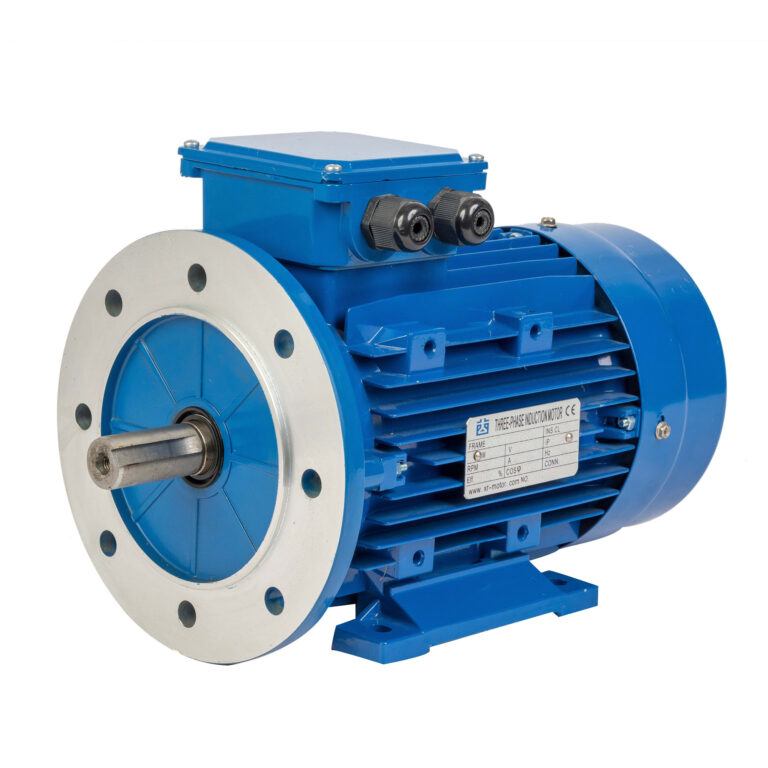
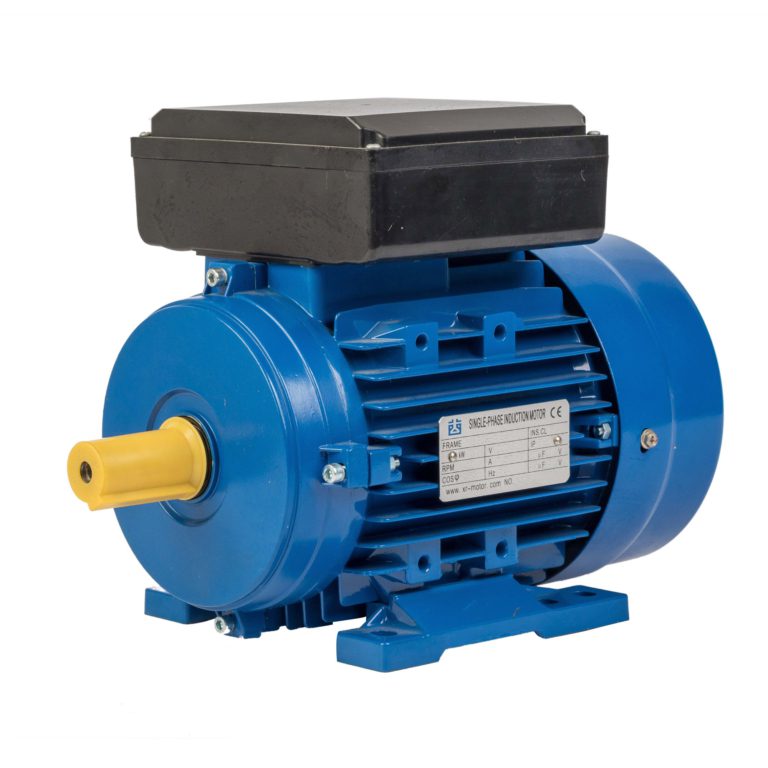
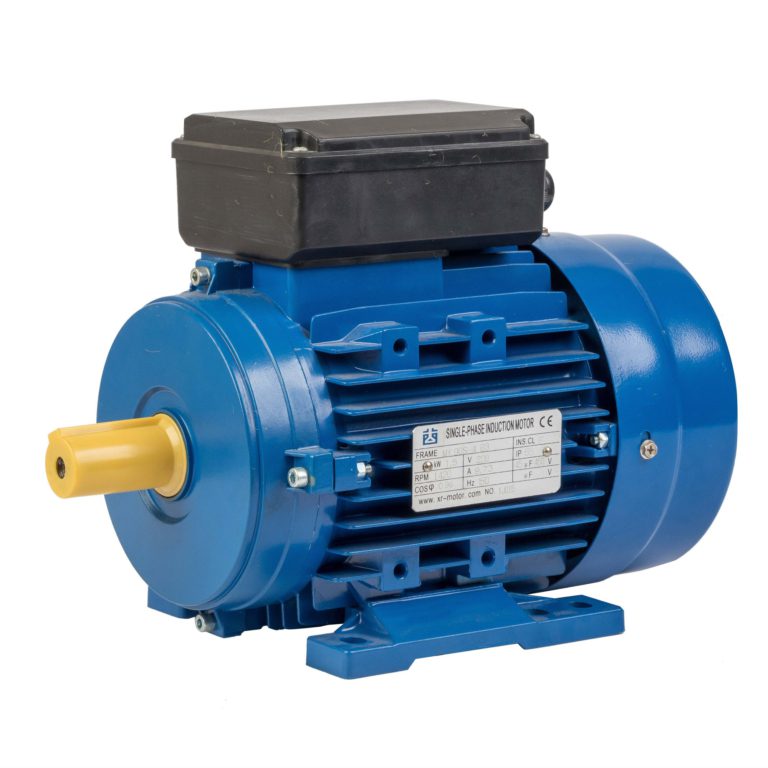
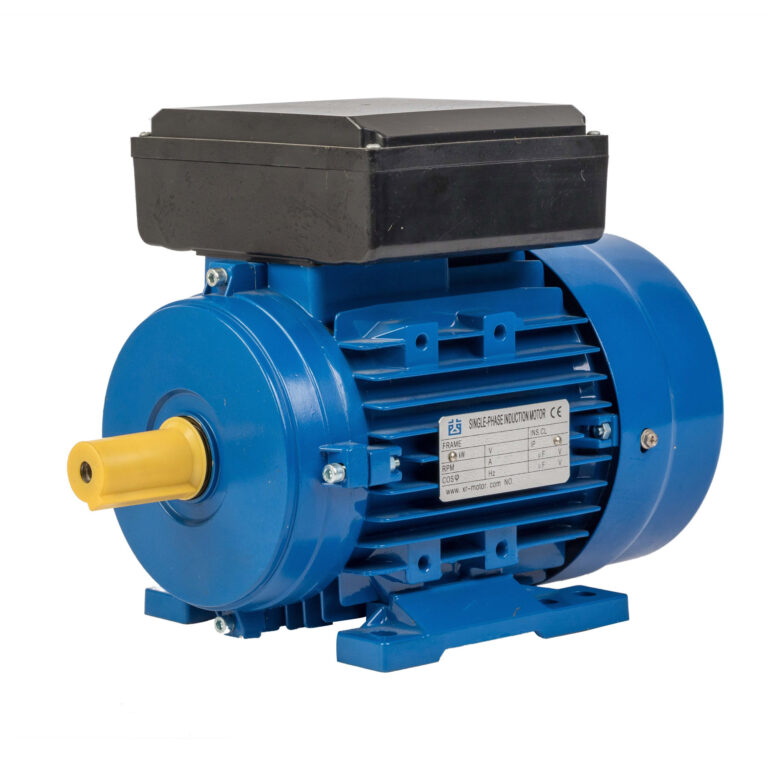
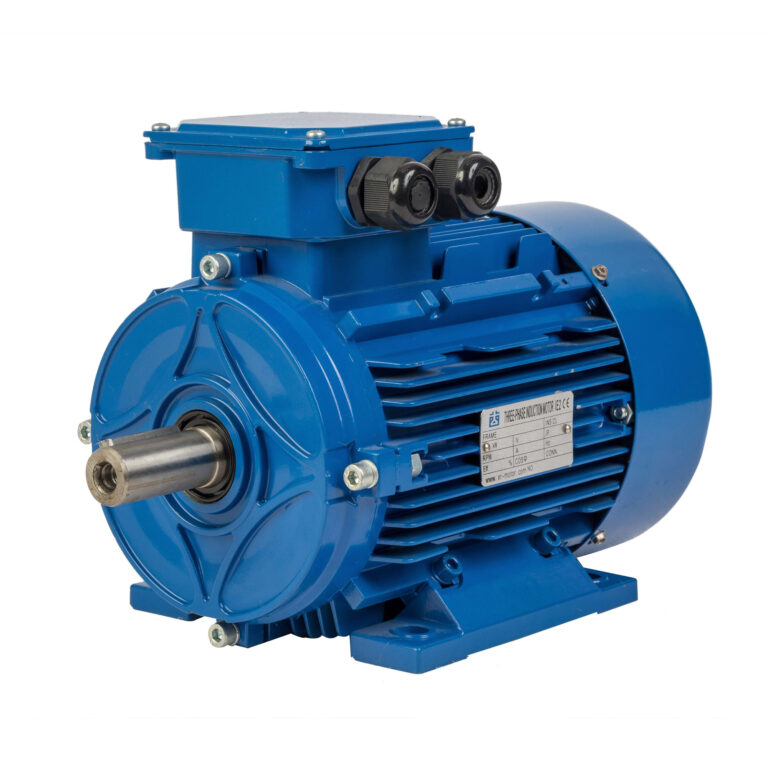
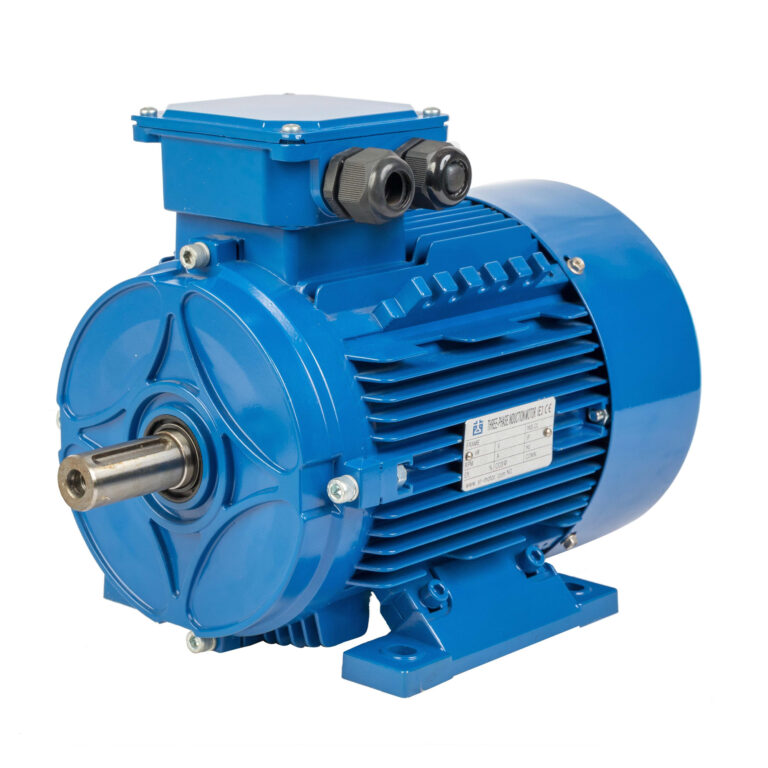
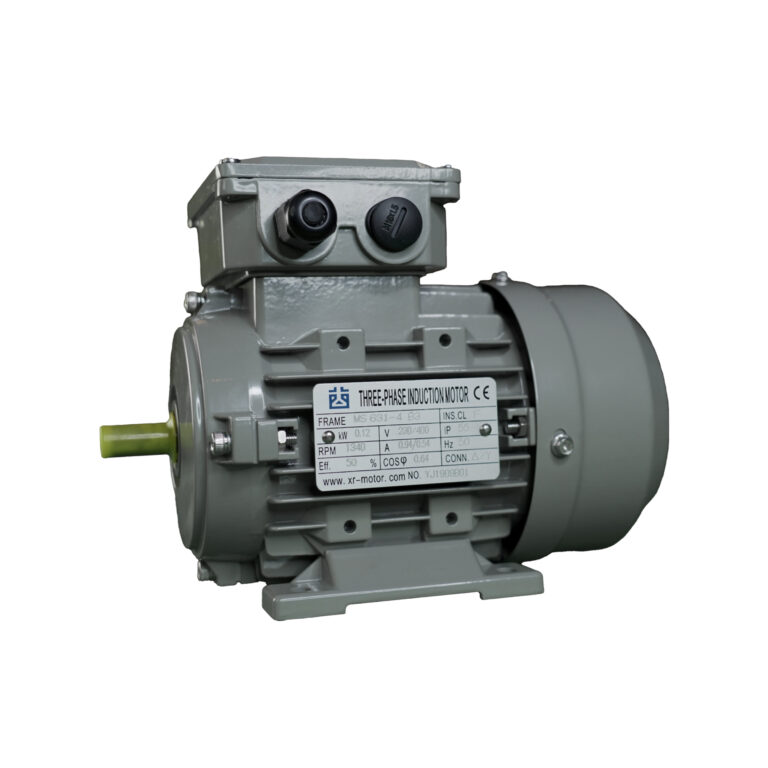
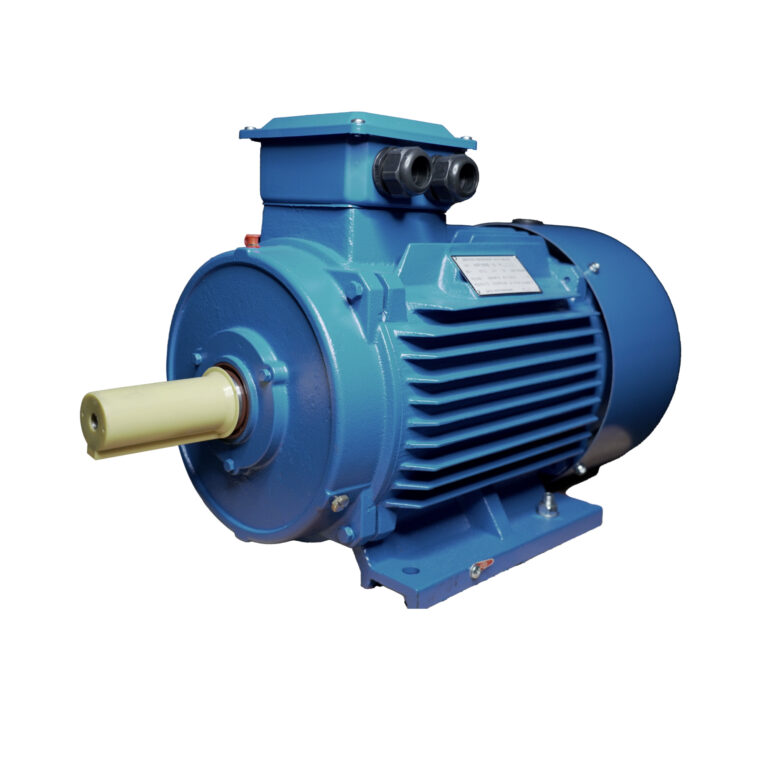
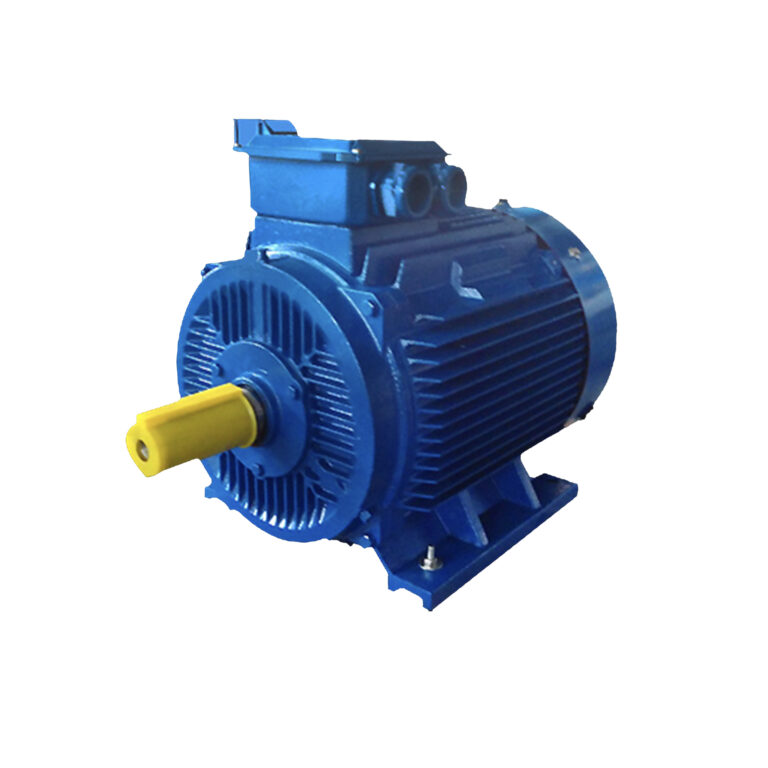
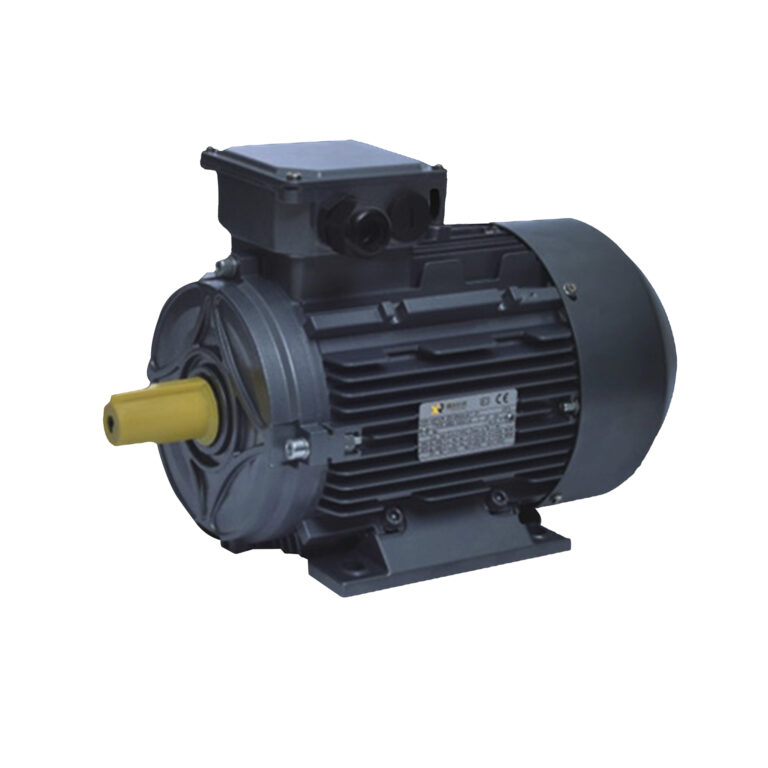
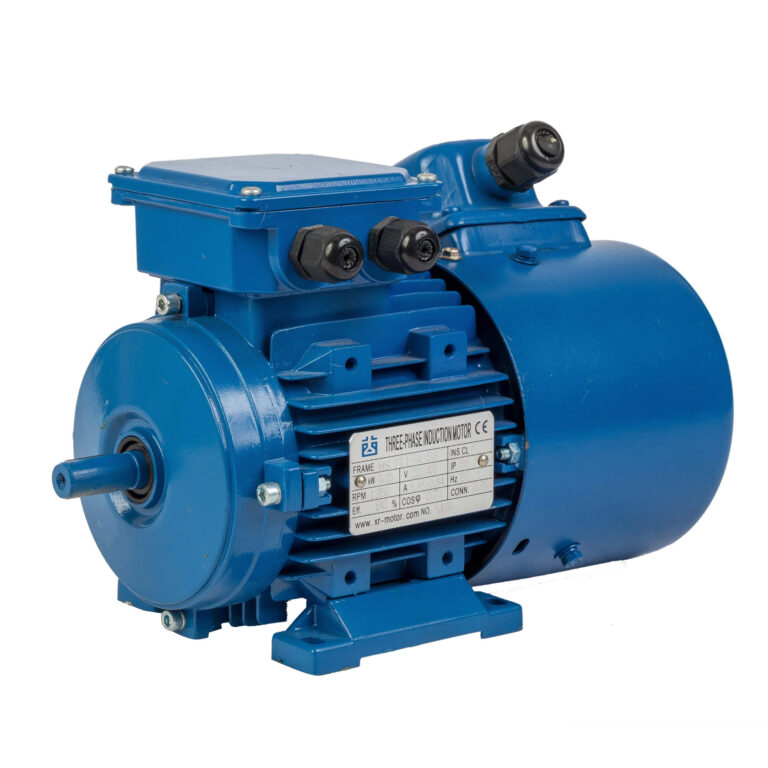
Industrial Electric Motor MOQ, Lead Time and Export Delivery: What Buyers Should Know
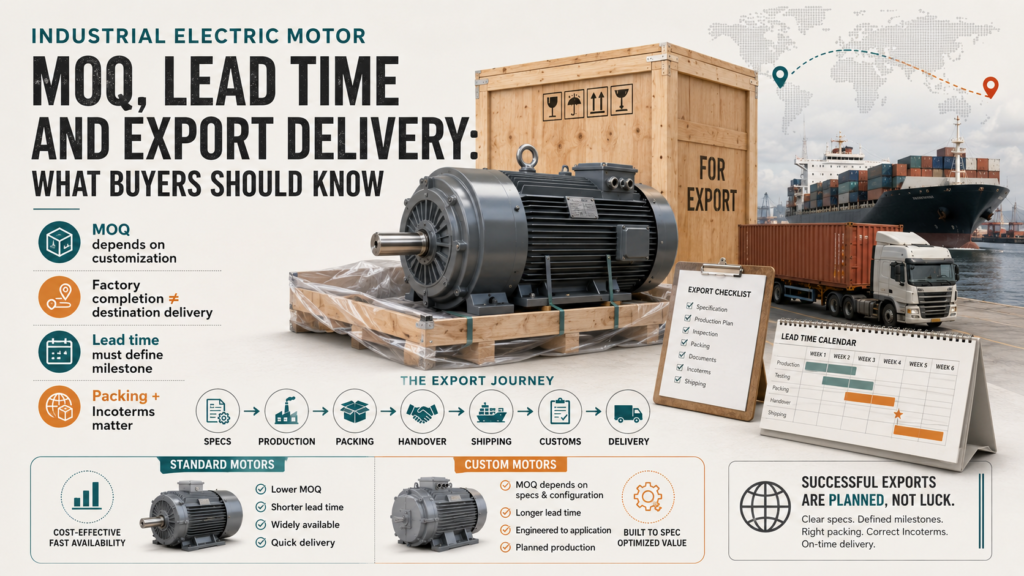
Buying an industrial electric motor is rarely just about choosing the right power rating, voltage, or mounting type. For many projects, the real challenge comes later: confirming the minimum order quantity, locking in a realistic production date, arranging export packing, and making sure the shipment reaches site when it is needed.
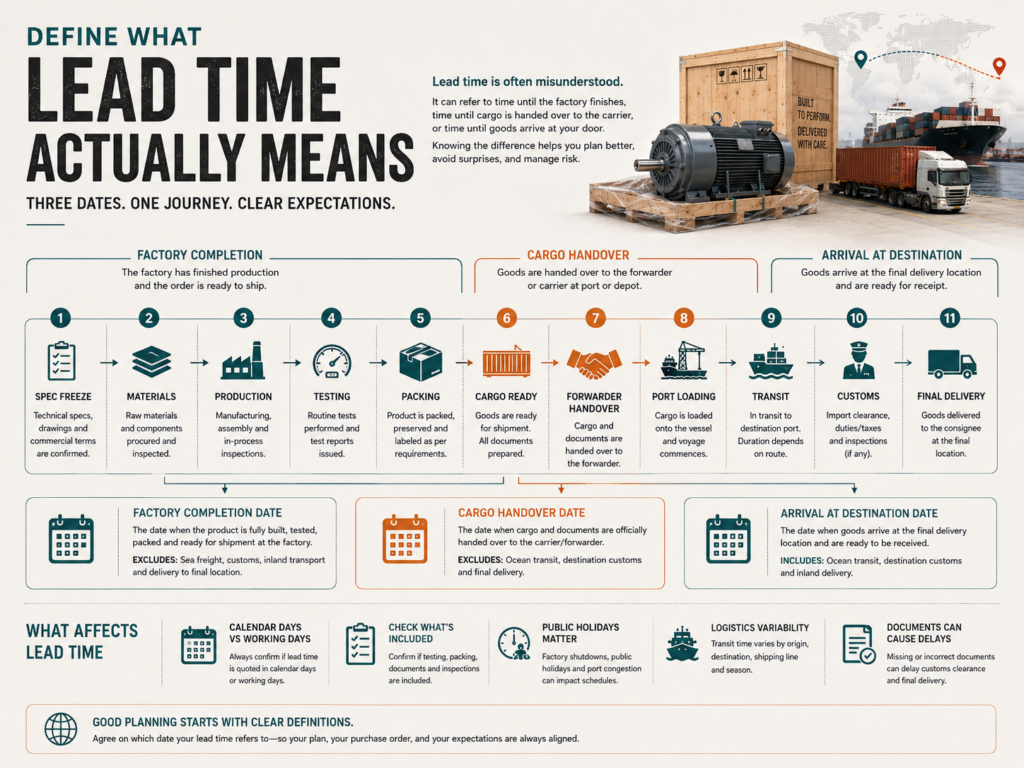
These details matter most when the motor is customized or tied to a fixed installation schedule. A practical purchasing plan should separate three dates: factory completion, cargo handover, and final delivery at destination. They are related, but they are not the same thing.
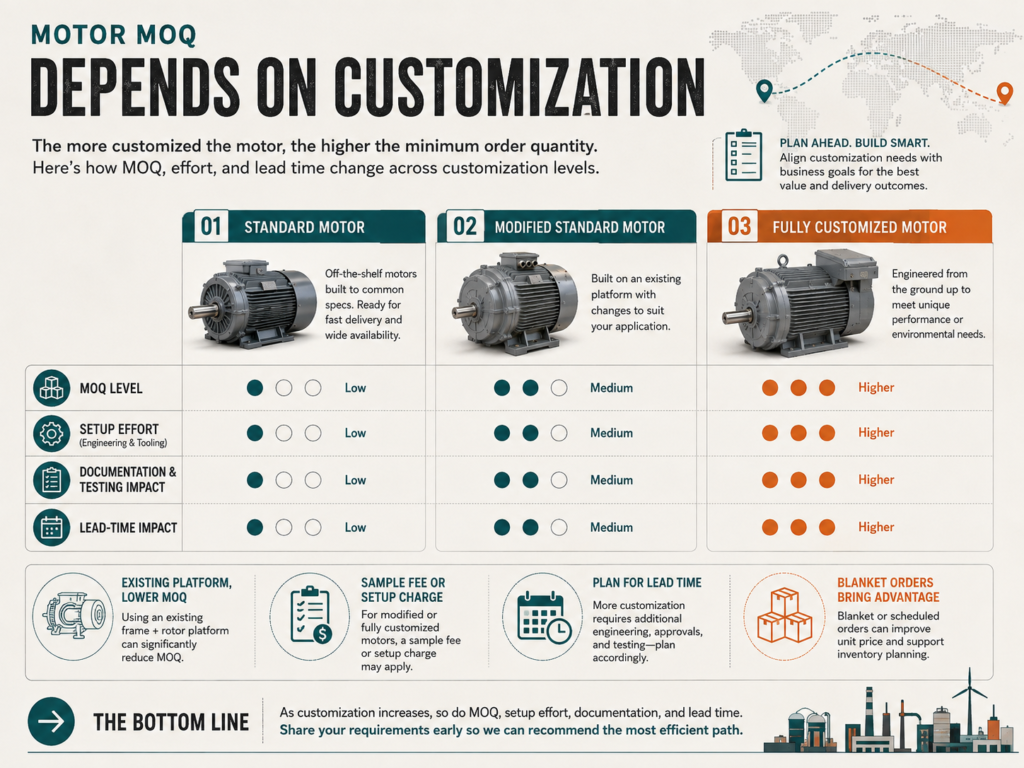
Motor MOQ Depends on the Level of Customization
There is no single motor MOQ that applies to every order. Standard IEC or NEMA motors may be available from stock, in small batches, or even as single samples. The situation changes when the motor requires special voltage, frequency, insulation, protection class, shaft dimensions, flange arrangements, or explosion-proof construction.
A custom motor MOQ is usually linked to the factory’s preparation work. The supplier may need to buy dedicated materials, prepare a winding process, schedule a separate production run, or cover testing and certification costs. For a first order, some factories can accept a smaller quantity with a sample fee or setup charge.
If the initial demand is limited, it is often more practical to use an existing frame and rotor platform, then adapt only the winding, nameplate, or connection details. Another option is a blanket order with scheduled deliveries. This can help keep the unit price reasonable without forcing the buyer to hold unnecessary stock.
Define What “Lead Time” Actually Means
“Lead time” sounds clear until different people use it to describe different stages of the order.
One supplier may mean the day production is finished. Another may mean the date the goods are packed, ready for collection, handed to the forwarder, or loaded at the port. For project buyers, that difference can be the difference between a smooth installation and an expensive delay.
The purchase order should state the delivery milestone clearly. It is also worth confirming whether the quoted motor lead time is based on calendar days or working days, and whether it includes testing, packing, export documents, public holidays, and cargo pickup.
Standard motors can move quickly when materials and stock are available. Custom motors usually take longer because drawings, special parts, routine tests, or compliance documents need to be completed first. A written production schedule is far more useful than a general promise of “fast delivery.”
Final Specifications Should Be Confirmed Before Production
First orders often take longer than repeat orders, especially when special materials or documentation are involved. Copper, electrical steel, bearings, castings, and other components can affect the schedule. Certification requirements may add time as well, particularly for hazardous-location motors or regulated export markets.
For example, a buyer requesting a motor MOQ for Middle East equipment builders should confirm voltage, ambient temperature, IP rating, and documentation requirements before the order is released. A buyer asking about motor lead time for European OEMs should also confirm the relevant compliance documents, efficiency class, labeling, and test requirements.
Once production has started, changes to voltage, flange type, bearing arrangement, or certification requirements may require a partial restart. That is why the technical specification should be frozen before materials are committed.
Factory Completion Is Not Destination Delivery
A motor can be complete at the factory and still be weeks away from the customer’s site. Motor export planning should include pickup, export handling, port or airport processing, carrier booking, transit time, customs clearance, and inland delivery.
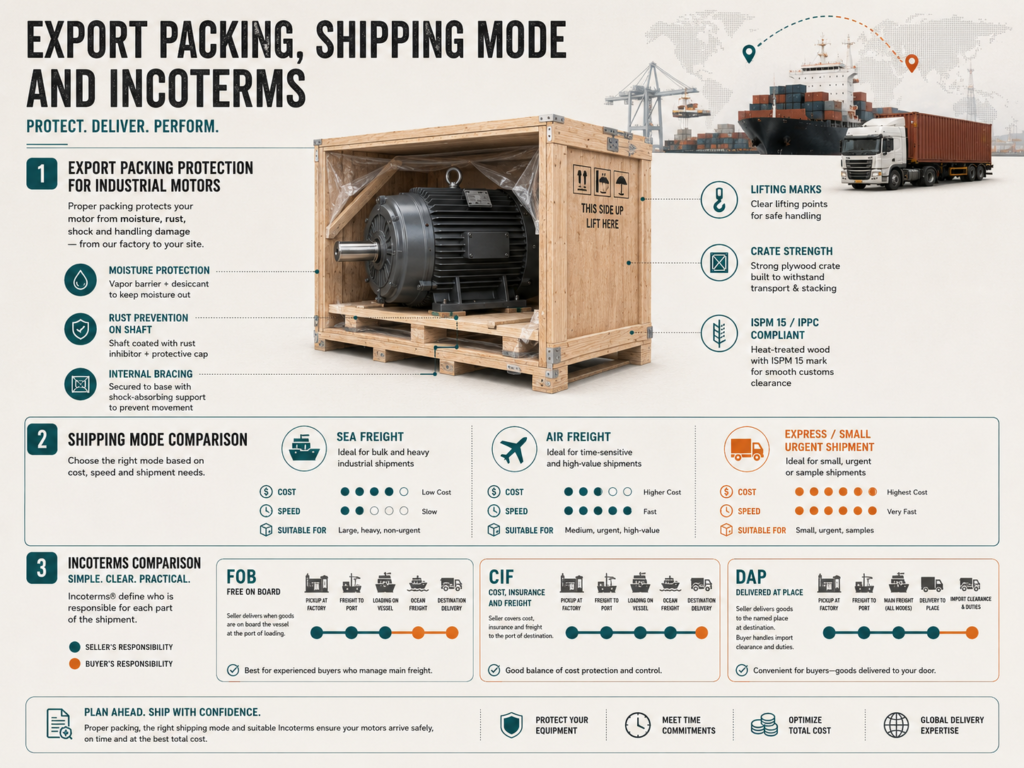
Sea freight is generally the sensible option for heavy motors and larger orders. Air freight or express shipping is more suitable for samples, urgent replacement motors, or small spare parts where speed matters more than freight cost. Less-than-container-load shipments may also require consolidation and additional handling, so a door-to-door estimate is usually more useful than an ocean-transit figure alone.
For motor export to South America, buyers should confirm import documents, duties, voltage and frequency requirements, and destination-port procedures early. An industrial motor supplier in Southeast Asia may also need to consider regional sailing schedules, humidity protection, and spare-parts planning. Buyers arranging electric motor shipping from China to North America should allow additional time for customs clearance, inland transport, and possible local inspections.
Export Packing Is Part of Product Protection
Industrial motors are heavy, and the packaging needs to protect the motor as well as make handling safer. Export packing should address moisture protection, rust prevention on exposed shafts, internal bracing, lifting marks, and crate strength.
For solid-wood pallets or crates, check whether ISPM 15 treatment and marking are required in the destination market. The IPPC marking system identifies wood packaging treated under approved phytosanitary measures.
Plywood cases are widely used for export shipments, but the buyer and forwarder should still confirm the destination’s specific requirements. Permanent-magnet motors may require carrier-specific checks or magnetic shielding for air freight, so this needs to be confirmed before booking.
Agree on Incoterms and Responsibilities Early
The contract should specify the applicable Incoterms rule and the exact named place or port. It should also make clear who is responsible for pickup, export clearance, freight booking, insurance, import customs procedures, duties, and final delivery.
FOB, CIF, and DAP can all be suitable for electric motor orders, but they place different responsibilities on the buyer and seller. The right choice depends on the shipment type, destination, the buyer’s logistics experience, and how much control the buyer wants over the transport process.
DAYOU MOTOR can help buyers clarify factory completion dates, export packing, available documents, and cargo handover arrangements before shipment.
Questions Worth Asking Before You Order
Can I order one motor as a sample?
Often yes, particularly for a standard model. Confirm whether the requested configuration already exists, and whether a sample fee, setup charge, or minimum order value applies.
What does the quoted motor lead time include?
Ask whether the date refers to production completion, cargo-ready status, forwarder pickup, port loading, or arrival at destination.
Which documents should I request for motor export?
Typical documents may include a commercial invoice, packing list, bill of lading or air waybill, certificate of origin when required, test records, and market-specific compliance documents. Exact requirements depend on the product and destination.
Plan the Order as a Complete Supply Chain
A clear motor MOQ helps control inventory and customization costs. A realistic motor lead time protects the installation schedule. Careful export planning reduces the risk of freight damage, customs delays, and avoidable surprises after the motor leaves the factory.
DAYOU MOTOR works with OEMs, distributors, and project buyers to align technical specifications, production planning, packaging, and delivery requirements before an order enters production.