


- Home
- Product
- GOST standard motor
- IEC standard motor
 MC Series single phase capacitor start asynchronous motor
- MY MYT series single phase capacitor running asynchronous motor
- ML Series single phase dual-capacitor asynchronous motor
- ME2 series three phase high efficiency aluminum housing motor(IE2)
- ME3 series three phase high efficiency aluminum housing motor(IE3)
- MS series three-phase aluminum housing motor (IE1)
- Y2 series three phase cast iron motor (IE1)
- YE2 series three phase high efficiency cast iron motor (IE2)
- YE3 series three phase high efficiency cast iron motor (IE3)
- Special application motor
- Rolling door motor
- Industry application
- News
- About us
- Contact us
- Certifications
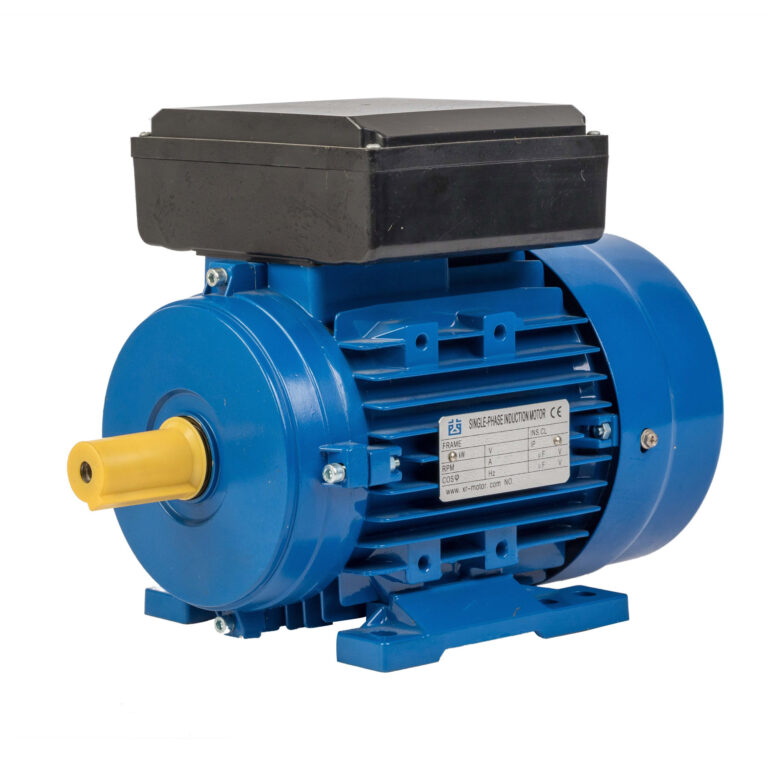
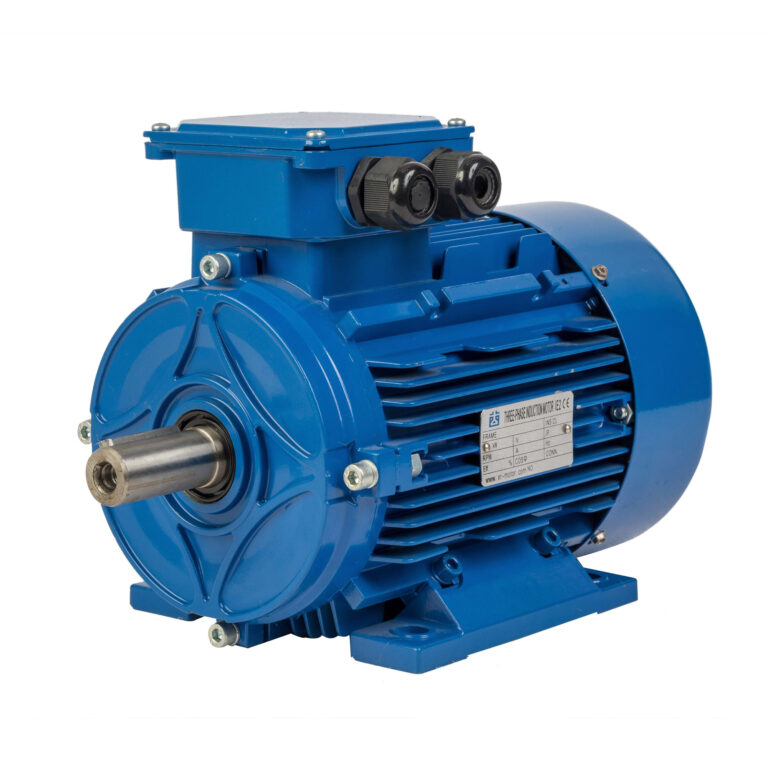
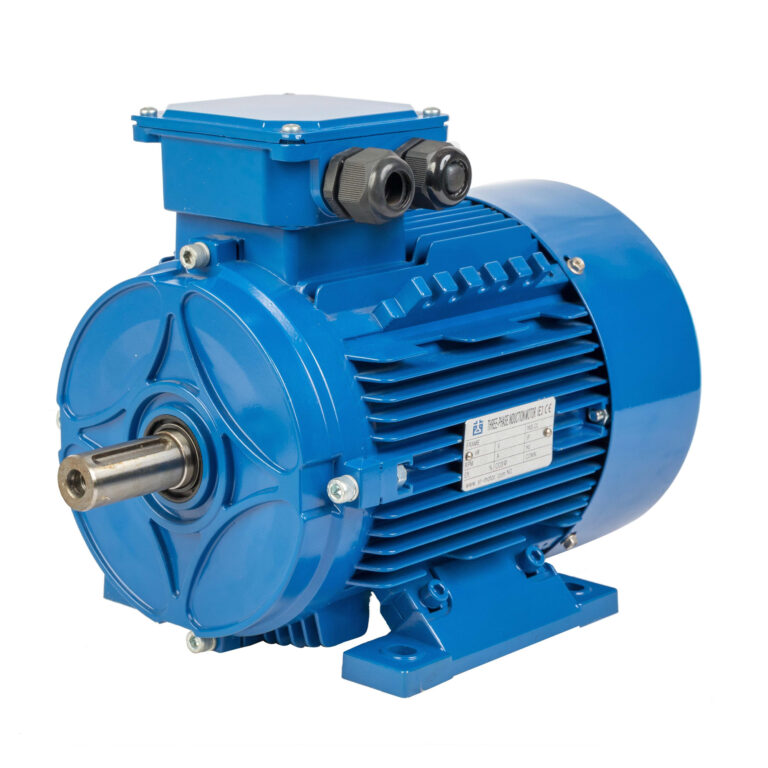
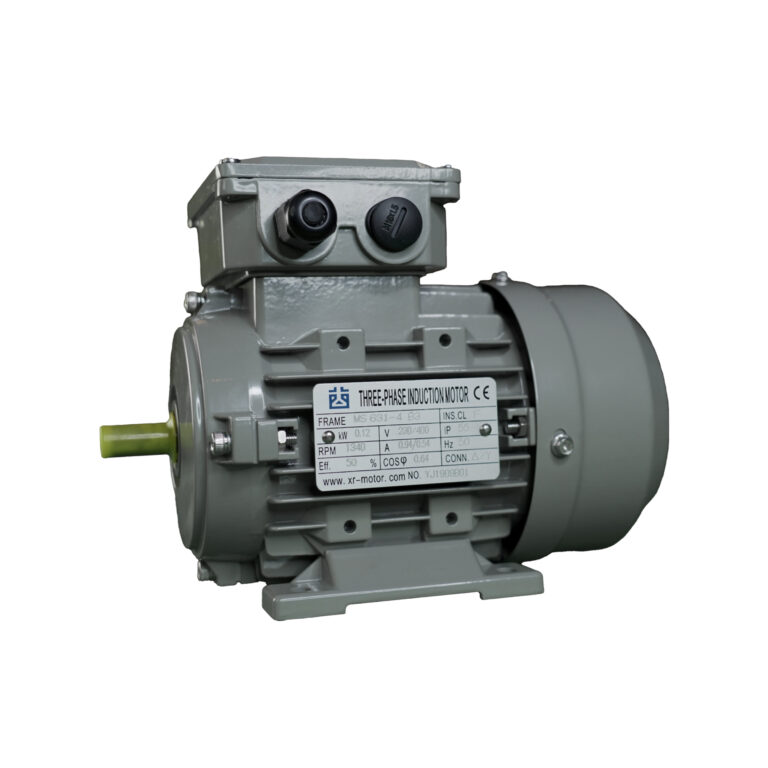
Electric Motor Manufacturer vs Distributor: Which Supplier Should You Choose?
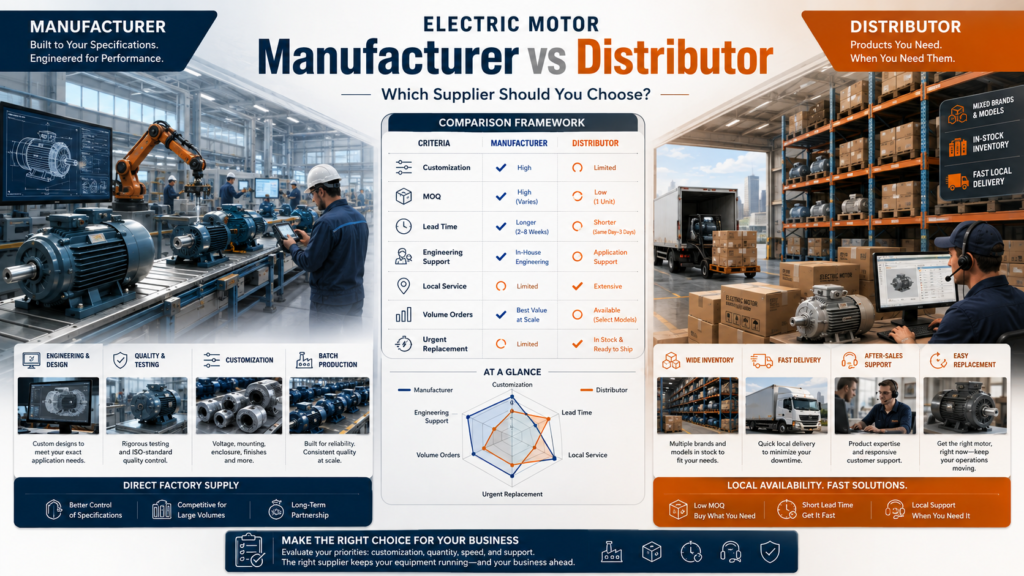
Choosing the right motor supplier is not simply a question of who offers the lowest price. Order volume, technical complexity, delivery urgency, local support, and long-term purchasing plans all influence whether a factory or distributor is the better fit. When evaluating an electric motor manufacturer vs distributor, buyers should compare total purchasing value rather than unit price alone.
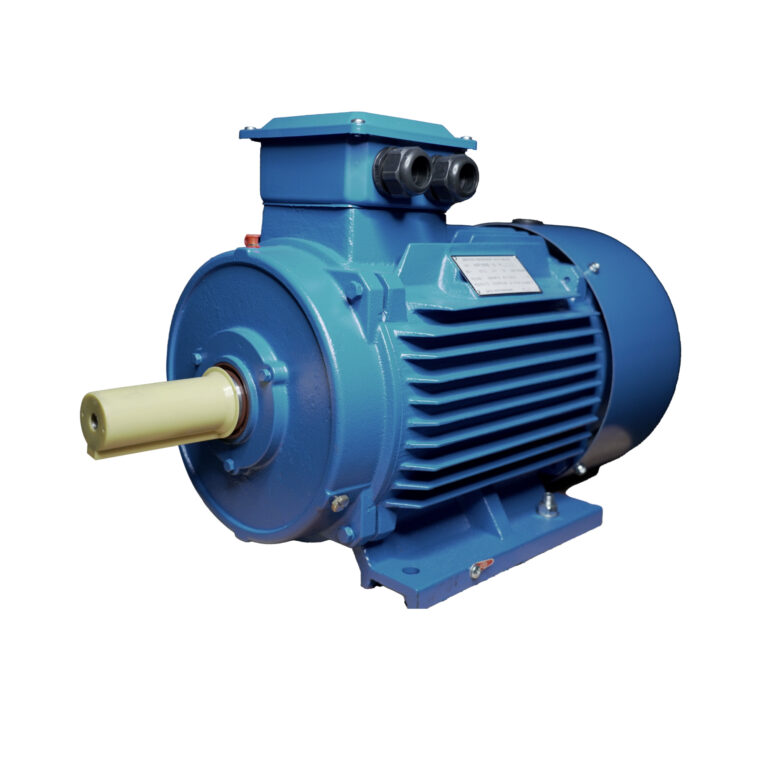
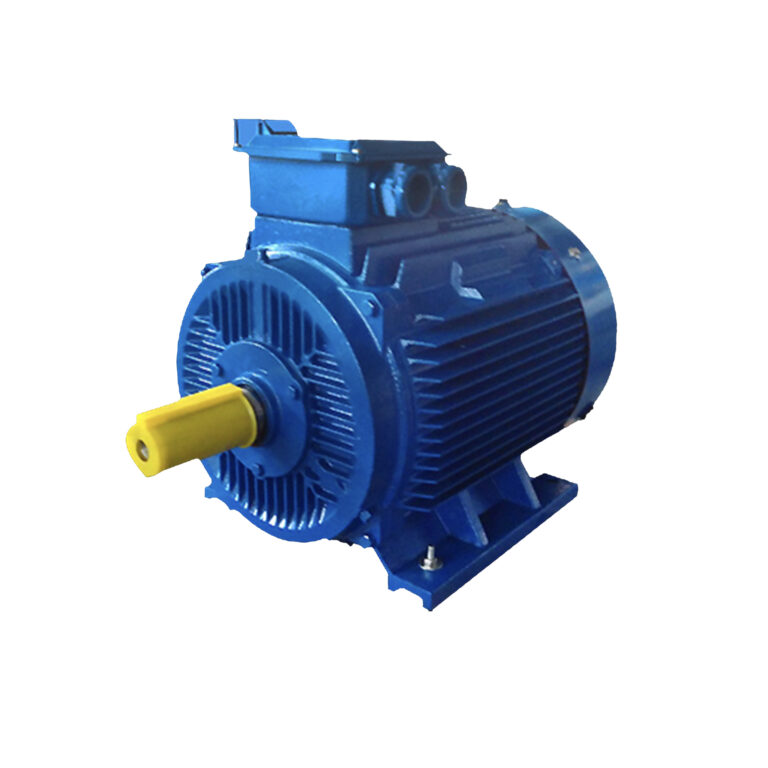
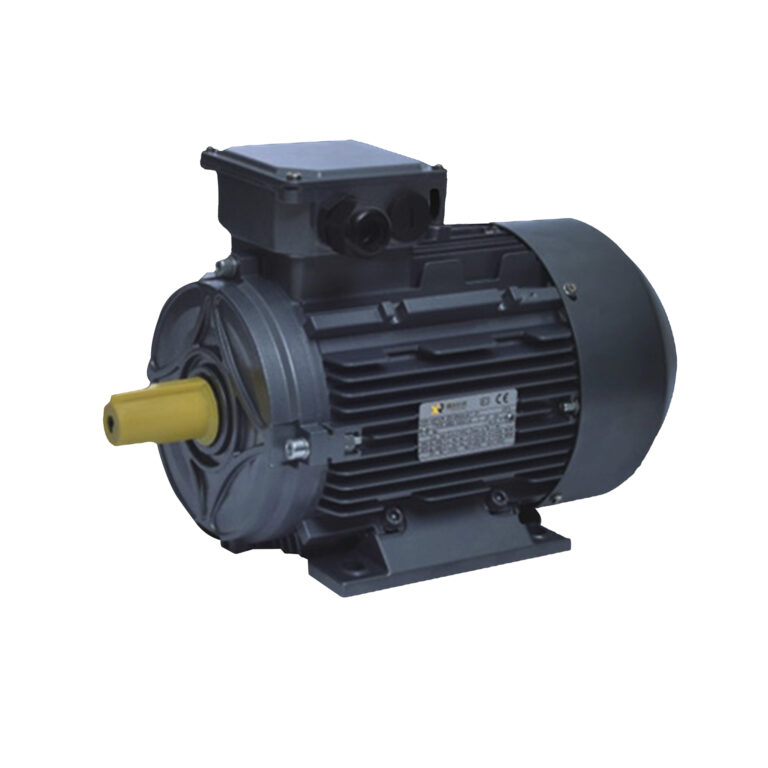
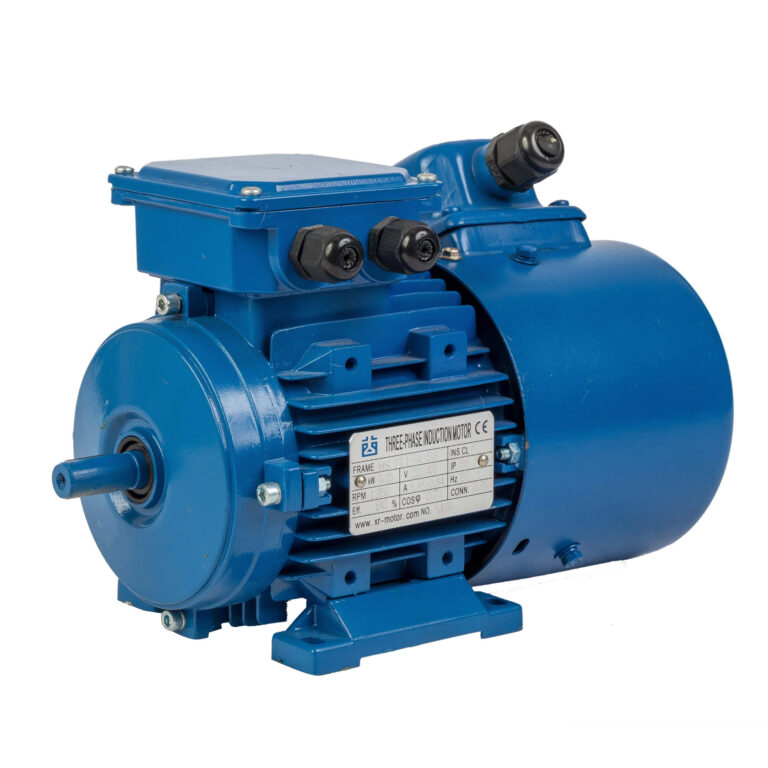
DAYOU MOTOR manufactures and supplies industrial motors for OEMs, distributors, equipment builders, and replacement markets. From our experience, factories are generally stronger in engineering and customization, while distributors often perform better when local inventory and immediate service matter most.
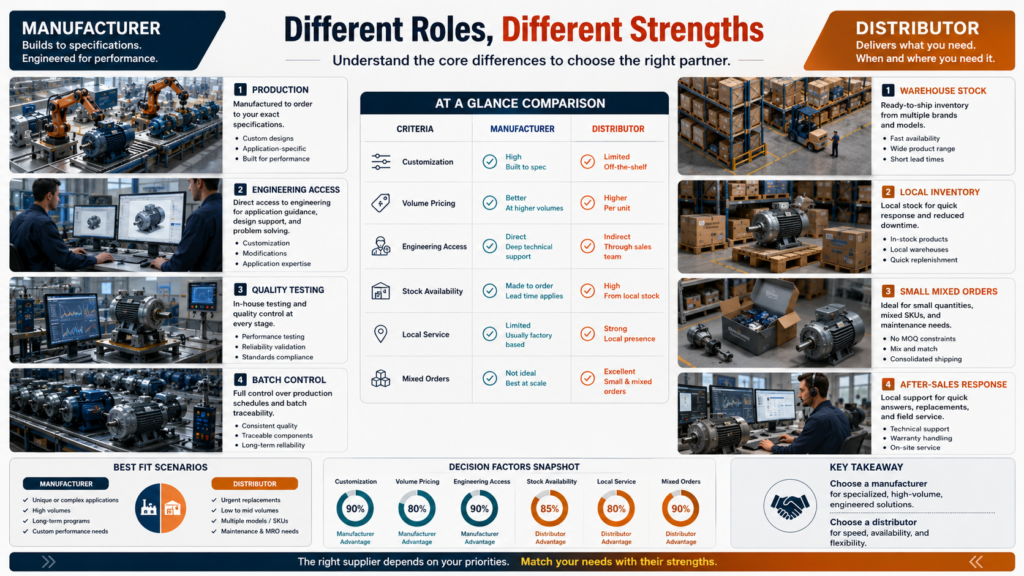
The manufacturer and distributor play different roles
A manufacturer designs or produces the motor and controls important factors such as winding data, materials, machining, assembly, testing, and engineering changes. A distributor purchases finished products from one or more factories and resells them from local or regional inventory.
The electric motor manufacturer vs distributor decision becomes easier once buyers identify which of these capabilities is more important to their project.
A manufacturer may offer:
- Better pricing for planned volume orders
- Customized voltage, shaft, flange, mounting, or winding designs
- Direct communication with engineers
- Greater access to test data and production records
- Better control over long-term product consistency
A distributor may provide:
- Faster delivery from available stock
- Small quantities and mixed-model orders
- Multiple brands in one purchase
- Local payment terms and technical visits
- Convenient replacement and warranty service
Neither option is automatically better. The correct supplier is the one whose business model matches the purchasing situation.
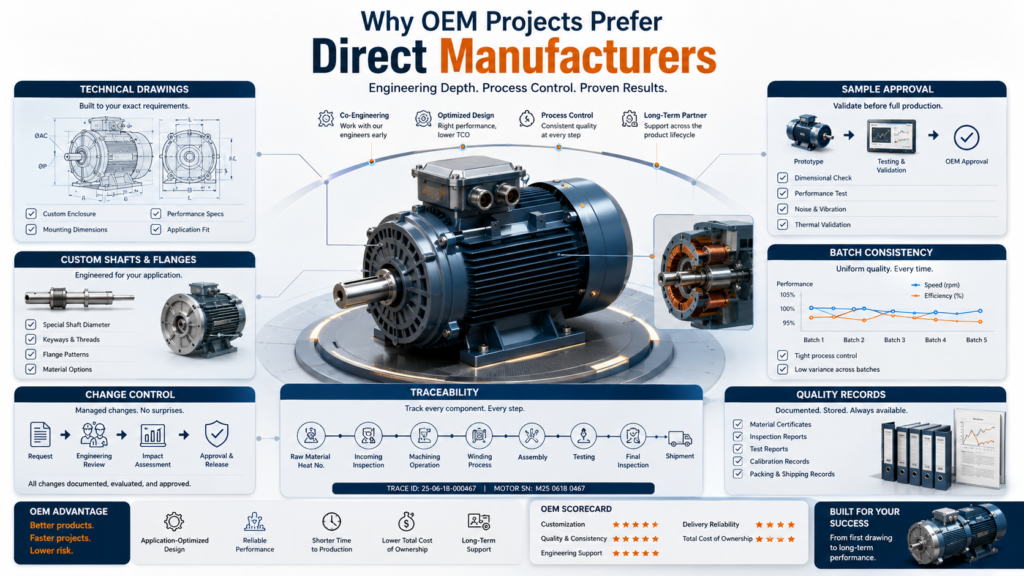
Direct manufacturers are usually better for volume projects
OEMs with stable demand often benefit from working directly with a motor manufacturer, especially when the required motor will become a standard component in a machine or production line.
A direct factory motor supplier in China can normally discuss winding design, torque characteristics, temperature rise, VFD operation, shaft tolerances, bearing selection, and mounting dimensions directly with the buyer’s engineering team. This communication becomes particularly valuable when a catalogue motor does not fit the equipment without modification.
Large orders may also receive more competitive factory pricing because there is no additional distribution margin. However, direct purchasing does not always mean the lowest total cost, since tooling, sample development, international freight, customs clearance, and local inventory must still be considered.
A factory is generally the stronger option when buyers need:
- Regular batch production
- Stable annual demand
- Private labels or customized nameplates
- Special voltage or frequency
- Non-standard shafts and flanges
- Encoders, brakes, heaters, or temperature sensors
- Detailed testing and quality documentation
- Written control over material or design changes
An electric motor manufacturer for European OEMs should also understand the applicable efficiency, technical documentation, and market compliance requirements instead of simply stating that every motor is “CE approved.”
Distributors are often better for urgent and mixed orders
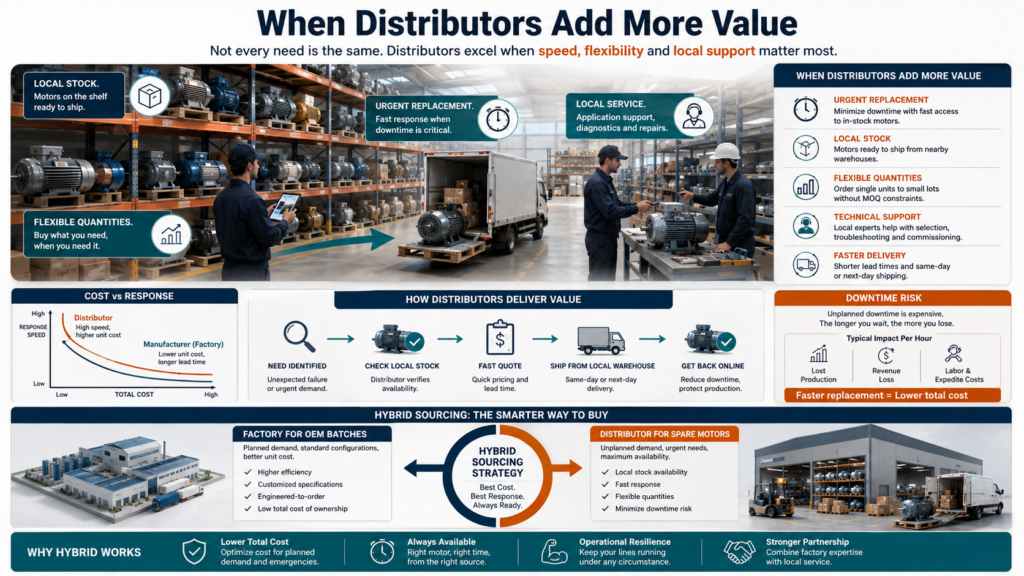
A distributor becomes valuable when delivery speed and purchasing flexibility are more important than customization. Local stock can help maintenance teams replace a failed motor without waiting for a new production cycle or international shipment.
An industrial motor distributor in the United States, for example, may stock commonly used NEMA motors, provide local technical support, and arrange faster replacement than an overseas factory. Although the unit price may be higher, reducing equipment downtime can make the distributor the more economical choice.
Distributors are particularly suitable for:
- One-off replacement motors
- Small quantities across several frame sizes
- Emergency maintenance orders
- Buyers who need motors, VFDs, and gearboxes together
- Customers requiring local credit terms
- Applications that do not need product modification
A capable distributor should still verify the application rather than matching only power and speed. Voltage, frequency, frame size, mounting position, shaft dimensions, starting torque, duty, IP rating, and VFD compatibility all affect whether the replacement will work correctly.
A comparison should include more than purchase price
The electric motor manufacturer vs distributor comparison should consider the entire purchasing process.
Purchasing factor | Manufacturer | Distributor |
Unit price | Often better for volume orders | Usually higher because stock and local service are included |
MOQ | May apply to customized products | Often supports single-unit orders |
Customization | Strong | Usually limited to available models |
Delivery speed | Depends on production and shipping | Fast when stock is available |
Engineering support | Direct access to product engineers | Application support varies by distributor |
Brand selection | Usually limited to the factory’s products | May offer several brands |
Quality traceability | Direct production and test records | Depends on access to the original factory |
Local service | May be limited in overseas markets | Usually more convenient |
Product consistency | Can be controlled through agreements | Depends on stock source and brand continuity |
A manufacturer may offer a lower quoted price but require a larger order, while a distributor may reduce inventory pressure by supplying smaller quantities. Buyers should therefore compare landed cost, carrying cost, downtime risk, engineering time, and warranty response together.
OEM projects need direct engineering involvement
When comparing an electric motor manufacturer vs distributor for OEM production, direct access to engineering information is often decisive. The selected motor must fit the machine mechanically, electrically, and thermally, while remaining consistent across future production batches.
An OEM motor supplier for Southeast Asian equipment builders may need to accommodate high humidity, regional voltage variations, special mounting arrangements, and export packaging. These requirements should be confirmed through drawings, approved samples, and a technical agreement.
OEM buyers should request:
- Complete dimensional drawings
- Performance and torque data
- Efficiency and temperature-rise information
- Vibration and noise limits
- Bearing and insulation specifications
- VFD operating limits when applicable
- Sample and pilot-batch approval
- Batch inspection records
- Written engineering-change control
From an engineering perspective, change control is especially important. Replacing bearings, electrical steel, winding materials, fans, or insulation without approval can affect temperature, efficiency, noise, and service life even when the model number remains unchanged.
Local service may justify a higher distributor price
For maintenance departments, the cost of a stopped pump, fan, conveyor, or compressor may be much greater than the price difference between two motors. In these cases, local availability and replacement speed can outweigh factory-direct savings.
An electric motor supplier for Middle East industrial projects may also provide local site inspections, spare motors, regional documentation, and faster warranty coordination. These services have a real value, particularly when the buyer does not have an experienced motor engineer.
Before selecting a distributor, confirm whether it is authorized by the original manufacturer, whether its stock is genuine and traceable, and who will handle warranty claims. Buyers should also check how long the distributor plans to support the selected series.
Some purchasing programs benefit from both channels
The electric motor manufacturer vs distributor choice does not always require selecting only one. Many industrial buyers use a combined sourcing model.
A company may purchase customized production motors directly from a factory while using a regional distributor for emergency replacements. The factory provides cost control and product consistency, while the distributor maintains nearby stock and supports urgent service requirements.
DAYOU MOTOR also works with distributors that serve local markets, allowing OEM production and regional replacement support to be planned as parts of the same supply strategy.
Ask these questions before selecting a supplier
A useful supplier review should include the following questions:
- Does the supplier manufacture the motor or resell another factory’s product?
- Can it provide complete technical drawings and performance data?
- What are the MOQ and normal production or delivery times?
- Can it support special voltages, shafts, flanges, and mounting arrangements?
- Which electrical and mechanical tests are performed before shipment?
- Can every motor or batch be traced to inspection records?
- Who handles warranty analysis, replacement, and freight costs?
- Will changes to materials or production processes require buyer approval?
- Are spare parts and replacement models available locally?
- What is included in the quoted price and delivery term?
Clear answers are more useful than a long product catalogue. They show whether the supplier can support the motor throughout its actual working life.
Frequently asked questions
Is buying directly from a motor factory always cheaper?
Not always. Factory pricing is often more competitive for large orders, but small buyers may face higher freight, MOQ, inventory, and customs costs. A distributor can offer a lower total cost when only a few motors are needed quickly.
Can a distributor provide customized motors?
Some authorized distributors can coordinate customization with the original factory, although development normally takes longer than purchasing a stocked model. Engineering responsibility should be clearly defined before approval.
Which supplier is better for replacement motors?
A distributor is usually more practical when a standard replacement is urgently required. For obsolete, unusual, or mechanically customized motors, direct factory engineering may be necessary.
Which supplier is better for OEM equipment?
A factory is generally better suited to repeat OEM production because it can control dimensions, performance, materials, testing, and engineering changes. Local distributor support can still be added for regional spare parts.
The right choice depends on the purchasing risk
The best answer to electric motor manufacturer vs distributor depends on what the buyer is trying to protect. OEMs usually prioritize customization, consistency, technical control, and volume pricing, while maintenance buyers often value stock availability, flexible quantities, and local service.
As both a manufacturer and international motor supplier, DAYOU MOTOR supports customized OEM production, standard industrial motor orders, distributor cooperation, and technical selection. A well-planned sourcing strategy may use direct factory supply for regular demand and distributor stock for urgent local replacements, achieving a practical balance between cost, reliability, and delivery speed.