


- Home
- Product
- GOST standard motor
- IEC standard motor
 MC Series single phase capacitor start asynchronous motor
- MY MYT series single phase capacitor running asynchronous motor
- ML Series single phase dual-capacitor asynchronous motor
- ME2 series three phase high efficiency aluminum housing motor(IE2)
- ME3 series three phase high efficiency aluminum housing motor(IE3)
- MS series three-phase aluminum housing motor (IE1)
- Y2 series three phase cast iron motor (IE1)
- YE2 series three phase high efficiency cast iron motor (IE2)
- YE3 series three phase high efficiency cast iron motor (IE3)
- Special application motor
- Rolling door motor
- Industry application
- News
- About us
- Contact us
- Certifications
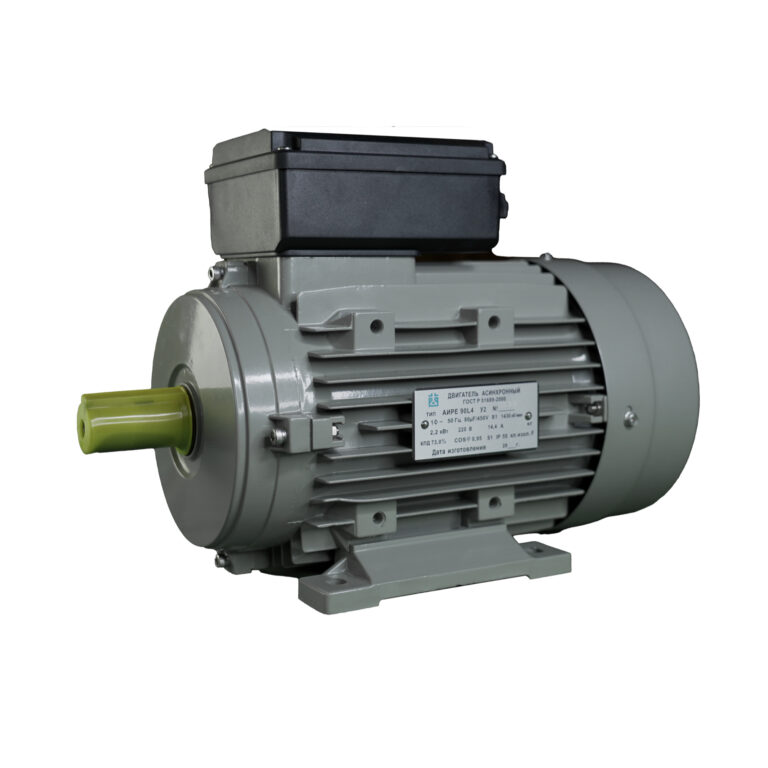
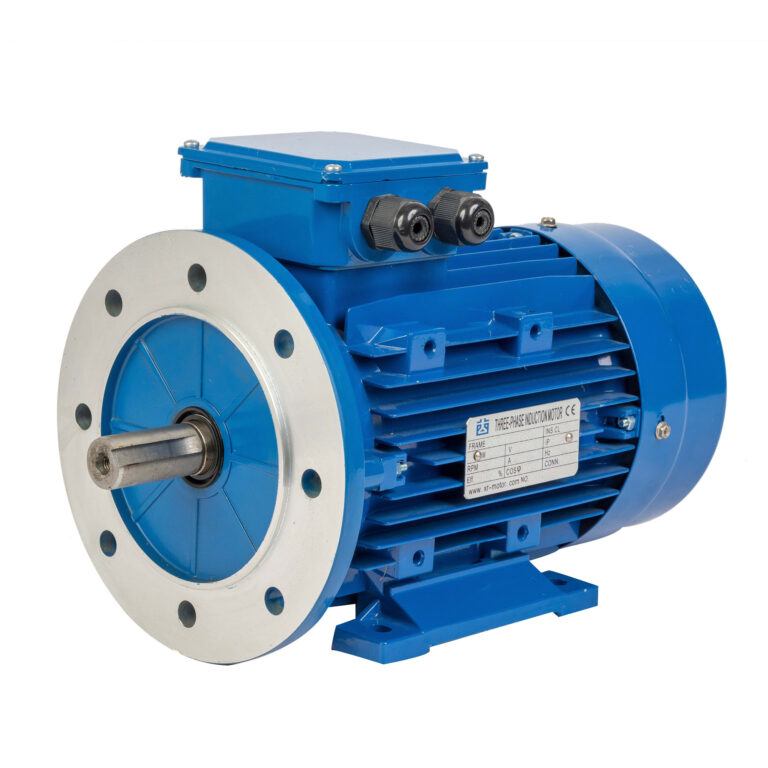
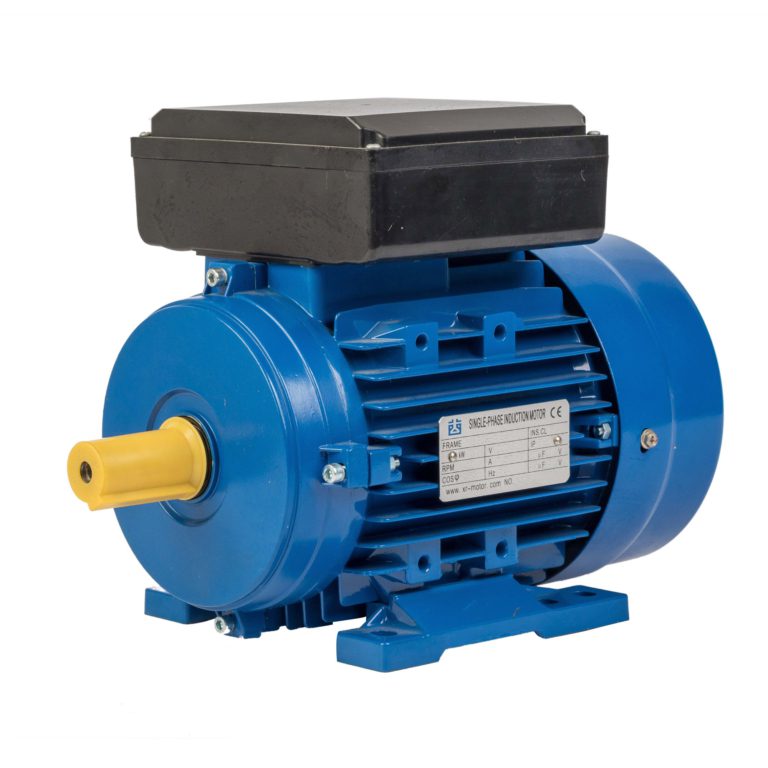
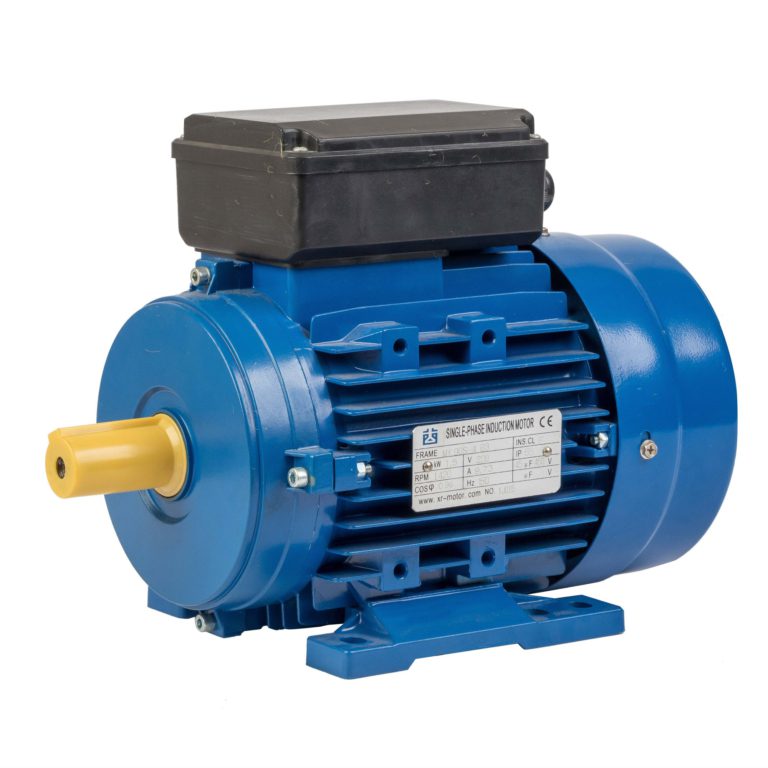
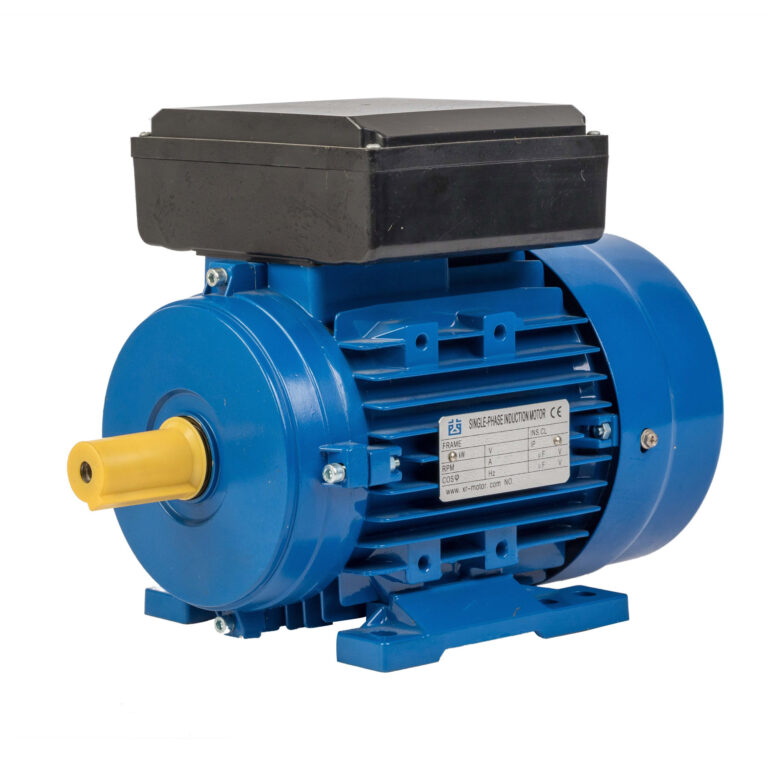
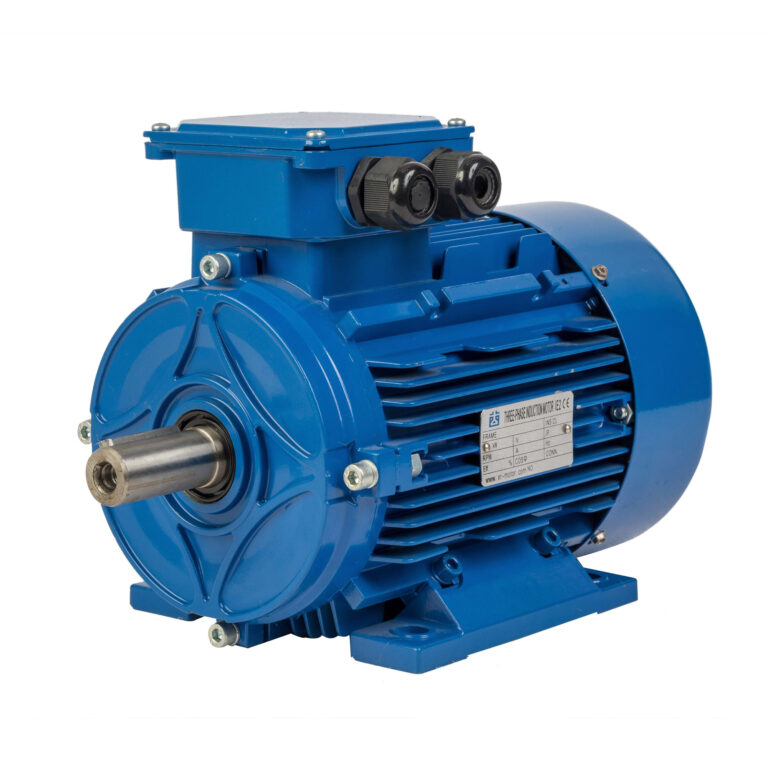
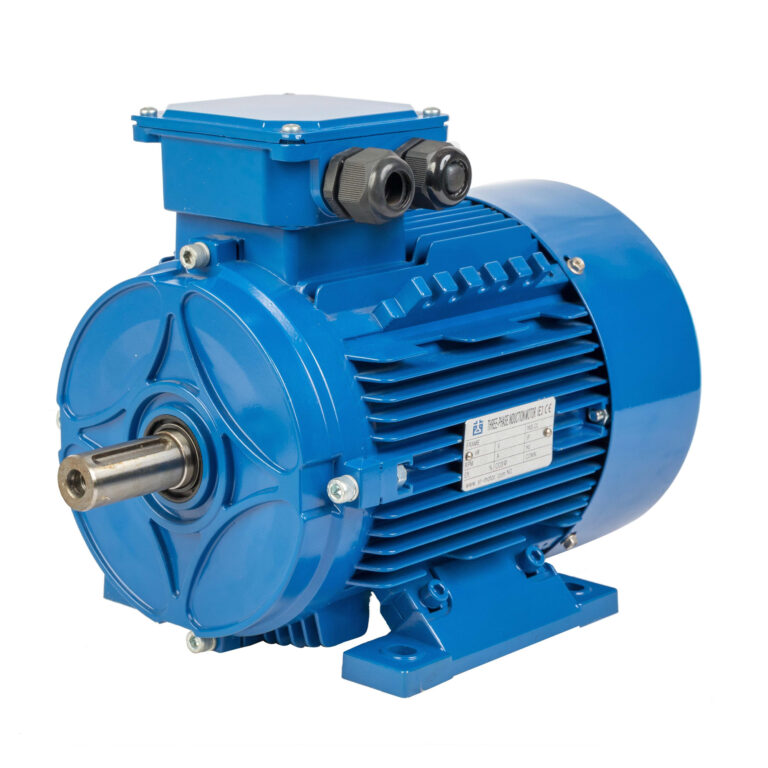
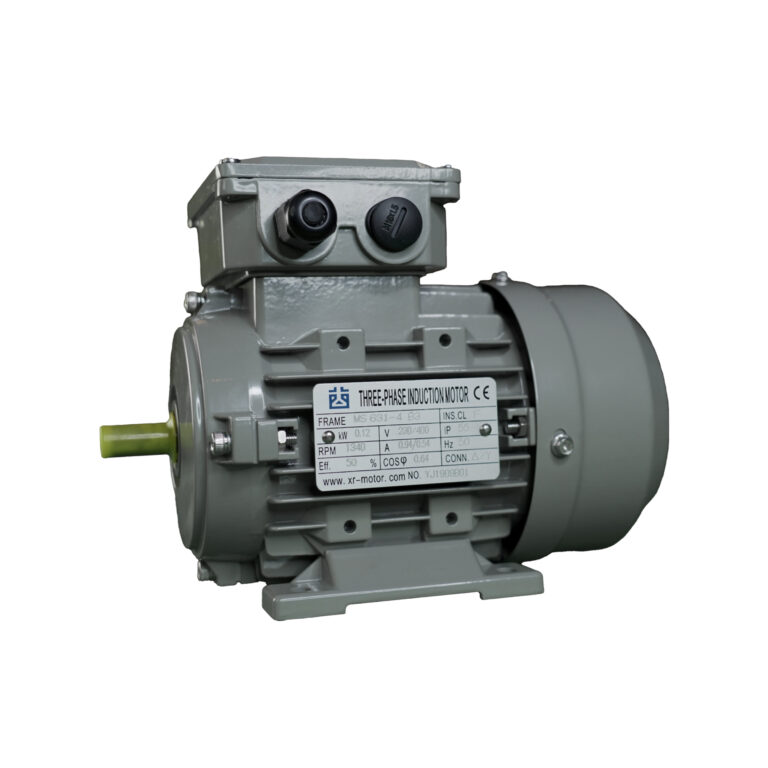
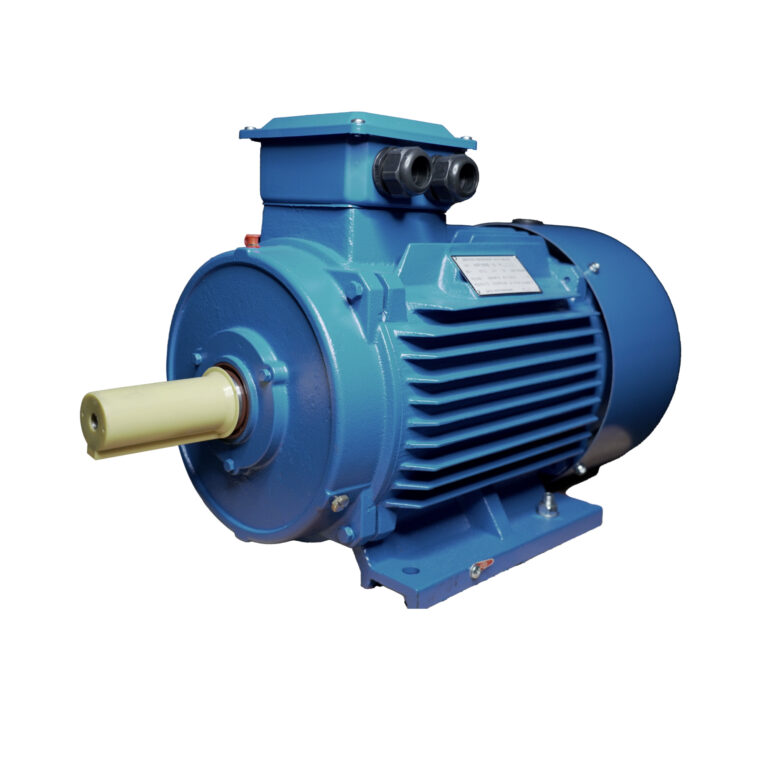
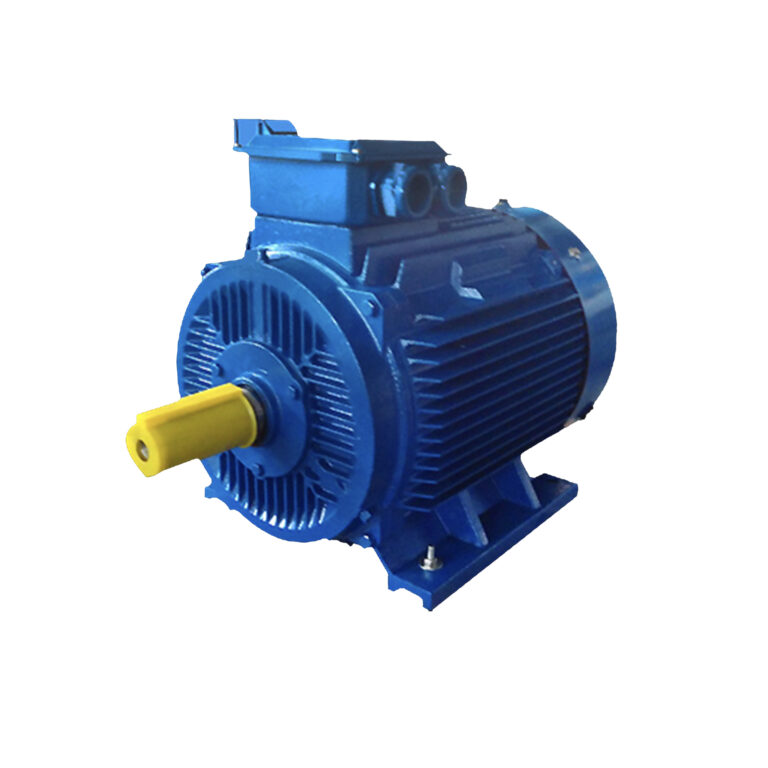
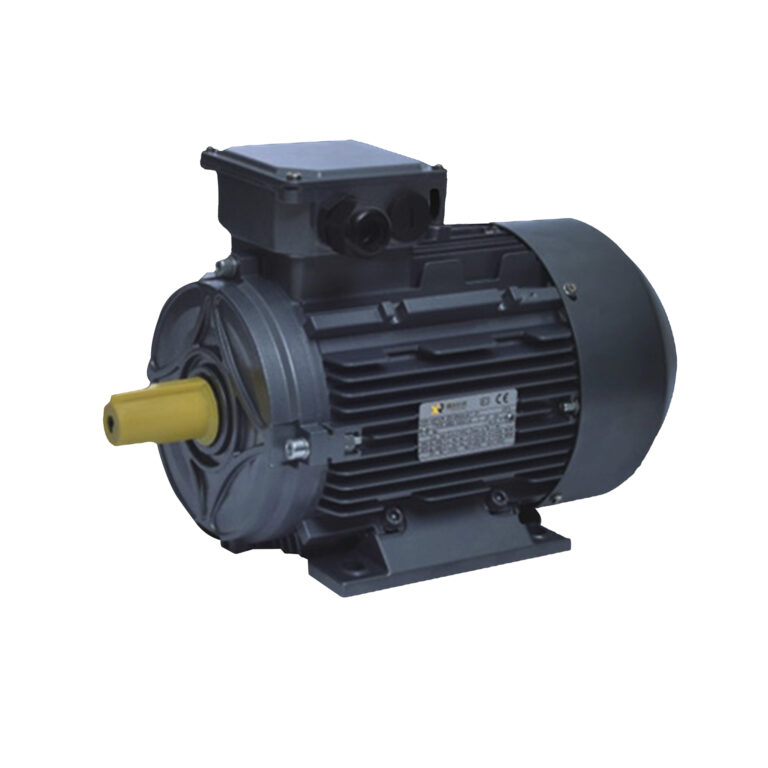
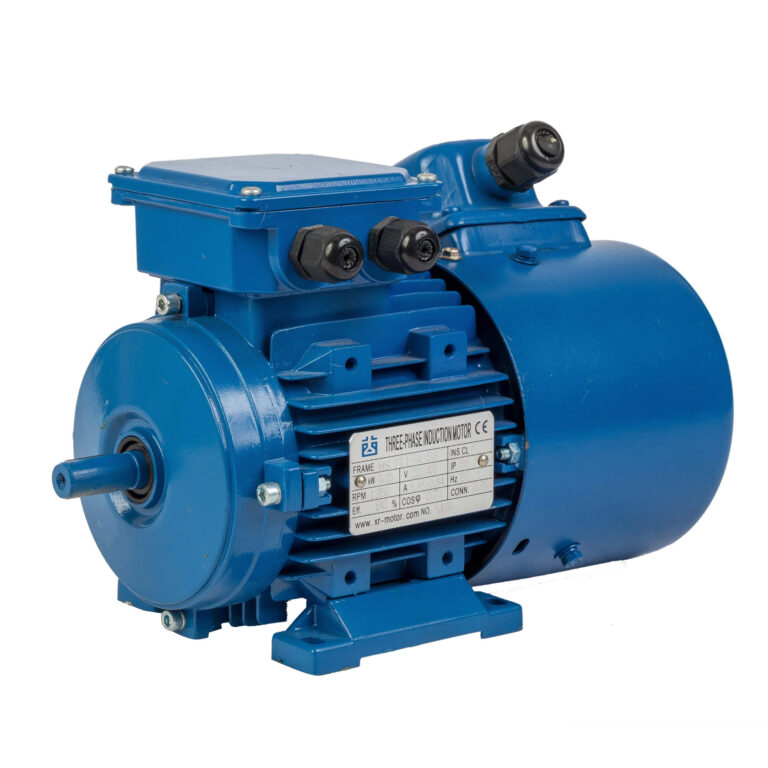
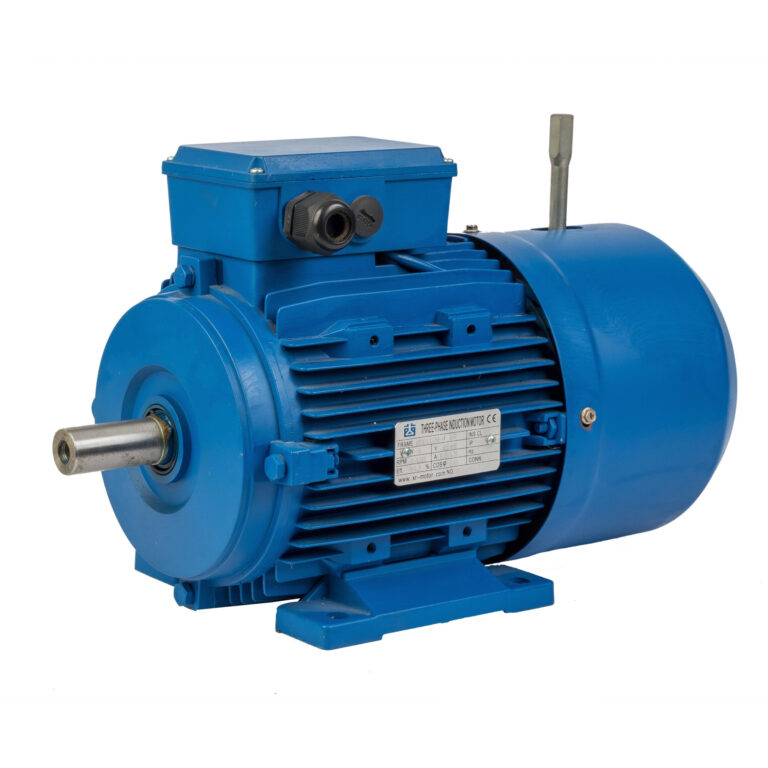
4 Pole Three Phase Motor 1500 RPM: Applications and Selection
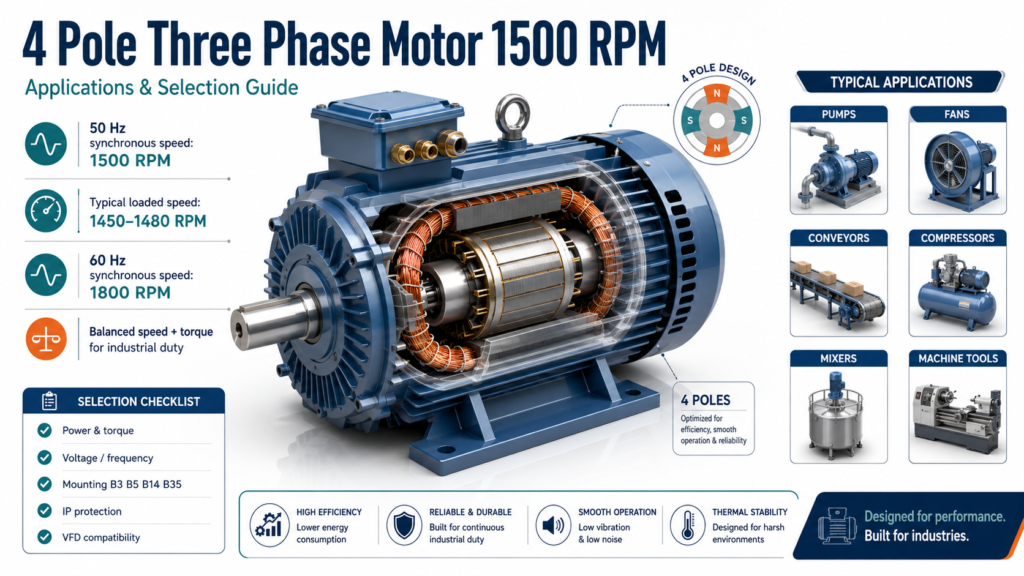
A 4 pole three phase motor is widely used in pumps, fans, conveyors, compressors, mixers, and general industrial equipment. It offers a good balance of speed, torque, size, and stability.
It is often called a 1500 rpm motor, but an induction motor normally runs below 1500 RPM because of slip. DAYOU MOTOR supplies four-pole motors for industrial, OEM, pump, ventilation, and customized applications.
Actual speed of a 1500 RPM motor
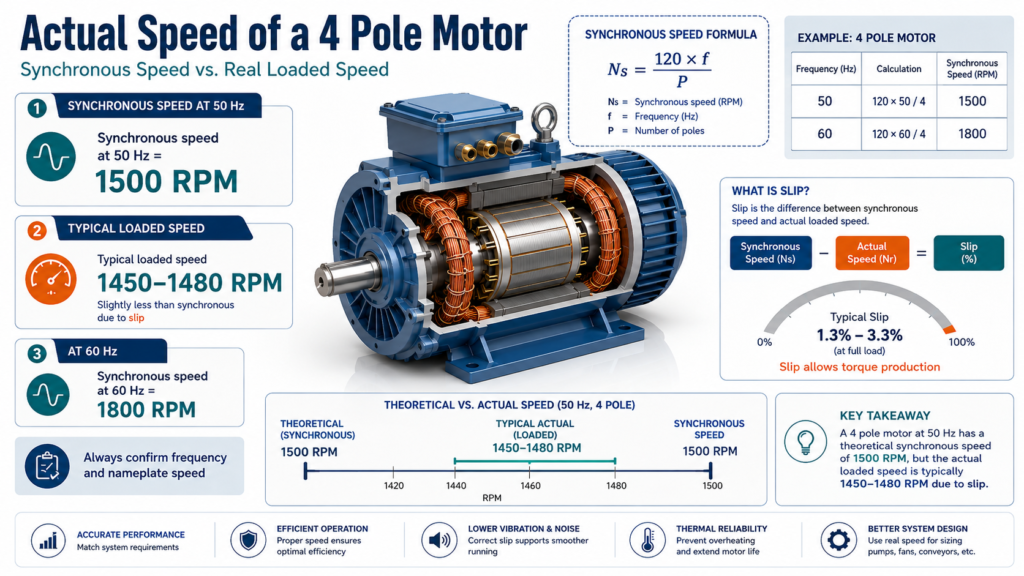
At 50 Hz, a four-pole motor has a synchronous speed of 1500 RPM. A standard induction motor usually runs at about 1450–1480 RPM under load, depending on its design and power.
At 60 Hz, the synchronous speed becomes 1800 RPM, with the actual shaft speed slightly lower. Always confirm the supply frequency and nameplate speed before selecting a motor.
If exact speed control is required, use a VFD, encoder-based control, synchronous motor, or servo motor.
Common applications
Application | Main selection factors |
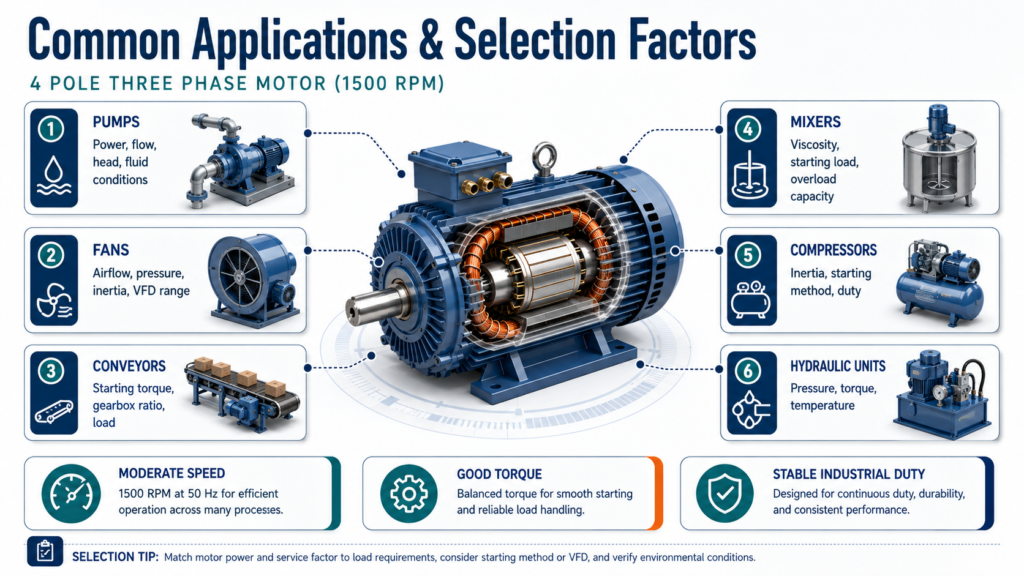
Pumps | Power, flow, head, fluid conditions |
Fans | Airflow, pressure, inertia, VFD range |
Conveyors | Starting torque, gearbox ratio, load |
Mixers | Viscosity, starting load, overload capacity |
Compressors | Inertia, starting method, duty |
Machine tools | Speed, vibration, mounting, braking |
Hydraulic units | Pressure, torque, temperature |
Four-pole motors are often preferred for pumps and fans because their moderate speed can reduce noise, bearing stress, and wear. Conveyors and mixers may require higher starting torque, especially under loaded conditions.
Power and torque selection
Motor size should be based on the driven equipment’s shaft power, torque, load variation, and transmission efficiency.
For example, a 7.5 kW motor running at 1460 RPM produces approximately 49.1 N·m of rated torque. However, this does not confirm that it can start the machine. Starting torque, inertia, acceleration time, voltage drop, and starting method must also be checked.
Oversizing can reduce efficiency and power factor, while undersizing may cause overheating and repeated trips.
Electrical and mechanical requirements
Before ordering, confirm:
- Rated power and actual speed
- Voltage, frequency, and star/delta connection
- Duty cycle and starts per hour
- Mounting type: B3, B5, B14, or B35
- Shaft, flange, keyway, and bolt dimensions
- IP protection and environmental conditions
- Efficiency class and applicable standards
- VFD operating range, if used
A motor with the correct power may still be unsuitable if its shaft or mounting dimensions do not match the machine.
VFD operation
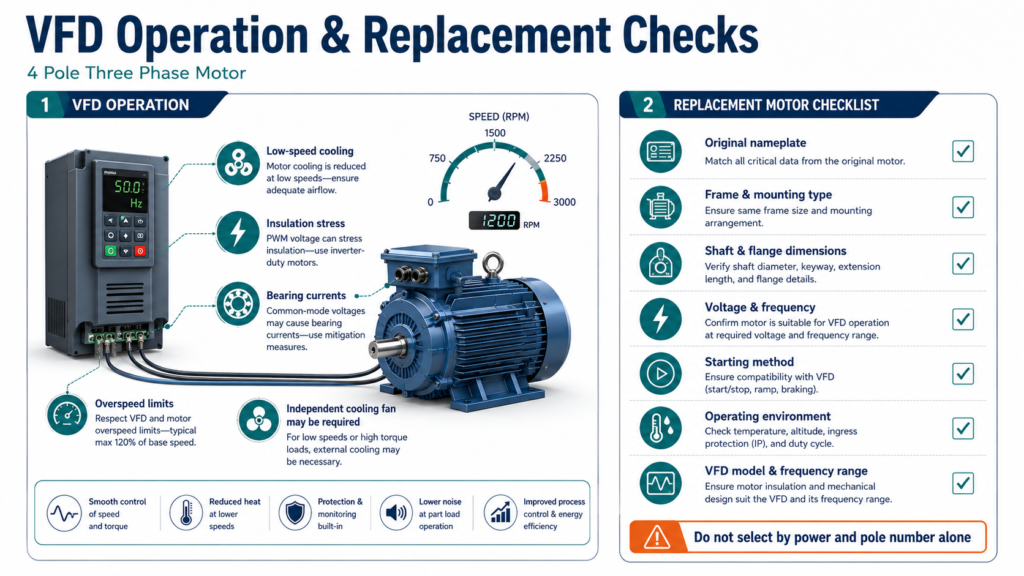
A four-pole motor can often be used with a VFD, but low-speed cooling, insulation stress, bearing currents, and overspeed limits must be considered.
At low frequency, the standard cooling fan may provide insufficient airflow. Continuous low-speed operation may require an independent cooling fan. Operation above base frequency must also remain within the motor and machine’s safe speed limits.
For demanding variable-speed applications, an inverter-duty motor is usually recommended.
Replacement motor checks
Do not select a replacement by power and pole number alone. Check:
- Original nameplate
- Frame and mounting type
- Shaft and flange dimensions
- Voltage and frequency
- Starting method
- Operating environment
- VFD model and frequency range
A nameplate photo and dimensional drawing can prevent installation problems.
Frequently asked questions
What is the actual speed of a 1500 RPM motor?
At 50 Hz, 1500 RPM is the synchronous speed. A typical induction motor runs at about 1450–1480 RPM under load.
Can a four-pole motor run at 60 Hz?
Yes, if the voltage, winding, cooling, speed, and driven equipment are suitable. Its synchronous speed will be 1800 RPM.
Is a four-pole motor better than a two-pole motor?
Not always. Four-pole motors provide lower speed and higher torque, while two-pole motors suit higher-speed applications.
Can a standard motor be used with a VFD?
Often, but low-speed operation, long cables, high frequency, cooling, and bearing protection must be evaluated.
Conclusion
The right 4 pole three phase motor must match the load, starting conditions, power supply, mounting, duty, and environment. Treat 1500 RPM as the synchronous speed, not a guaranteed shaft speed.
DAYOU MOTOR supplies standard and customized four-pole motors for pumps, fans, conveyors, compressors, mixers, gearboxes, and OEM equipment.