


- Home
- Product
- GOST standard motor
- IEC standard motor
 MC Series single phase capacitor start asynchronous motor
- MY MYT series single phase capacitor running asynchronous motor
- ML Series single phase dual-capacitor asynchronous motor
- ME2 series three phase high efficiency aluminum housing motor(IE2)
- ME3 series three phase high efficiency aluminum housing motor(IE3)
- MS series three-phase aluminum housing motor (IE1)
- Y2 series three phase cast iron motor (IE1)
- YE2 series three phase high efficiency cast iron motor (IE2)
- YE3 series three phase high efficiency cast iron motor (IE3)
- Special application motor
- Rolling door motor
- Industry application
- News
- About us
- Contact us
- Certifications
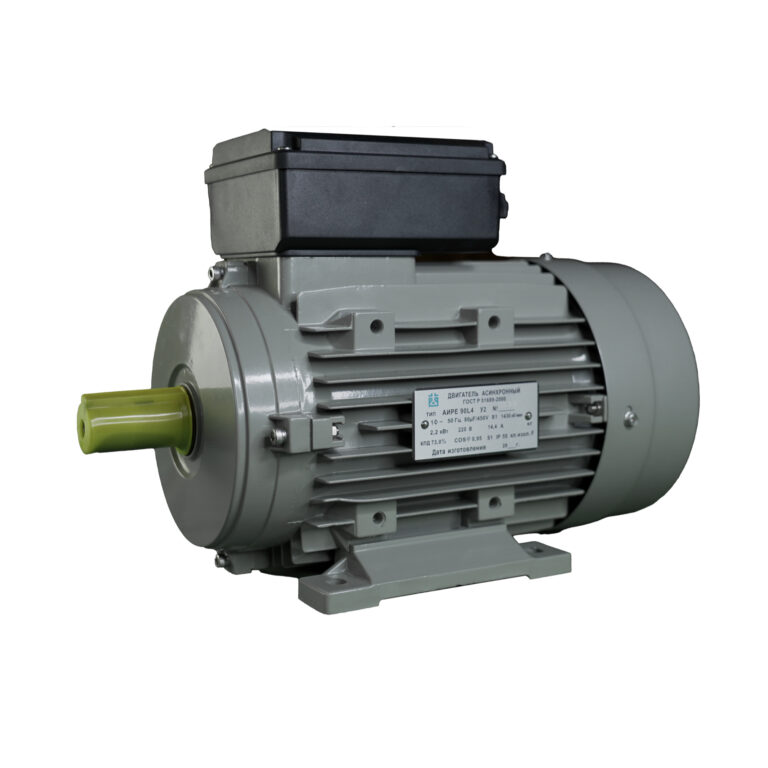
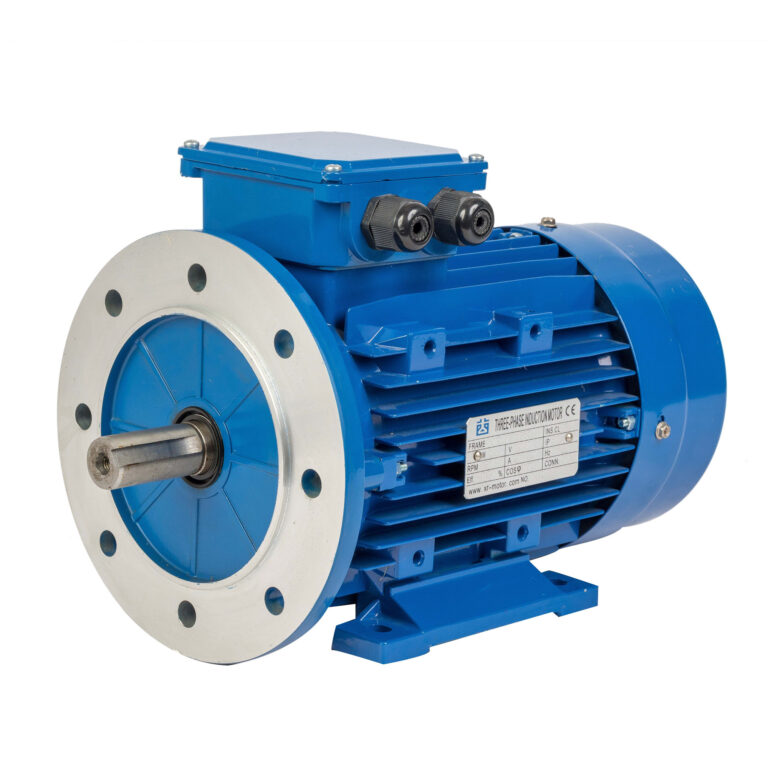
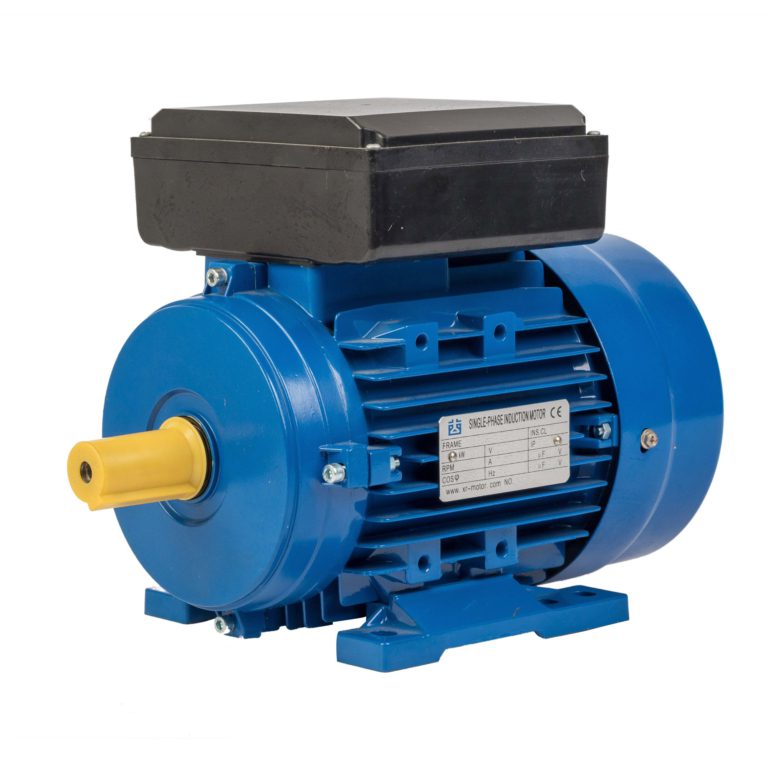
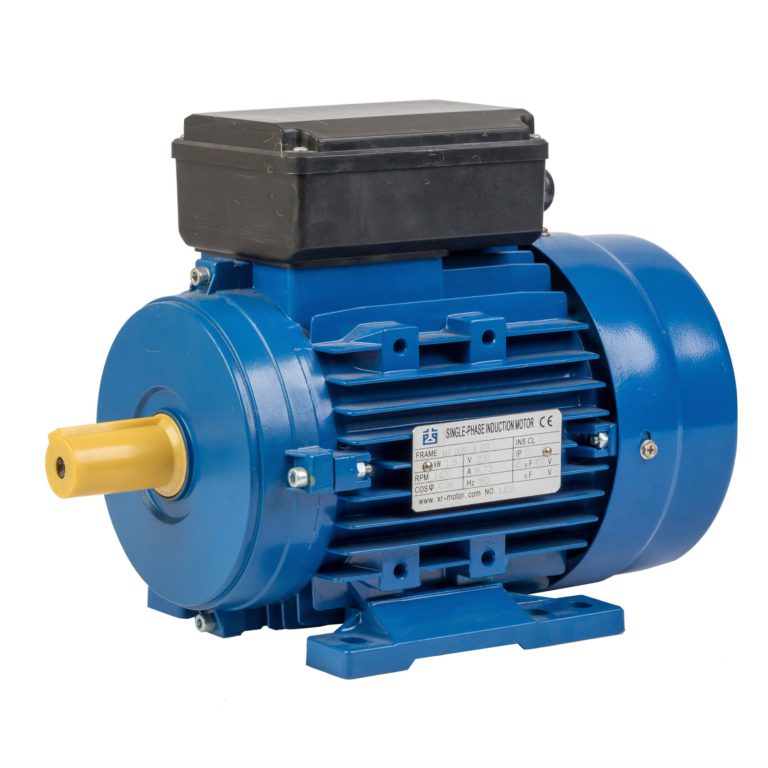
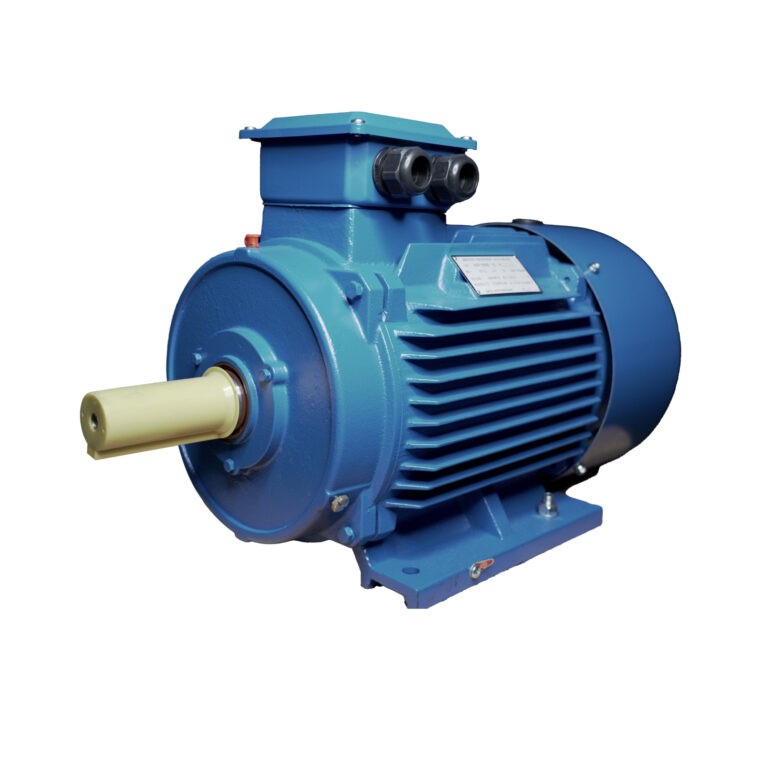
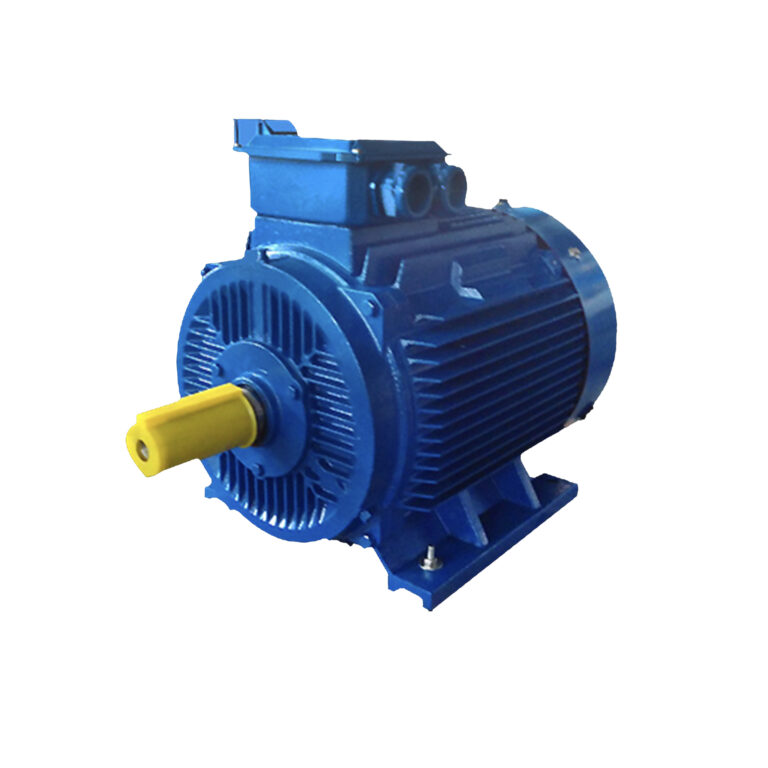
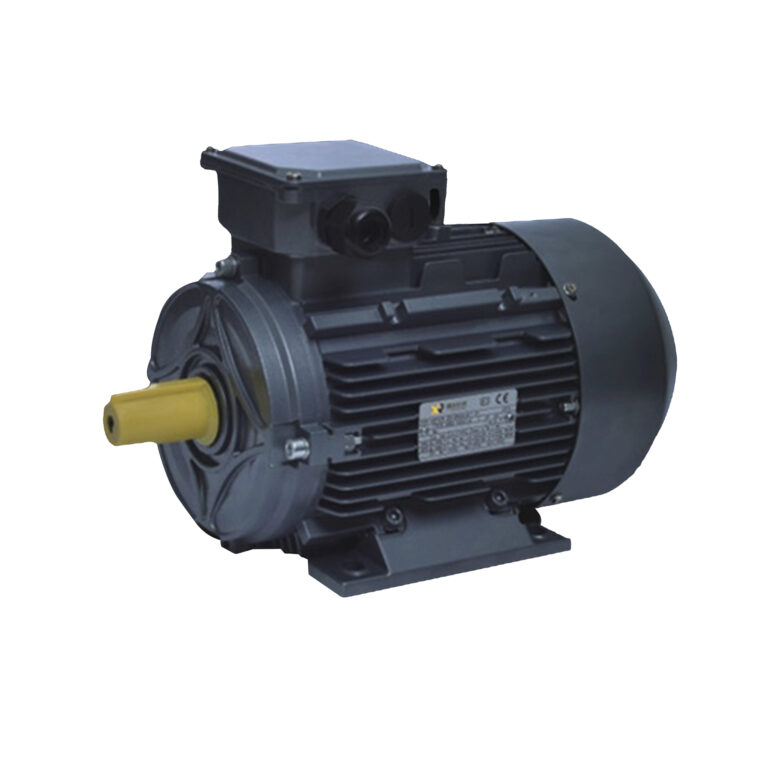
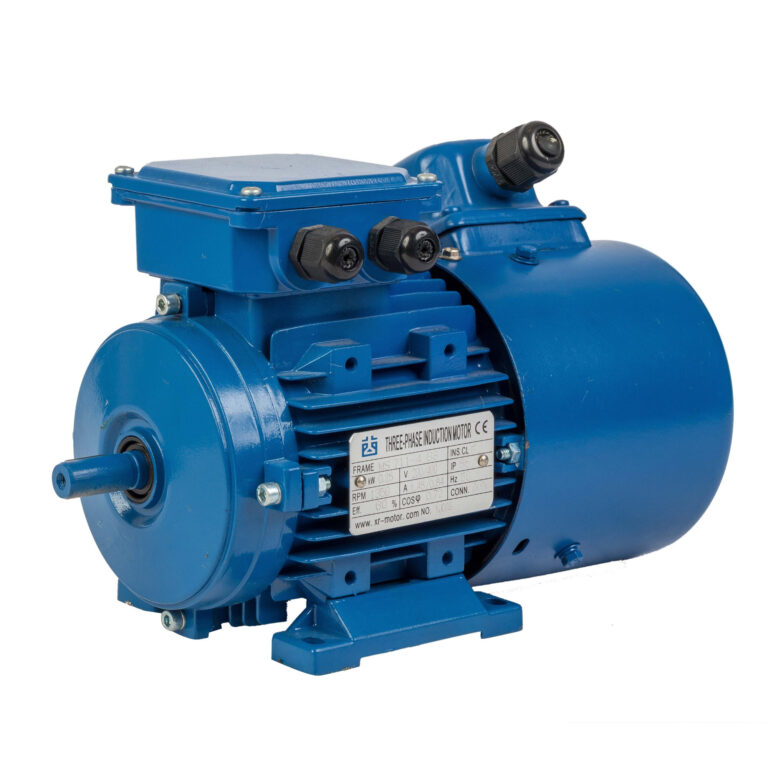
Squirrel Cage Motor vs Slip Ring Motor: Which One Is Better for Industrial Use?
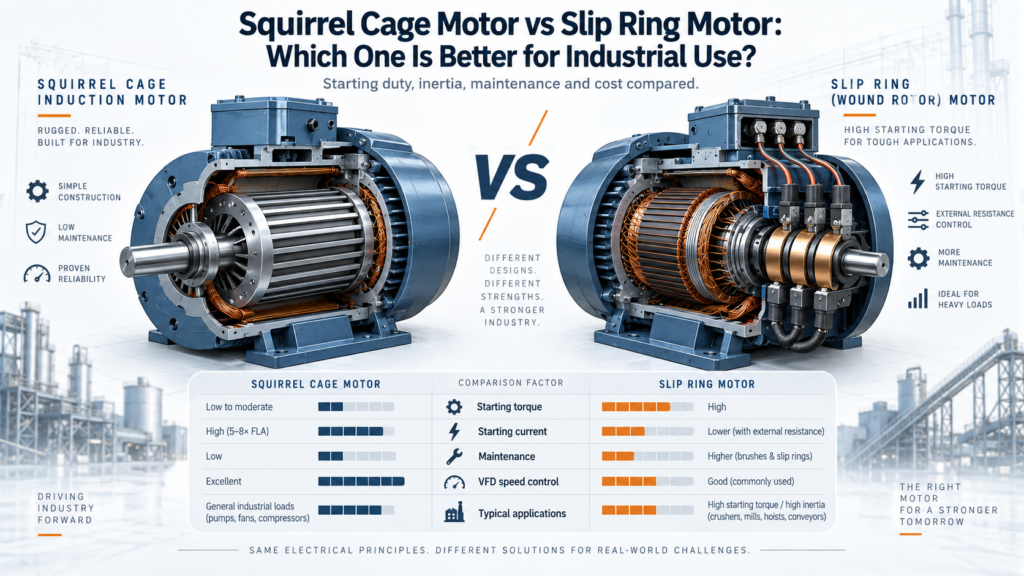
Choosing between these two induction motor designs depends mainly on starting conditions, load inertia, speed control requirements, maintenance capacity, and project cost. Cage motors suit most general industrial equipment, while wound rotor designs remain valuable for certain heavy-starting applications.
The squirrel cage motor vs slip ring motor decision should therefore be based on the complete load profile rather than rated power alone. DAYOU MOTOR supplies industrial motors for pumps, fans, compressors, conveyors, crushers, mills, and OEM machinery.
The rotor design creates the main difference
Understanding squirrel cage motor vs slip ring motor selection begins with the rotor.
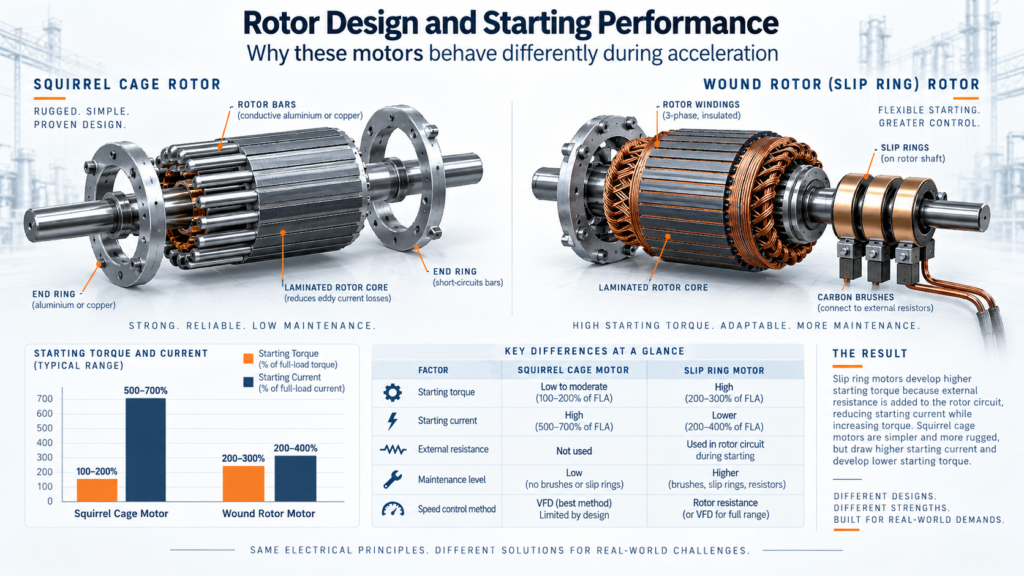
A cage rotor contains aluminum or copper bars that are permanently short-circuited by end rings. It has no brushes or external electrical connections, which gives the motor a simple and durable structure.
A slip ring design, also called a wound rotor induction motor, has insulated three-phase windings in the rotor. These windings connect to external resistors or starting equipment through slip rings and brushes.
External rotor resistance allows starting torque and current to be adjusted during acceleration. Once the motor reaches operating speed, the resistance is normally reduced or bypassed according to the starter design.
Performance differs most during starting
A practical squirrel cage motor vs slip ring motor comparison shows that the greatest differences appear during starting, low-speed operation, and maintenance.
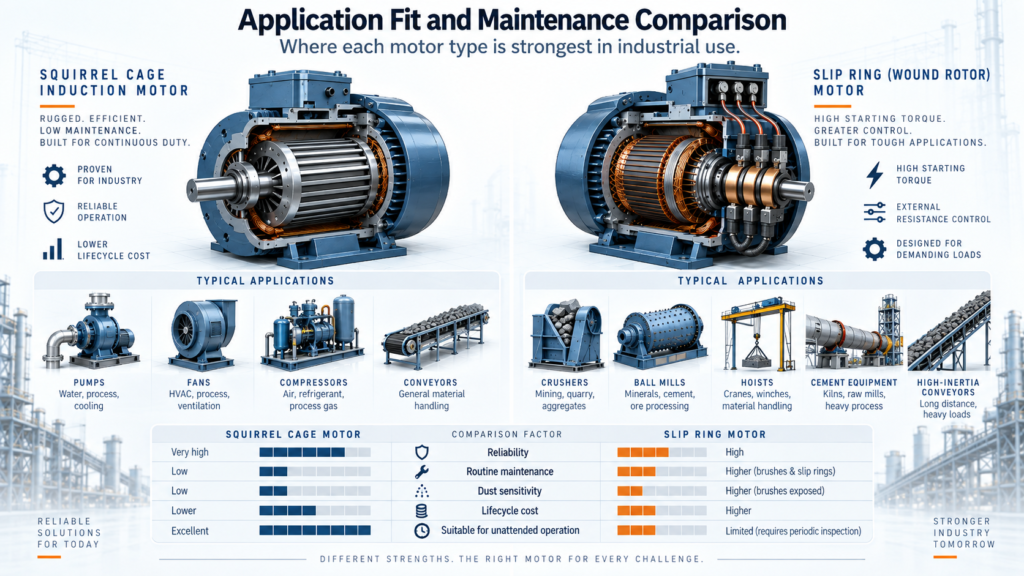
A squirrel cage motor uses conductive bars and end rings in the rotor. Its starting torque is moderate in general-purpose designs, while its direct-on-line starting current can be high. Speed control is efficient when combined with a VFD. Because it has no brushes, it offers high reliability, low maintenance, and generally lower purchase and lifecycle costs. Typical applications include pumps, fans, compressors, and general machinery.
A slip ring motor uses a three-phase wound rotor. It can provide high and adjustable starting torque, while external rotor resistance helps limit starting current. Speed control through rotor resistance is possible but less efficient because excess slip power is converted into heat. The design requires regular inspection of brushes, slip rings, resistors, and related components, so its initial and lifecycle costs are normally higher. Typical applications include mills, crushers, hoists, and high-inertia equipment.
High-torque cage rotor designs are also available, so starting performance should be checked from the actual torque-current curve rather than assumed from the rotor type alone.
Cage motors suit most general industrial equipment
A cage motor is usually the preferred choice when the equipment operates continuously, starts under a manageable load, or uses a VFD for acceleration and speed control.
Its simple rotor offers several advantages:
- No brushes or slip rings
- Low routine maintenance
- Strong mechanical construction
- Good reliability in continuous operation
- Broad availability
- Competitive purchase cost
- Efficient VFD speed control
- Easier installation and servicing
A squirrel cage motor supplier in China for European pump OEMs should review the pump curve, operating point, duty, voltage, efficiency, mounting, and VFD range before recommending a model.
Cage motors are commonly used for pumps, fans, blowers, compressors, machine tools, HVAC systems, mixers, and ordinary conveyors. They are also generally more suitable for dusty, humid, corrosive, or unattended sites because the rotor has no brush-and-ring assembly.
Slip ring designs support demanding starts
A slip ring motor may be more suitable when the driven equipment has very high inertia, starts fully loaded, or needs strong torque without excessive line current.
Typical applications include:
- Ball mills
- Crushers
- Mine hoists
- Large cranes
- Cement mills
- Loaded conveyors
- Large fans with high inertia
- Heavy reciprocating equipment
A slip ring motor for African mining equipment may be selected where crushers, hoists, or mills must accelerate large loads while the electrical supply cannot tolerate high inrush current.
A wound rotor motor for Middle East cement plants may also be practical when the site already uses liquid resistance starters or another established rotor-resistance system.
The motor, starter, resistor, cables, and control sequence must be treated as one system. Incorrect resistance steps or acceleration timing can cause overheating, poor torque, excessive brush wear, or long starting periods.
A VFD changes the modern selection process
For most new projects, the squirrel cage motor vs slip ring motor choice should include a technical and commercial comparison with a VFD-driven cage motor.
A VFD can provide:
- Controlled starting current
- Smooth acceleration
- Adjustable starting torque
- Process speed control
- Reduced mechanical shock
- Energy savings on variable-torque loads
- Programmable acceleration and deceleration
A VFD squirrel cage motor for Southeast Asian conveyors can often handle frequent starts and changing production speeds without using brushes, slip rings, or external rotor resistors.
However, adding a VFD does not automatically solve every starting problem. The drive must supply the required current and torque throughout acceleration, while the motor must be checked for low-speed cooling, insulation stress, bearing currents, cable length, and maximum speed.
For extremely high-inertia loads, the required VFD and motor may become large or expensive. A wound rotor system can still be competitive when the existing plant, maintenance team, and electrical system are already designed around it.
Rotor resistance speed control has efficiency limits
External resistance can reduce the operating speed of a wound rotor design, but the slip power is converted into heat. This makes resistance-based speed control inefficient when used continuously.
Modern applications requiring regular speed adjustment usually favor a VFD. Rotor resistance is more commonly used to improve starting or support existing installations where replacing the complete drive system is not practical.
If a plant needs continuous low-speed operation, buyers should compare energy consumption, resistor heat, ventilation, control accuracy, and maintenance requirements before selecting the drive method.
Maintenance conditions can determine the better option
The squirrel cage motor vs slip ring motor cost comparison should include maintenance labor, spare parts, production downtime, and energy losses.
Cage motors mainly require normal bearing, cooling, insulation, and alignment checks. Wound rotor models need additional attention to:
- Brush wear
- Brush pressure
- Slip ring surface condition
- Carbon dust
- Rotor connections
- Starting resistors
- Brush lifting or short-circuiting devices
- Ventilation around the ring chamber
Poor brush contact can cause sparking, local overheating, unstable current, and damaged slip rings. Dusty or hazardous environments may also require specialized enclosures, cleaning procedures, and protection measures.
An industrial motor manufacturer in China for South American projects should discuss access to brushes, slip rings, resistors, and technical support before the equipment is approved.
Power and torque still require full calculation
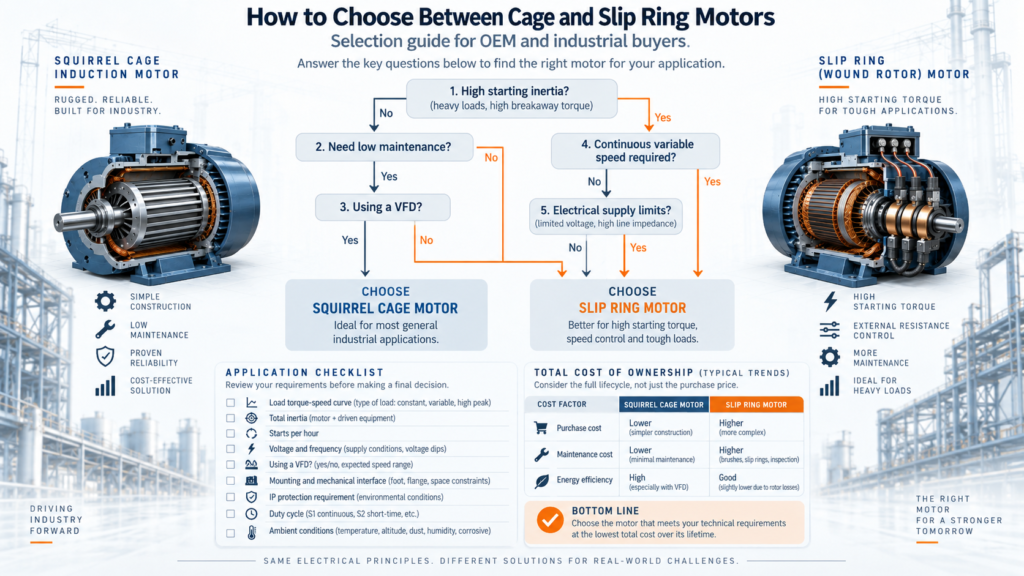
Whichever rotor design is selected, rated power is only the starting point. Buyers should provide:
- Load torque-speed curve
- Maximum and normal load
- Total system inertia
- Required acceleration time
- Starts per hour
- Motor speed and pole number
- Voltage, frequency, and permitted voltage drop
- Gear ratio and transmission efficiency
- Starting and control method
- Ambient temperature and altitude
- Mounting and shaft dimensions
- IP protection and duty cycle
Frequent starting also creates thermal stress. A motor may provide enough torque for one start but overheat when the same start is repeated too often.
Frequently asked questions
Which design is more reliable?
The cage design is generally more reliable because it has no brushes or slip rings. Maintenance quality becomes more important with a wound rotor machine.
Which motor provides higher starting torque?
A wound rotor design can provide high and adjustable starting torque through external resistance. A cage design can also deliver high starting torque when its rotor and control system are designed for the load.
Can a VFD replace a slip ring system?
In many applications, yes, but the replacement must be verified against torque, current, inertia, acceleration time, cooling, and electrical supply limits. It is not a direct replacement in every project.
Which design is better for pumps and fans?
A cage motor is normally preferred because pumps and fans usually benefit from simple construction, low maintenance, and efficient VFD speed control.
Which design is suitable for ball mills and crushers?
Both may be possible. Wound rotor designs remain useful for very high-inertia or heavily loaded starts, while modern VFD-driven cage systems should also be evaluated.
Choose according to the starting duty
The answer to squirrel cage motor vs slip ring motor is straightforward for many projects: choose a cage design for general industrial duty, low maintenance, and efficient variable-speed control, while considering a wound rotor design for exceptionally difficult starts or existing resistance-based systems.
DAYOU MOTOR supplies cage and wound rotor motors with different powers, voltages, speeds, mounting arrangements, protection levels, and starting characteristics. Complete load, inertia, starting, and environmental data allow the motor and control system to be selected together.