


- Home
- Product
- GOST standard motor
- IEC standard motor
 MC Series single phase capacitor start asynchronous motor
- MY MYT series single phase capacitor running asynchronous motor
- ML Series single phase dual-capacitor asynchronous motor
- ME2 series three phase high efficiency aluminum housing motor(IE2)
- ME3 series three phase high efficiency aluminum housing motor(IE3)
- MS series three-phase aluminum housing motor (IE1)
- Y2 series three phase cast iron motor (IE1)
- YE2 series three phase high efficiency cast iron motor (IE2)
- YE3 series three phase high efficiency cast iron motor (IE3)
- Special application motor
- Rolling door motor
- Industry application
- News
- About us
- Contact us
- Certifications
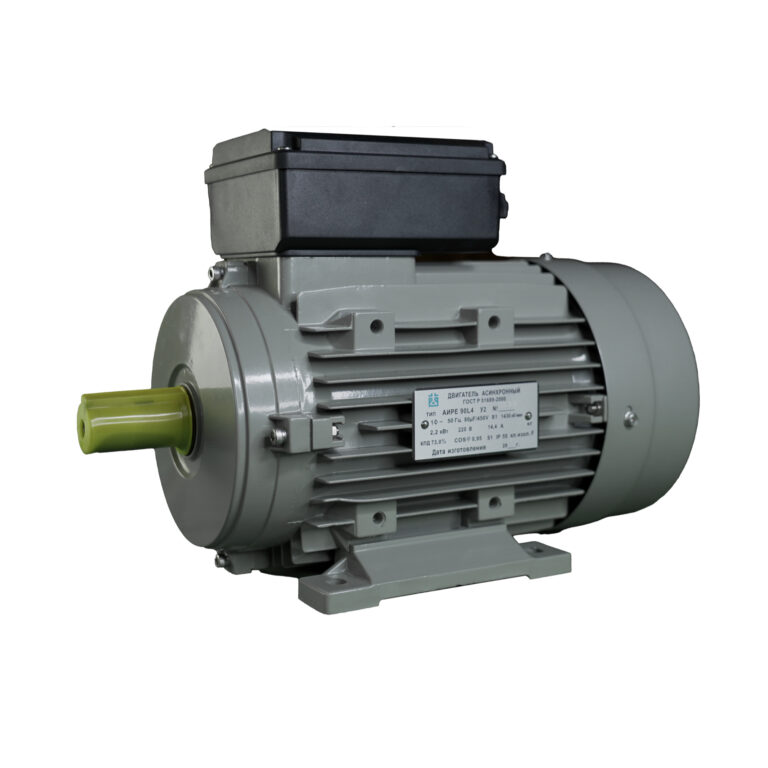
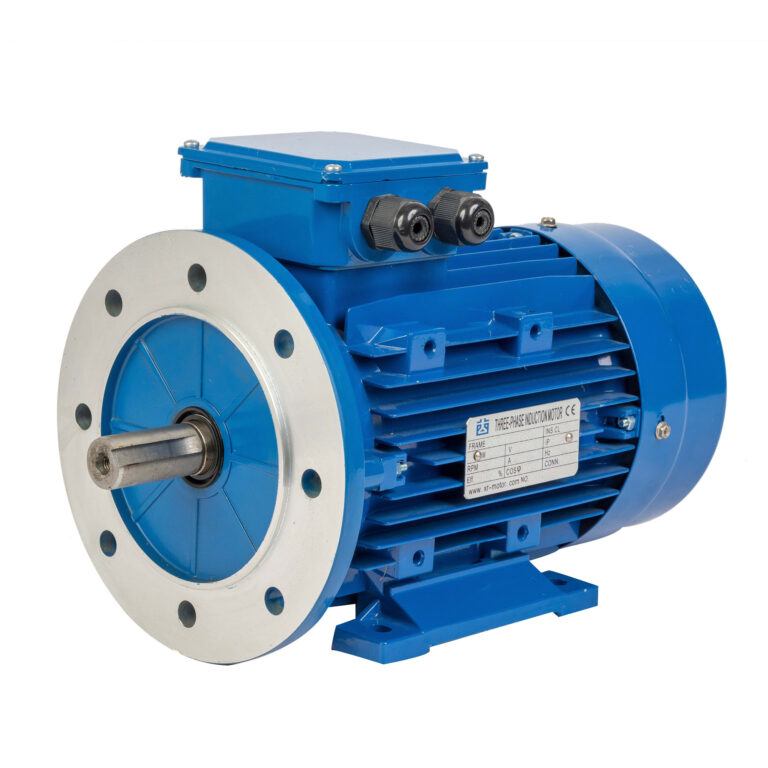
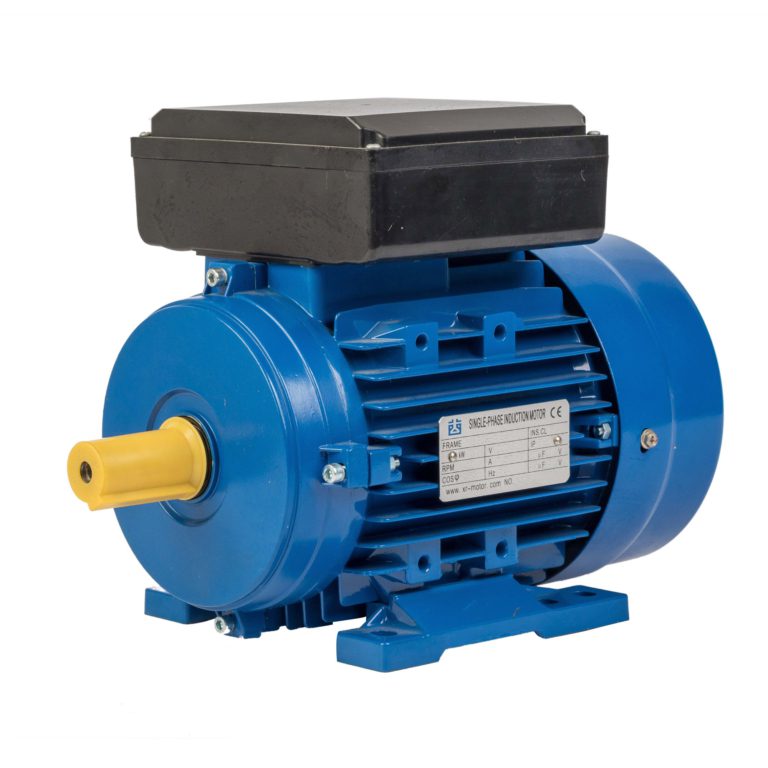
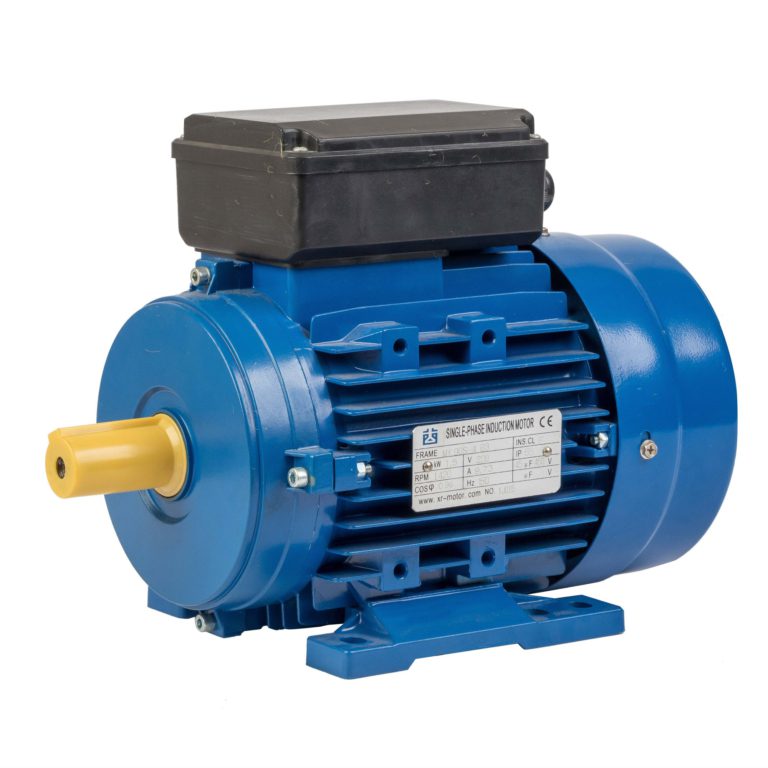
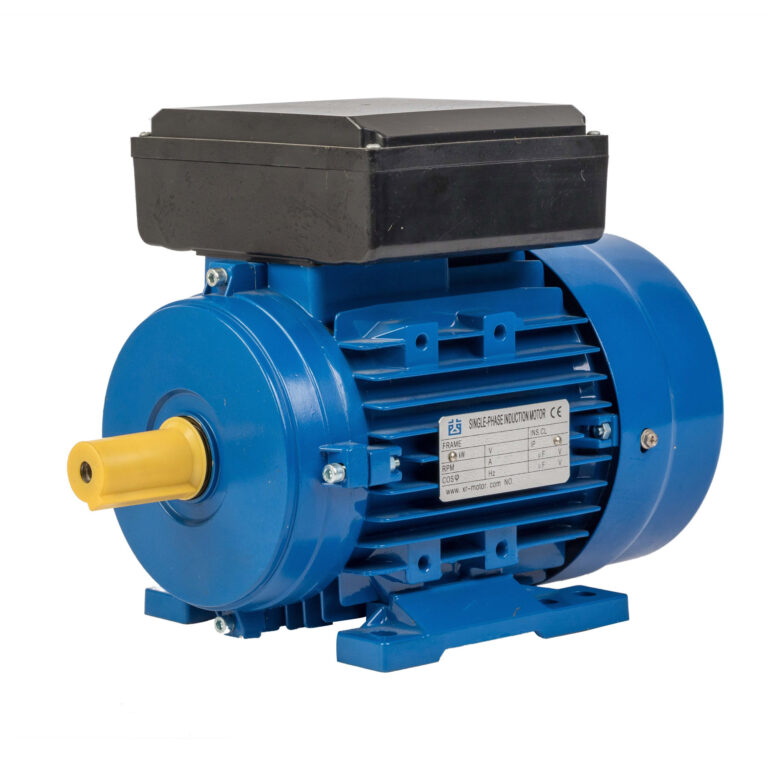
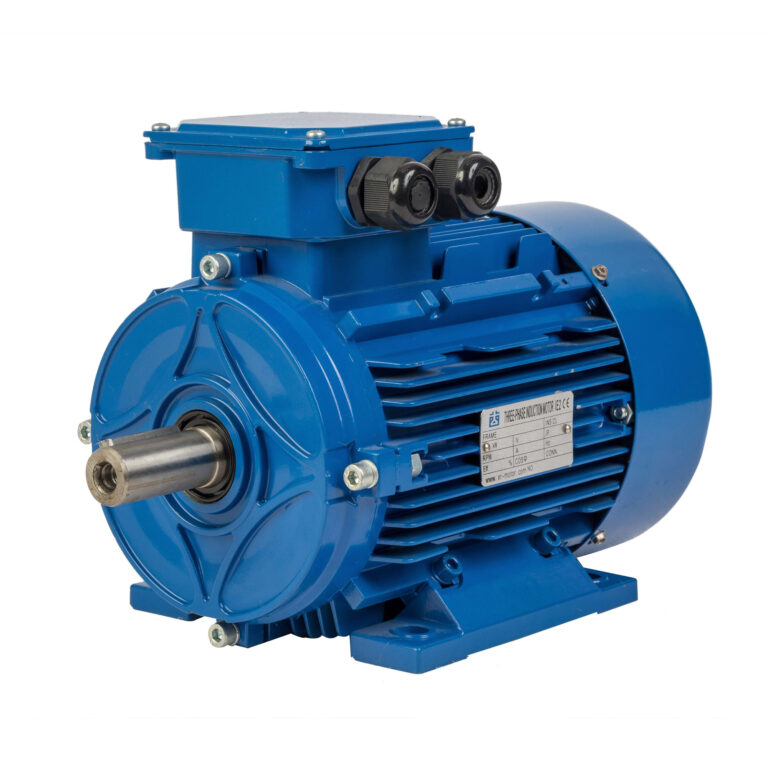
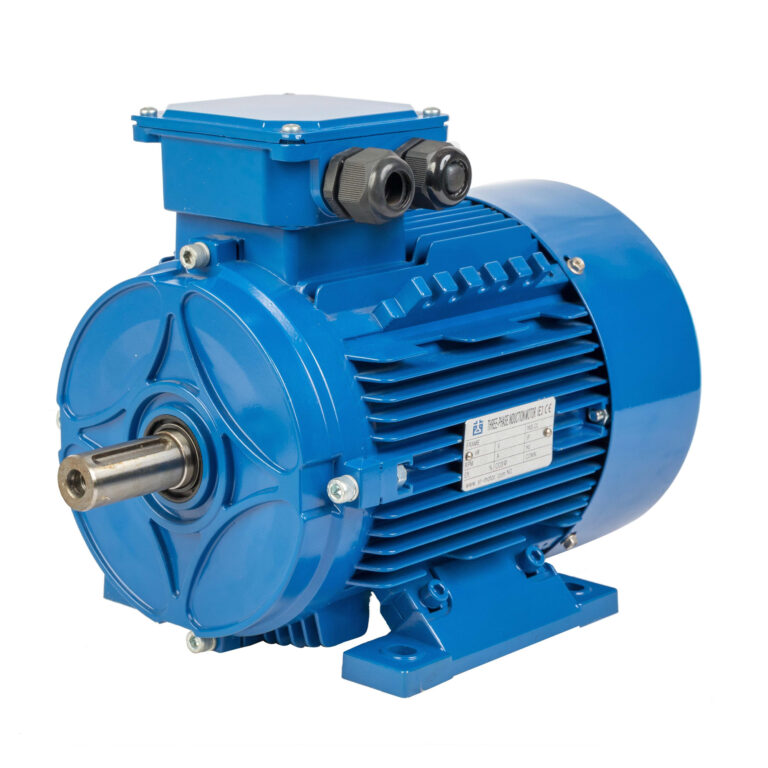
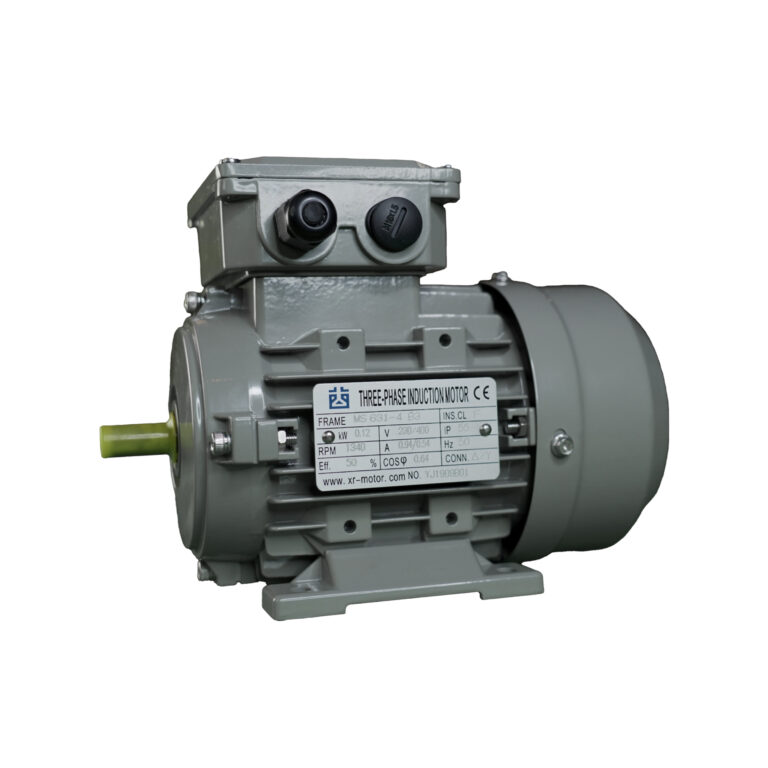
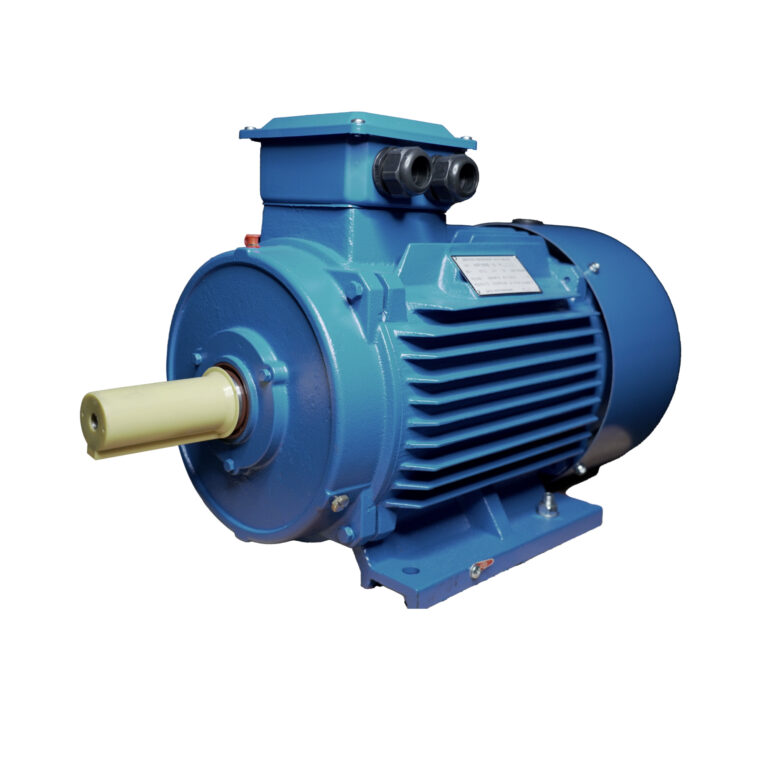
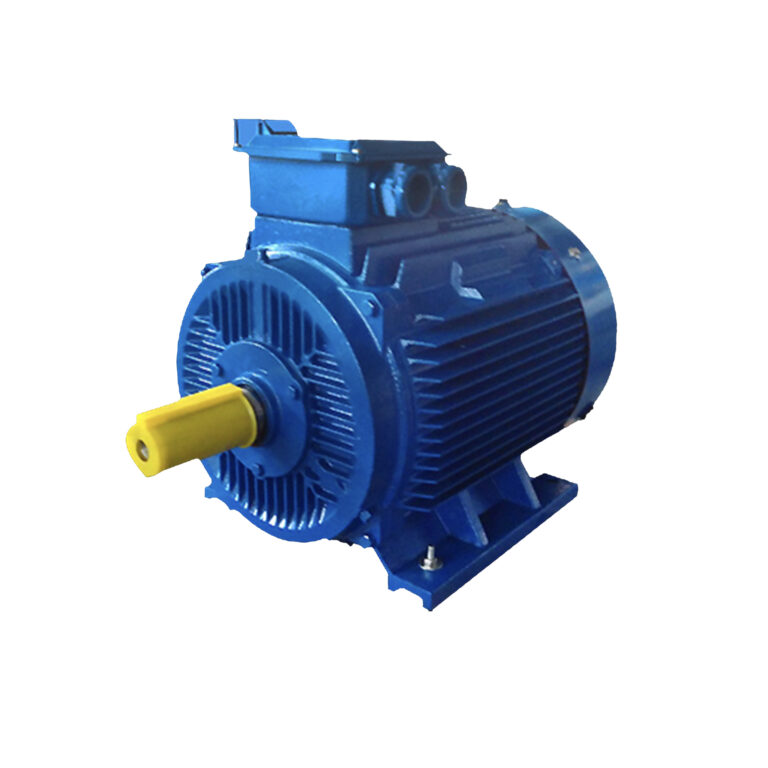
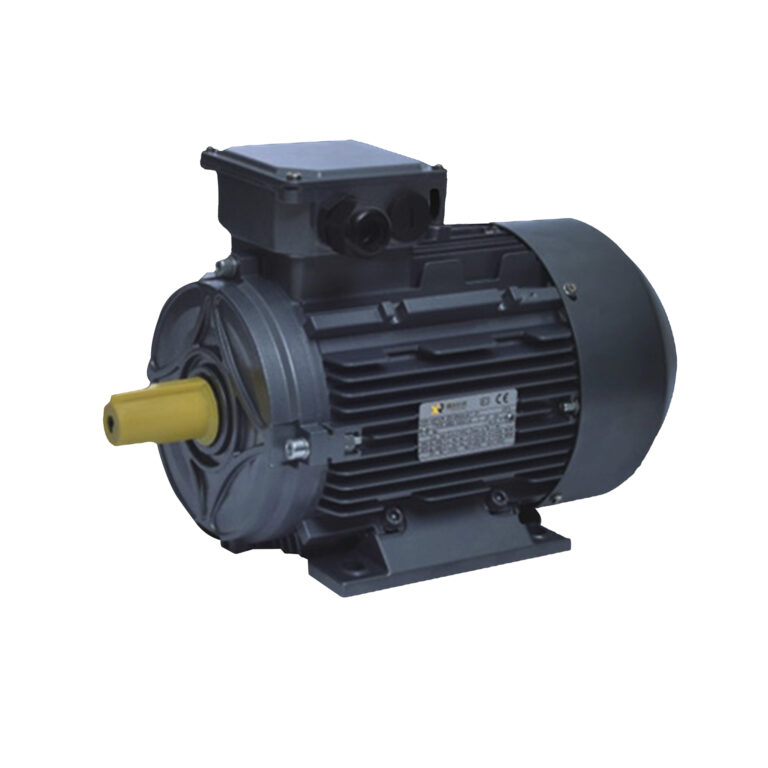
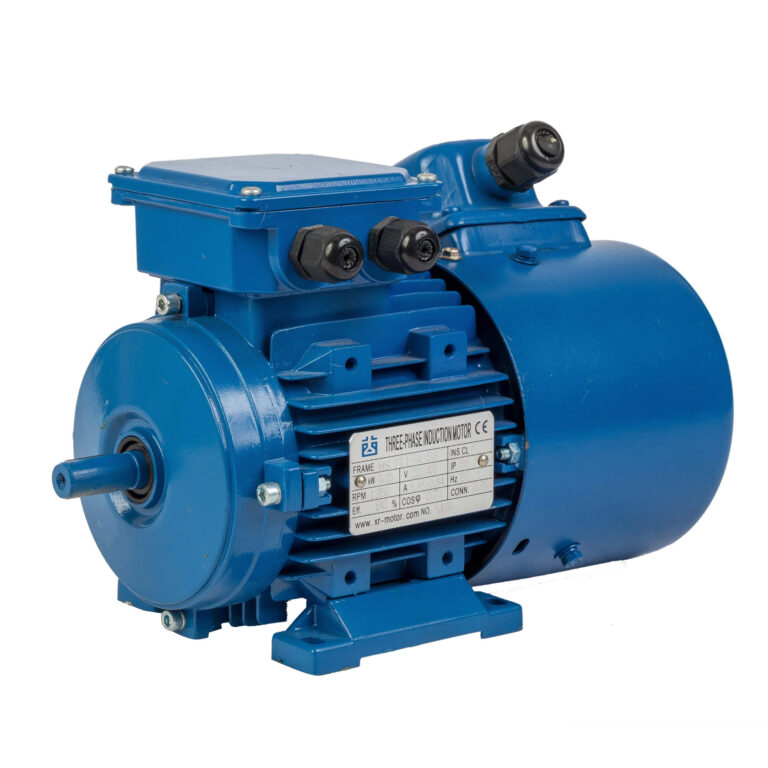
Three Phase Induction Motor for OEMs: What Buyers Should Check Before Ordering
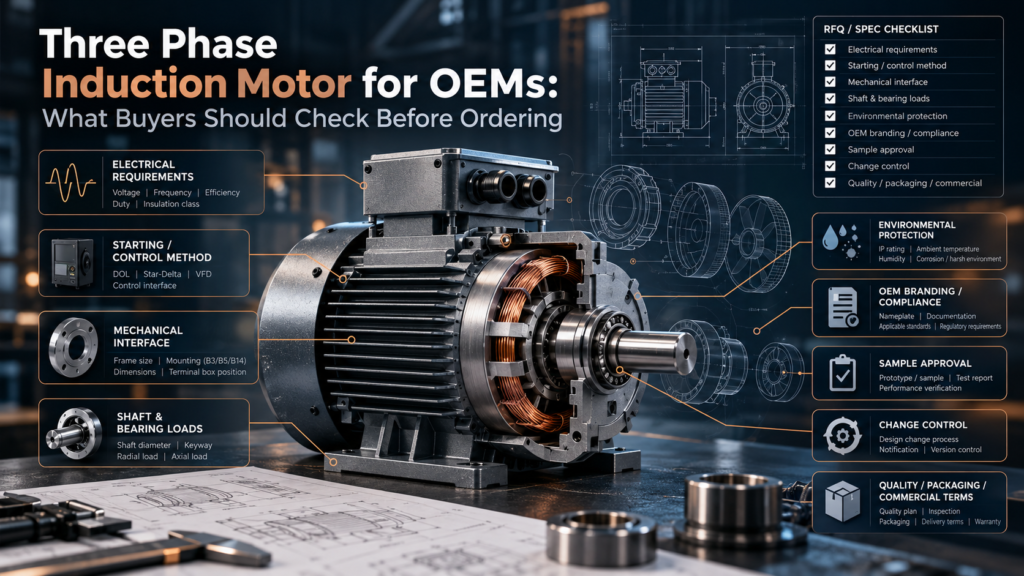
A three phase induction motor OEM project requires more than matching power and speed. The motor must fit the machine, start the load, suit the local power supply, withstand the environment, and remain consistent in production.
DAYOU MOTOR supplies standard and customized motors for pumps, fans, compressors, conveyors, and other industrial equipment.
Confirm electrical requirements
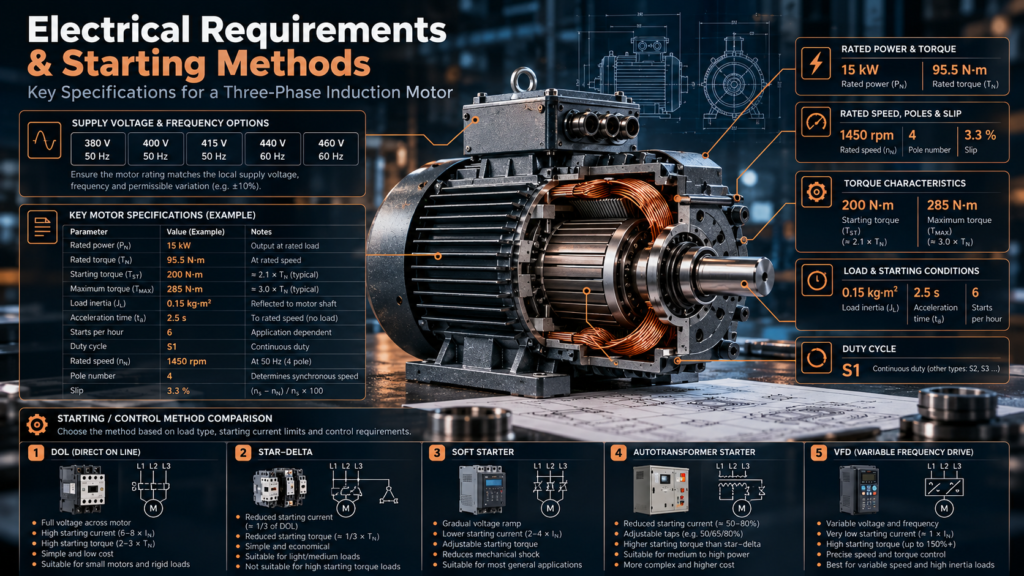
Define the destination voltage and frequency, such as 380 V/50 Hz, 400 V/50 Hz, 415 V/50 Hz, 440 V/60 Hz, or 460 V/60 Hz.
Specify:
- Rated power and torque
- Starting and maximum torque
- Load inertia
- Acceleration time
- Starts per hour
- Duty cycle
- Permitted voltage drop
- Rated speed and pole number
At 50 Hz, a four-pole motor has a synchronous speed of 1500 RPM, but its actual rated speed is lower because of slip. Use the nameplate speed for gearbox, pump, and fan calculations.
Also state whether the motor uses S1 continuous duty, S2 short-time duty, S3 intermittent duty, or another cycle. Frequent starting, high ambient temperature, and poor ventilation may require additional thermal margin.
Define the starting and control method
State whether the motor will use direct-on-line, star-delta, soft starter, autotransformer, or VFD control.
For VFD applications, confirm:
- Frequency range
- Torque range
- Acceleration and deceleration time
- Cable length
- Braking requirements
- Low-speed cooling
- Encoder or closed-loop control
- Bearing-current protection
Star-delta starting reduces both current and starting torque, so the winding and terminal arrangement must be suitable.
Freeze the mechanical interface
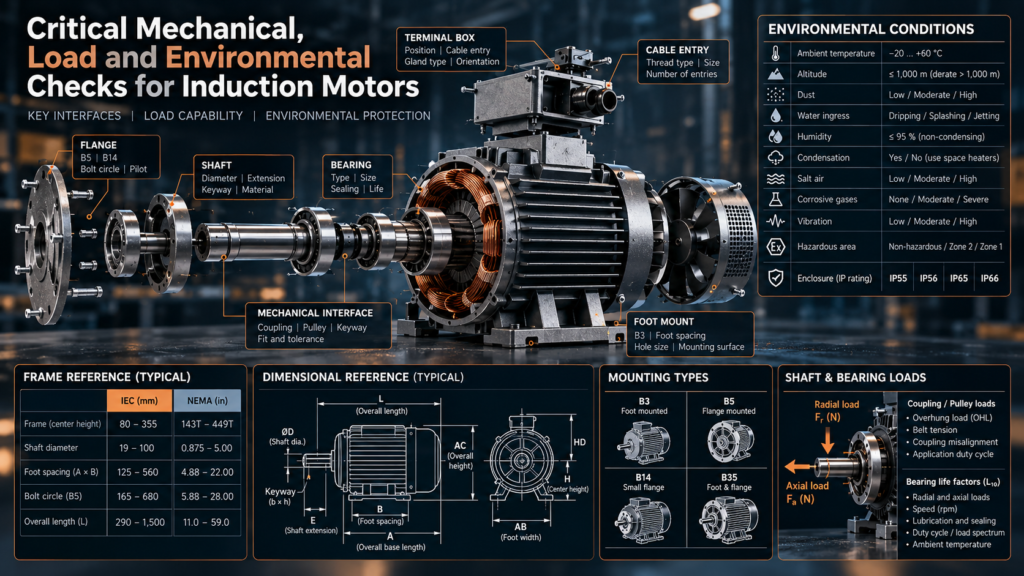
Mechanical dimensions must match the equipment precisely. Confirm the IEC or NEMA frame, shaft diameter and extension, keyway, flange, bolt circle, foot spacing, center height, overall length, terminal-box position, cable entry, rotation, and mounting direction.
B3 usually means foot mounting, B5 a large flange, B14 a smaller flange, and B35 feet plus a large flange. These codes do not automatically define vertical installation.
An IEC motor for Middle East pump OEMs may also require a special flange, shaft tolerance, terminal-box position, or corrosion-resistant finish.
Check shaft and bearing loads
Provide details of the coupling, pulley, belt tension, radial load, axial thrust, driven-equipment weight, speed, and mounting direction.
Bearing life depends on load, clearance, lubrication, sealing, fit, and temperature, not only on the bearing brand.
Match protection to the environment
Describe the actual installation conditions, including ambient temperature, altitude, dust, water, humidity, condensation, salt air, corrosive gases, vibration, and hazardous-area classification.
IP55 suits many industrial applications, while demanding environments may require IP56, IP65, or IP66. A higher IP rating alone does not guarantee corrosion resistance or washdown suitability.
Hazardous areas require a properly certified explosion-protected motor. A standard high-IP motor is not a substitute.
Confirm OEM branding and compliance
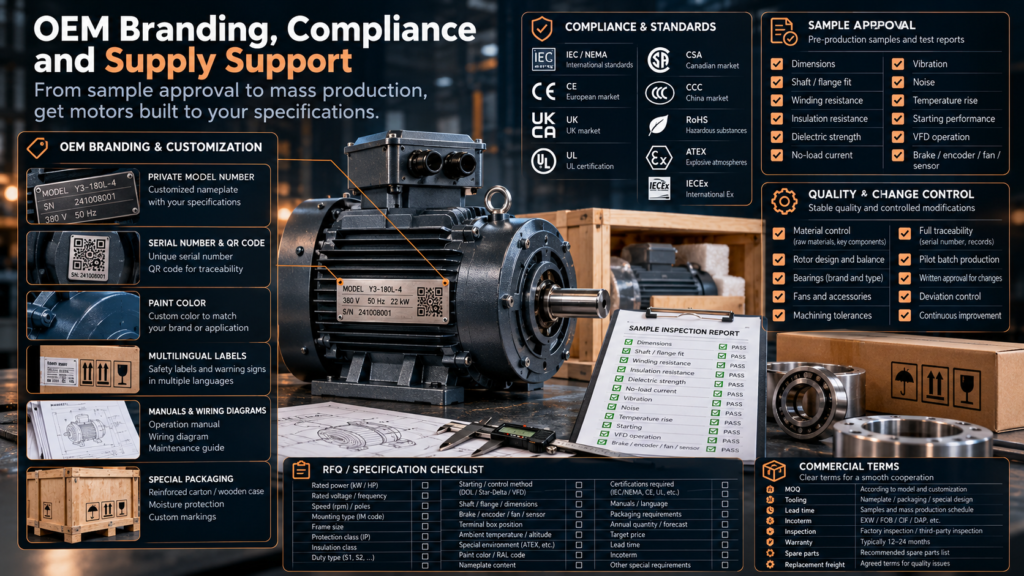
OEM requirements may include a private model number, logo, customized nameplate, serial number, QR code, paint color, multilingual labels, manuals, wiring diagrams, and special packaging.
Before production, confirm applicable IEC or NEMA standards, efficiency rules, CE, UKCA, UL, CSA, CCC, RoHS, ATEX, IECEx, and local labeling requirements. Requirements vary by country, motor type, and power range.
Approve the sample on the actual machine
Sample approval should cover dimensions, shaft and flange fit, rotation, winding resistance, insulation, dielectric strength, no-load current, vibration, noise, temperature rise, starting, VFD operation, and any brake, encoder, fan, or sensor.
Testing the sample on the actual machine helps confirm alignment, acceleration, temperature, vibration, noise, and control compatibility. A pilot batch is recommended before volume production.
Control materials and production changes
The quality agreement should control electrical steel, copper wire, insulation, rotor design, bearings, fans, shaft material, machining tolerances, paint, production location, and critical suppliers.
Any change should receive written approval. Material substitutions can affect efficiency, temperature, noise, vibration, and service life.
The supplier should also maintain batch records linking materials, production, testing, and shipment.
Review quality, packaging, and commercial terms
Audit incoming inspection, winding, impregnation, rotor production, machining, balancing, assembly, routine testing, calibration, nonconforming-product control, corrective action, and traceability.
Packaging should protect against moisture, rust, vibration, and rough handling. Confirm shaft protection, moisture barriers, desiccant, terminal-box covers, pallets or cases, lifting marks, and storage requirements.
Commercial terms should define MOQ, tooling charges, lead time, Incoterm, inspection, warranty, spare parts, defect handling, and replacement freight.
Use a complete RFQ checklist
Category | Information to provide |
Application | Equipment and load |
Electrical | Power, voltage, frequency, current, connection |
Performance | Speed, torque, inertia, duty, starting |
VFD | Frequency range, control mode, cable length, cooling |
Mechanical | Frame, shaft, flange, feet, dimensions |
Environment | Temperature, altitude, dust, water, corrosion |
OEM | Logo, model number, nameplate, color, packaging |
Compliance | Destination, efficiency, approvals |
Quality | Sample, pilot batch, inspection, traceability |
Commercial | Quantity, delivery, warranty, spare parts |
A complete RFQ helps suppliers evaluate feasibility, price, and delivery accurately.
Frequently asked questions
Is a catalogue model suitable for every OEM project?
No. Shaft, flange, mounting, terminal-box, environmental, and control requirements may differ.
Should buyers specify a bearing brand?
They can, but load, clearance, lubrication, sealing, fit, and service life are equally important.
Is sample approval enough for mass production?
No. A pilot batch, process audit, inspection plan, traceability, and change control are also important.
Does IP66 mean the motor is corrosion-resistant?
No. IP ratings describe protection from solids and water. Corrosion resistance depends on materials, coatings, fasteners, and seals.
What information is often missing from OEM inquiries?
Load torque, inertia, acceleration time, starts per hour, VFD details, mounting dimensions, and destination-market requirements are commonly incomplete.
Complete specifications reduce purchasing risk
A successful three phase induction motor OEM program requires clear electrical, mechanical, environmental, compliance, testing, production, and commercial requirements.
DAYOU MOTOR supports OEM buyers with motor selection, customized drawings, samples, testing, private labeling, batch production, export packaging, and quality documentation.