


- Home
- Product
- GOST standard motor
- IEC standard motor
 MC Series single phase capacitor start asynchronous motor
- MY MYT series single phase capacitor running asynchronous motor
- ML Series single phase dual-capacitor asynchronous motor
- ME2 series three phase high efficiency aluminum housing motor(IE2)
- ME3 series three phase high efficiency aluminum housing motor(IE3)
- MS series three-phase aluminum housing motor (IE1)
- Y2 series three phase cast iron motor (IE1)
- YE2 series three phase high efficiency cast iron motor (IE2)
- YE3 series three phase high efficiency cast iron motor (IE3)
- Special application motor
- Rolling door motor
- Industry application
- News
- About us
- Contact us
- Certifications
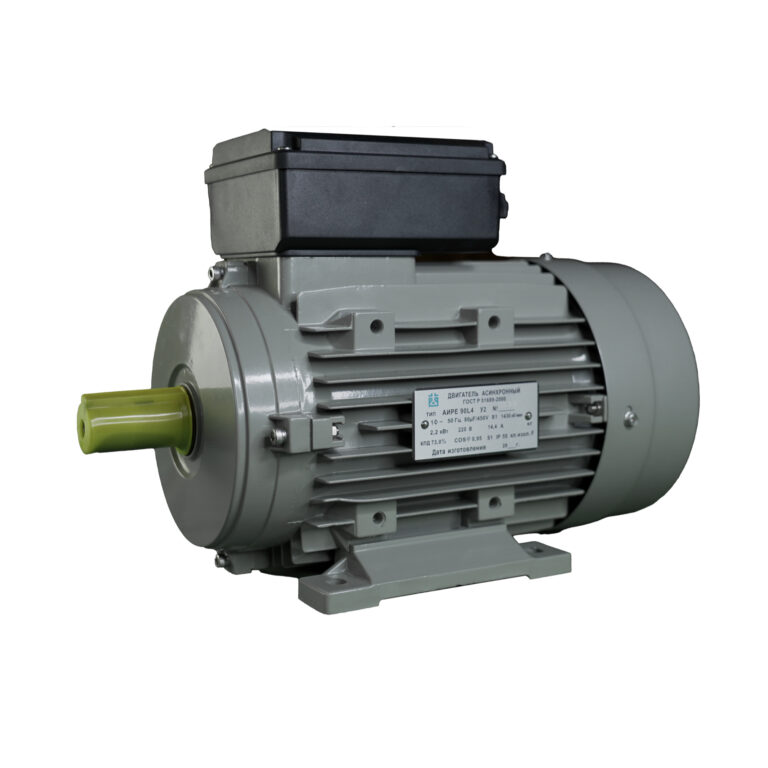
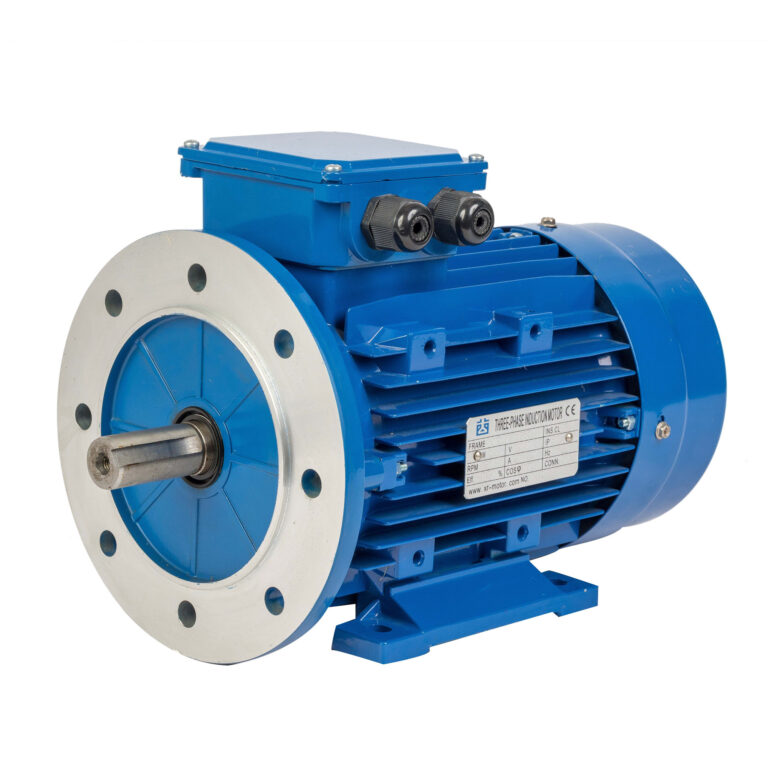
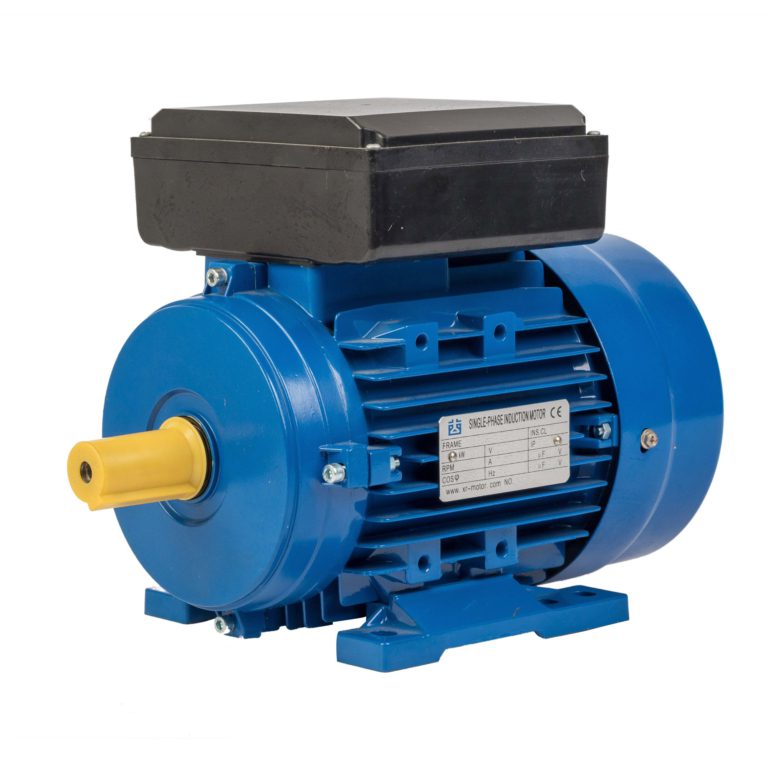
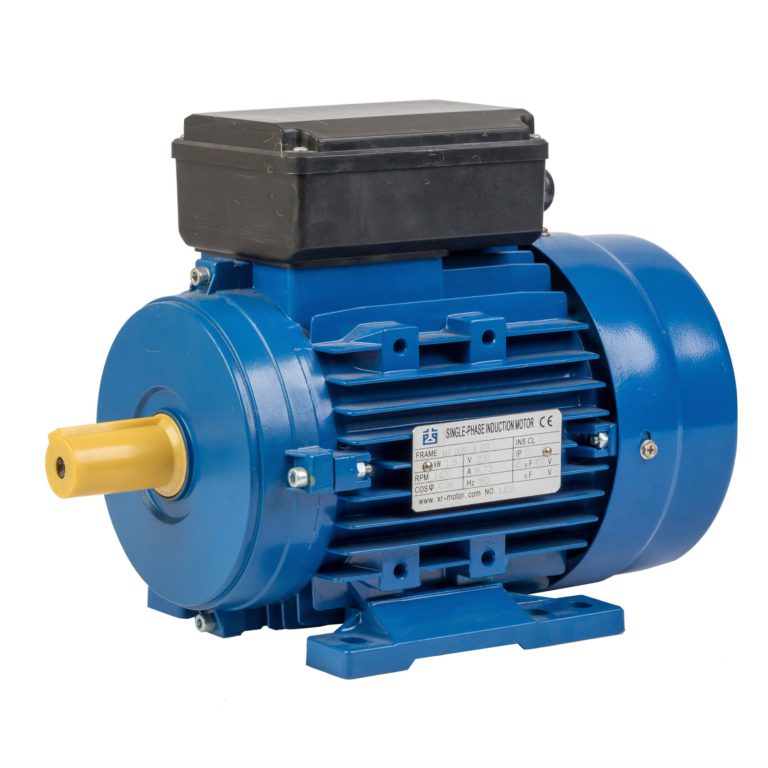
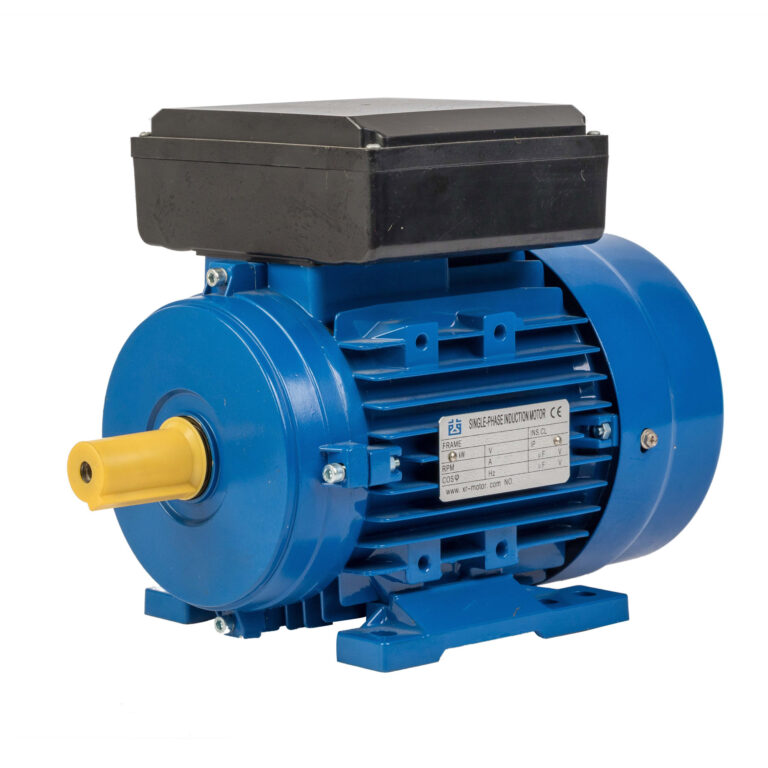
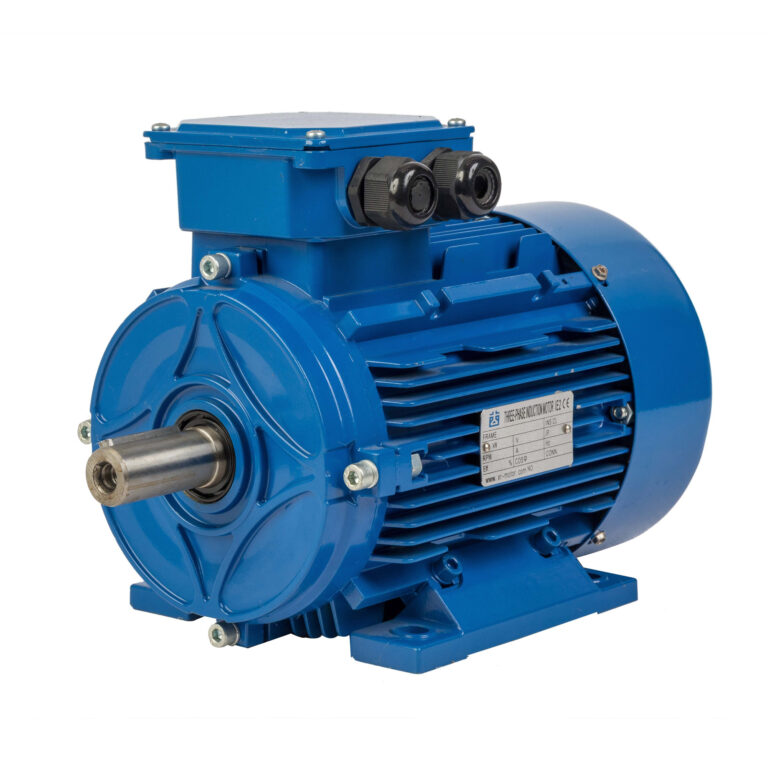
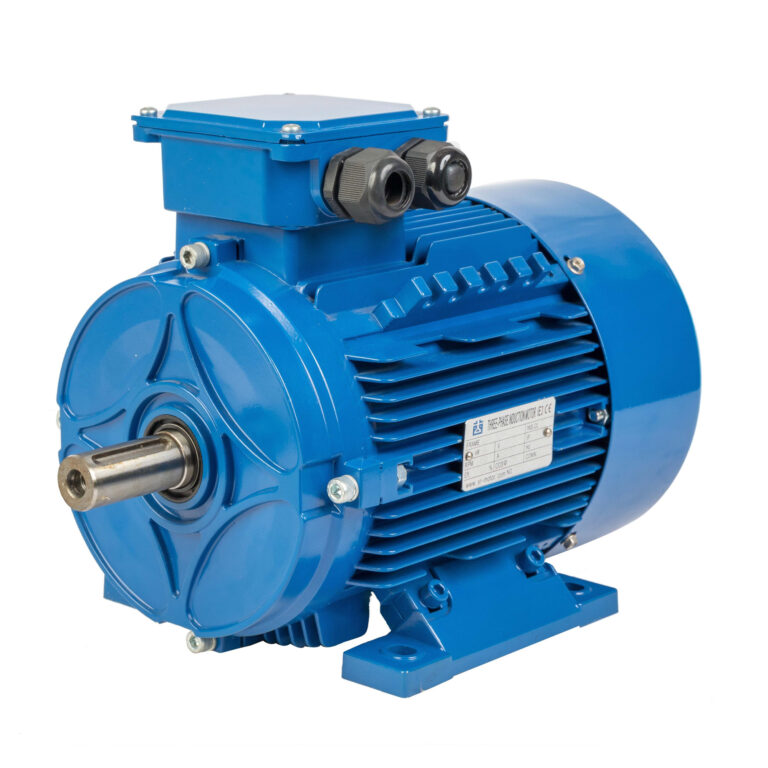
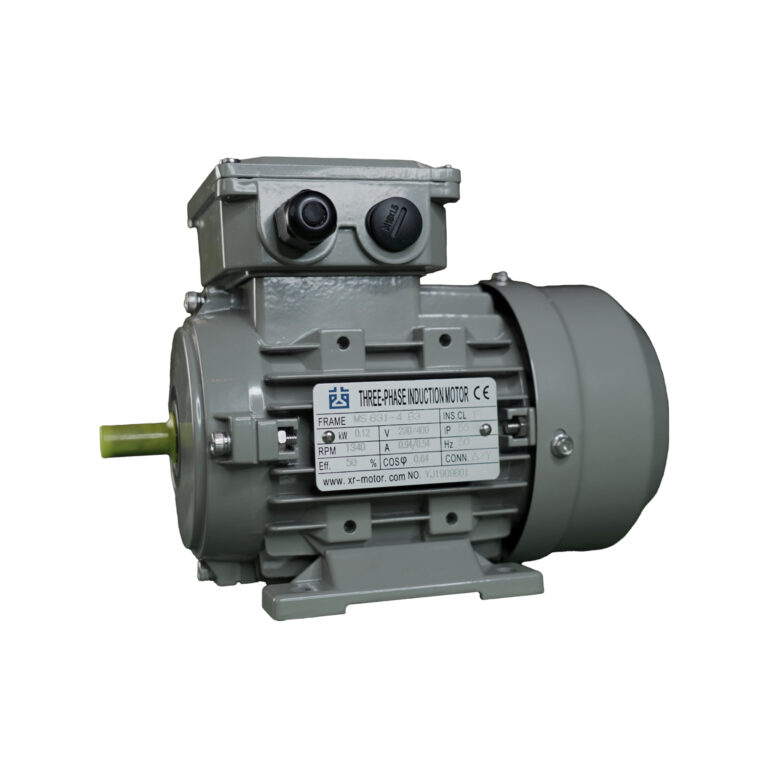
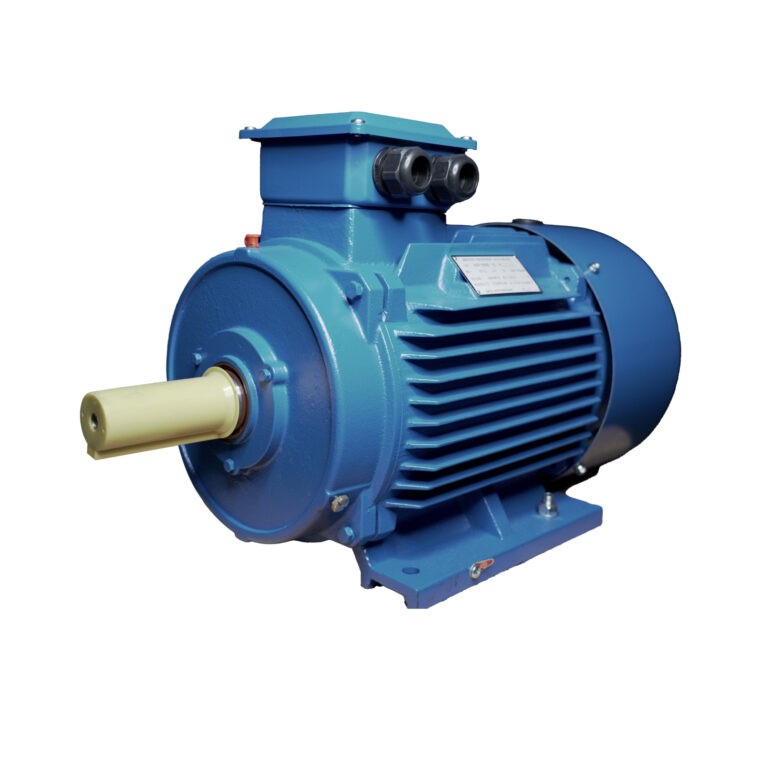
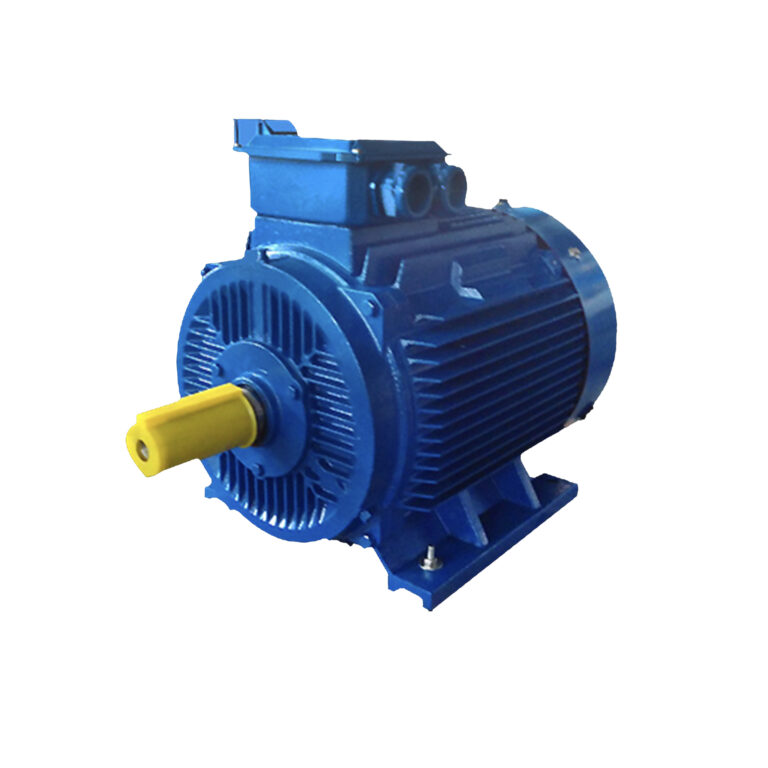
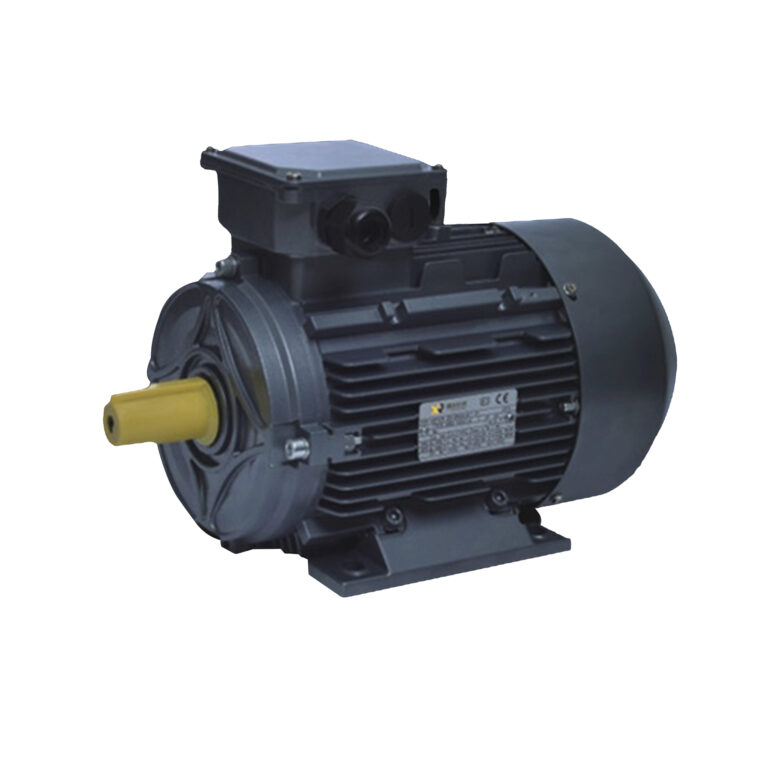
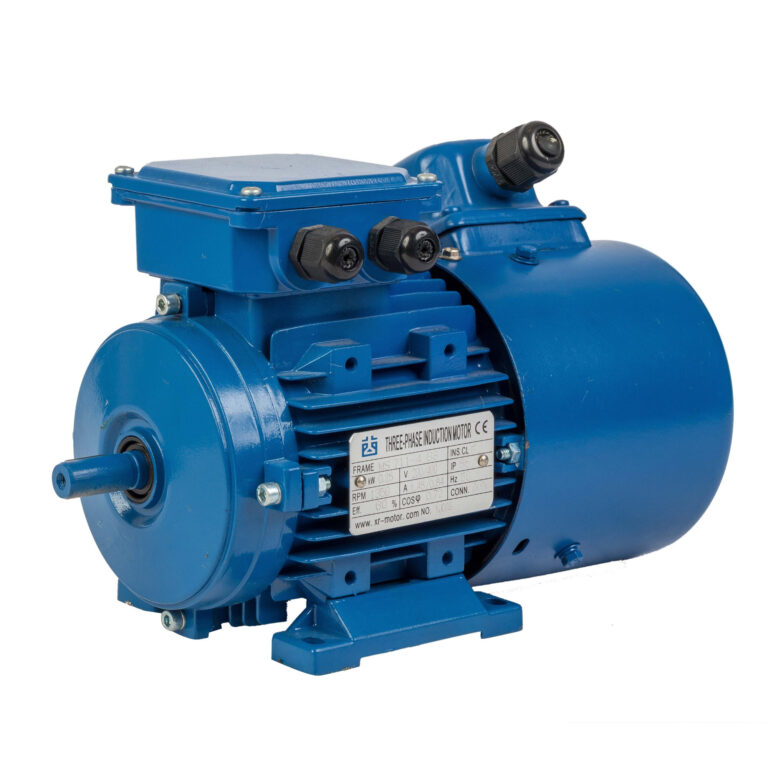
Conveyor Motor Selection: A Guide to Power, Speed and Starting Torque
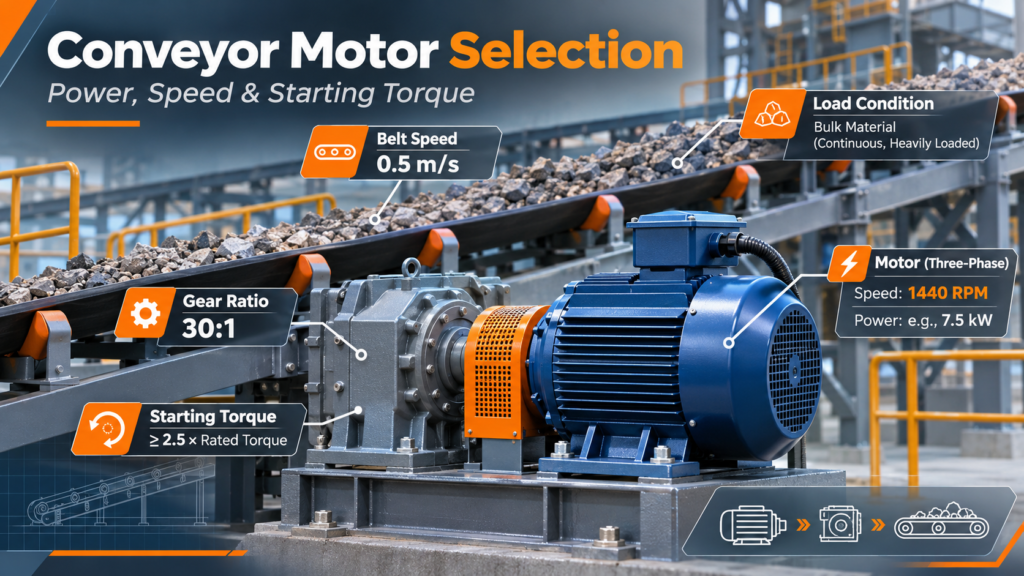
A conveyor may run smoothly while it is empty, then refuse to start after the belt has been loaded. The motor’s power rating might look reasonable on paper, but the drive also needs enough torque to move the heaviest load from a standstill.
Good conveyor motor selection begins with three questions: how much material must be moved, how fast should it travel, and does the machine need to start while fully loaded?
DAYOU MOTOR helps equipment builders and industrial buyers review these conditions when choosing a motor for a conveyor drive.
A geared motor is a common starting point
Many industrial conveyors use a three-phase induction motor with a gearbox. The gearbox reduces the motor’s speed and increases the torque available at the output shaft.
This arrangement is widely used on belt conveyors, roller conveyors, and material-handling equipment. The right gearbox ratio depends on the required belt speed and drive roller diameter.
A three phase conveyor motor can run directly from the power supply or be paired with a variable frequency drive, commonly called a VFD. The choice depends on the required starting behavior and whether the conveying speed needs to change.
Power depends on more than the weight
The maximum load matters, but it is only one part of conveyor motor selection. Belt speed, friction, the length of the conveyor, and elevation changes also influence the power required.
An inclined conveyor needs additional force to lift material. A long horizontal conveyor may have no lifting requirement, but friction and the mass of the moving belt still need to be considered.
As a basic relationship:
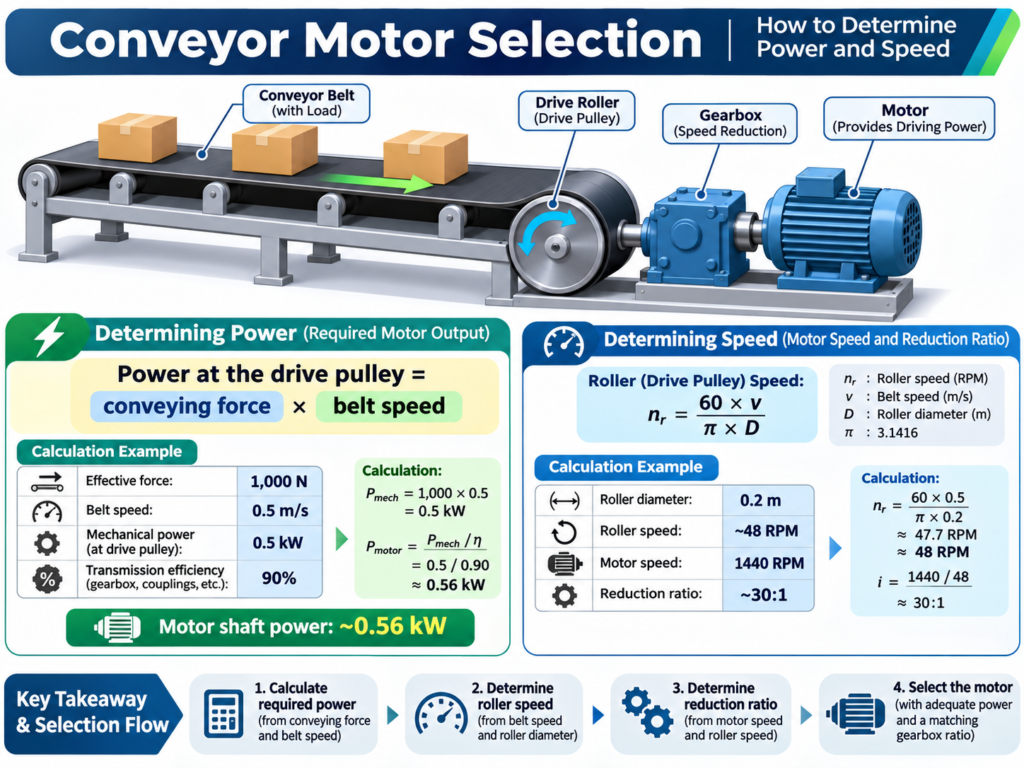
Power at the drive pulley = conveying force × belt speed
For example, suppose the required effective force at the belt is 1,000 N and the belt runs at 0.5 m/s. The pulley needs approximately 0.5 kW of mechanical power. If the gearbox and transmission are 90% efficient, the motor shaft must provide about 0.56 kW before an application allowance is added.
This is an illustrative calculation, not a complete sizing method. The effective force must already account for the relevant friction, lifting, and operating conditions. Starting, acceleration, and the selected motor’s thermal limits still need separate checks.
When asking for an electric motor for conveyor systems, provide the maximum operating load and the worst expected conditions. Sizing from an empty conveyor can leave too little capacity once production begins.
Work backward from belt speed
A conveyor belt does not need to run at motor speed. The drive roller turns much more slowly, with the gearbox providing the reduction.
Conveyor motor selection should therefore start with the target belt speed and roller diameter. These determine the approximate roller speed and gearbox ratio.
Consider a belt that needs to travel at 0.5 m/s over a drive roller 0.2 m in diameter. Ignoring belt slip, the roller needs to turn at approximately 48 RPM.
If the motor’s rated speed is 1,440 RPM, the required reduction is close to 30:1. The final choice should use the available gearbox ratios and account for the actual motor speed under load.
A larger roller or a different belt speed changes the result. Confirm those dimensions before ordering the drive.
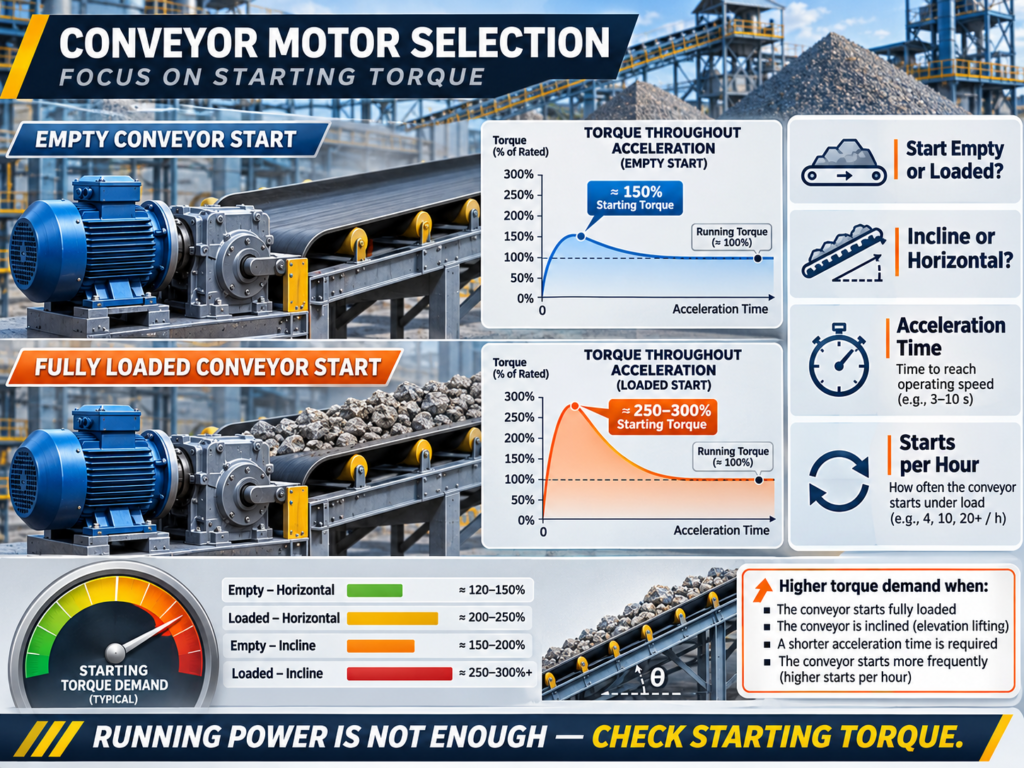
Check whether the conveyor must start fully loaded
Starting torque is often the deciding factor in conveyor motor selection. A motor may have enough power to keep the belt moving but not enough torque to accelerate the loaded system.
Ask how the conveyor will be used:
- Can it start empty, or must it restart with material on the belt?
- Is the conveyor horizontal, inclined, or declining?
- How quickly must it reach operating speed?
- How many starts occur each hour?
- Is the load steady, or can material build up?
The motor’s available torque must exceed the load requirement throughout acceleration. The gearbox must also be suitable for the output torque and operating duty.
A conveyor drive motor selected for one occasional start may overheat when asked to repeat the same start frequently. Share the expected start frequency and acceleration time with the supplier.
For difficult starts, a VFD or another starting arrangement may help, but the complete motor, drive, and gearbox combination still needs to be sized for the load.
Use a VFD when speed or starting control matters
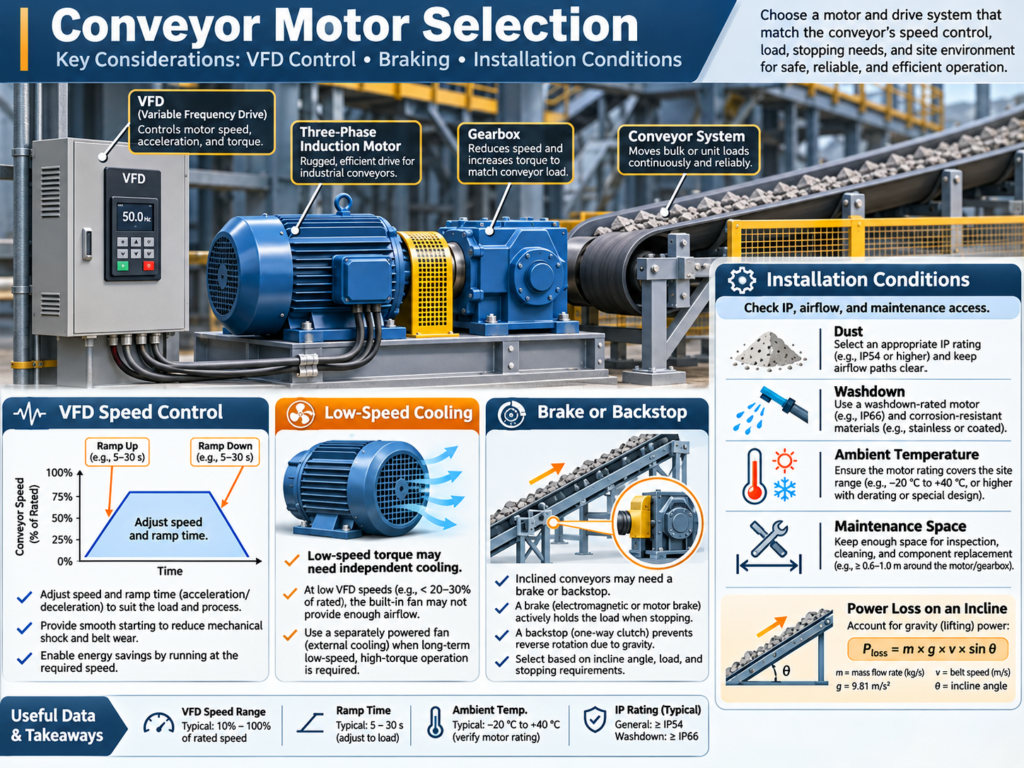
A VFD can make conveyor motor selection more flexible. It allows operators to adjust speed and set acceleration and deceleration ramps, which can reduce sudden movement of the belt and conveyed products.
The drive does not eliminate the need for correct sizing. It must supply the required current and torque during starting and operation.
Low-speed running deserves attention. A motor with a shaft-mounted cooling fan receives less airflow as it slows down. If the conveyor needs substantial torque at low speed for long periods, an independent cooling fan or another suitable motor configuration may be necessary.
Confirm the operating speed range, motor load, cable length, and drive requirements before ordering the VFD.
Consider what happens when power is lost
An inclined conveyor may need to prevent the belt and material from moving backward after the drive stops. Depending on the equipment, the solution may involve a brake, a backstop, or another engineered restraint.
A VFD alone should not be assumed to hold a suspended or inclined load safely during a power failure. The equipment designer must assess the load, stopping requirements, and applicable safety provisions.
If a brake motor is proposed, confirm whether the brake is intended to hold a stopped load or absorb energy during stopping. Brake torque, action frequency, and heat capacity all need to match the application.
Match the motor to the installation
An industrial conveyor motor should also suit the place where it will work. Dust, washdown, humidity, high ambient temperature, and restricted airflow can all affect reliability.
Before ordering, check the power supply, duty cycle, mounting dimensions, shaft loads, enclosure protection, gearbox interface, and available maintenance space. Hazardous areas require an appropriately certified motor and system.
For a replacement, provide the existing nameplate and gearbox details, along with the conveyor’s operating problem. A larger motor is not always the answer; a seized roller, incorrect gear ratio, excessive belt tension, or poor starting setup may be the real cause.
Send DAYOU MOTOR the conveyor type, maximum load, belt speed, roller diameter, incline, starting frequency, and control requirements. These details give conveyor motor selection a sound basis and help the supplier check the motor and gearbox as a complete drive.