


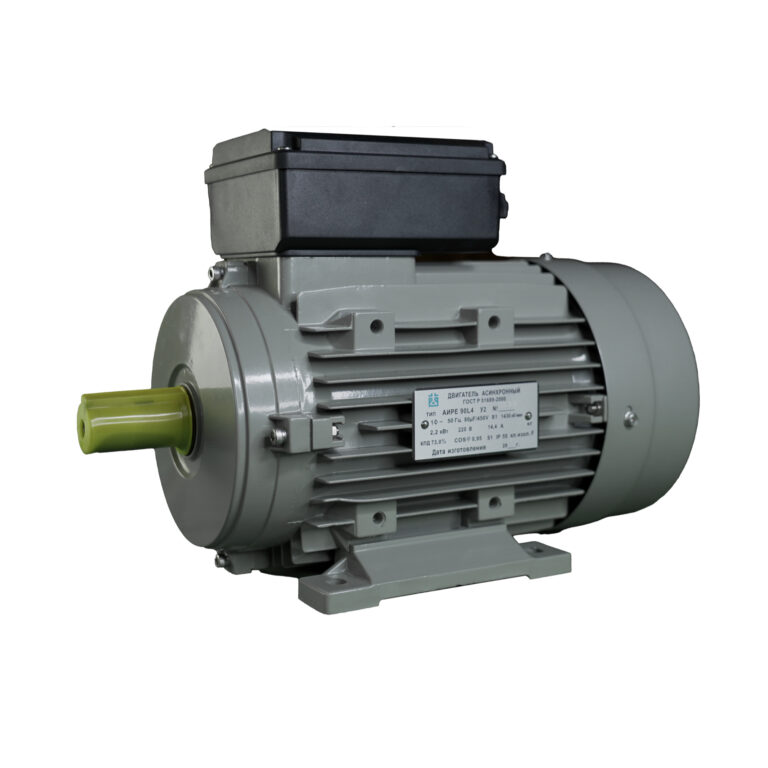
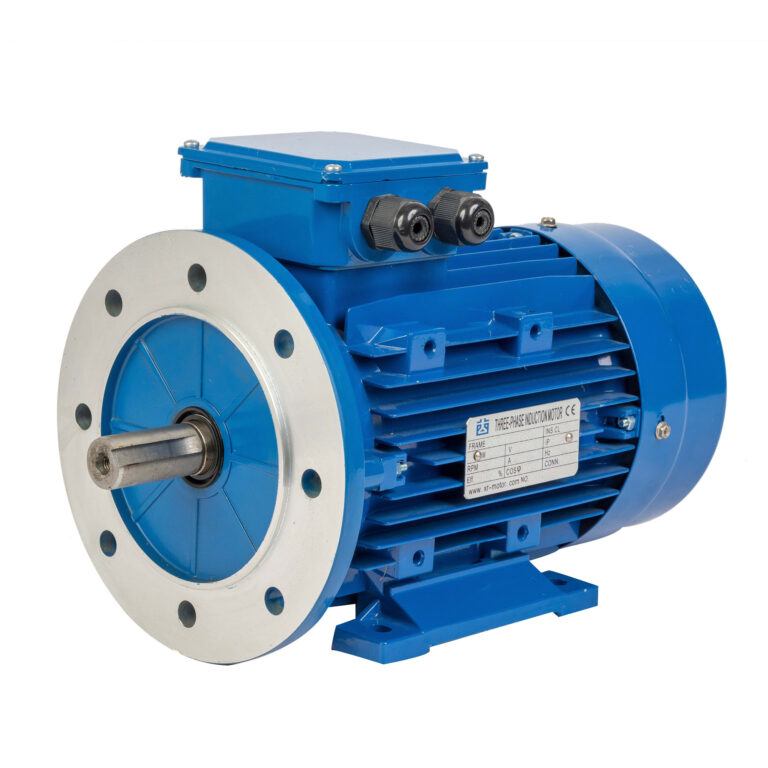
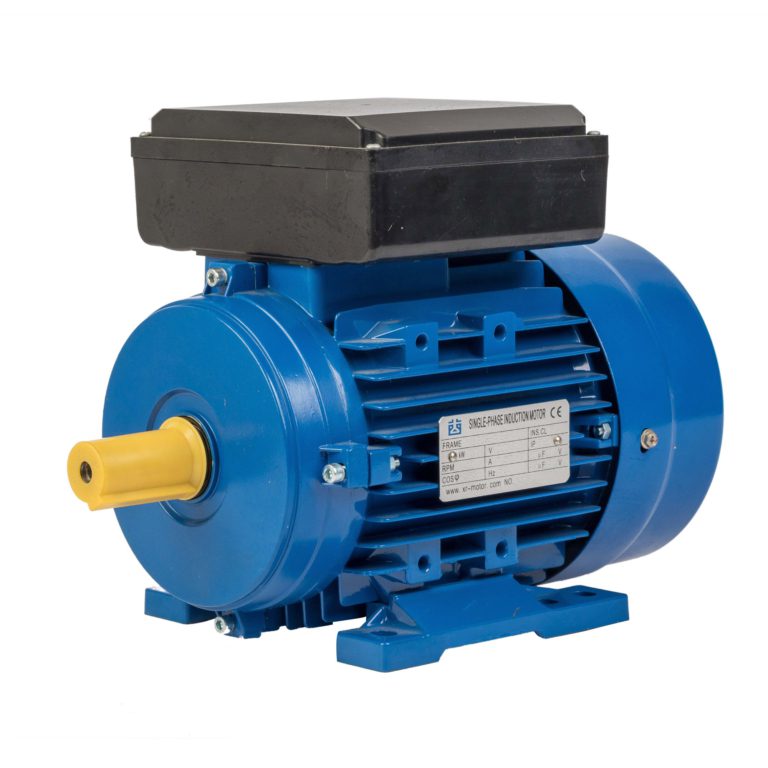
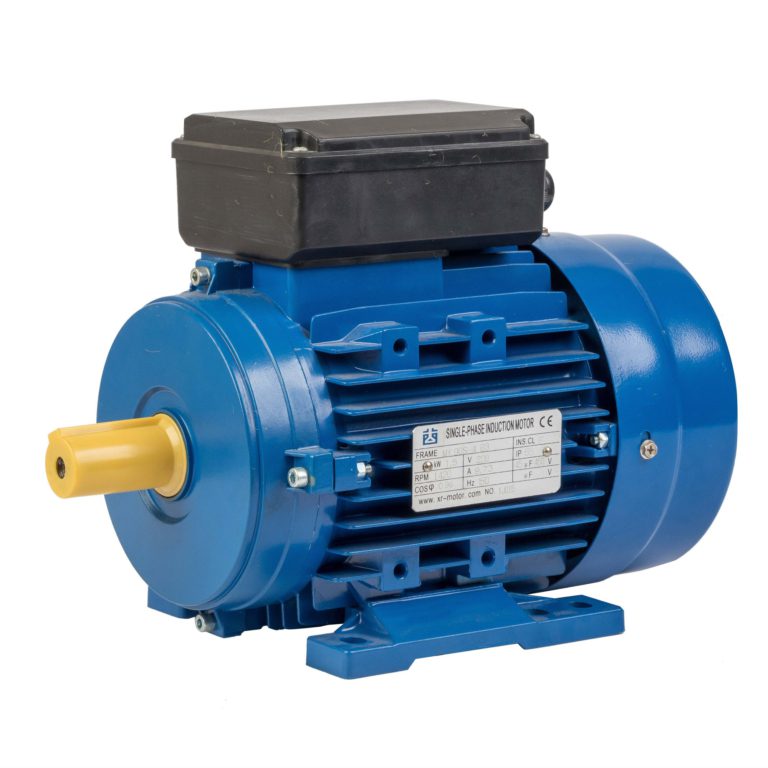
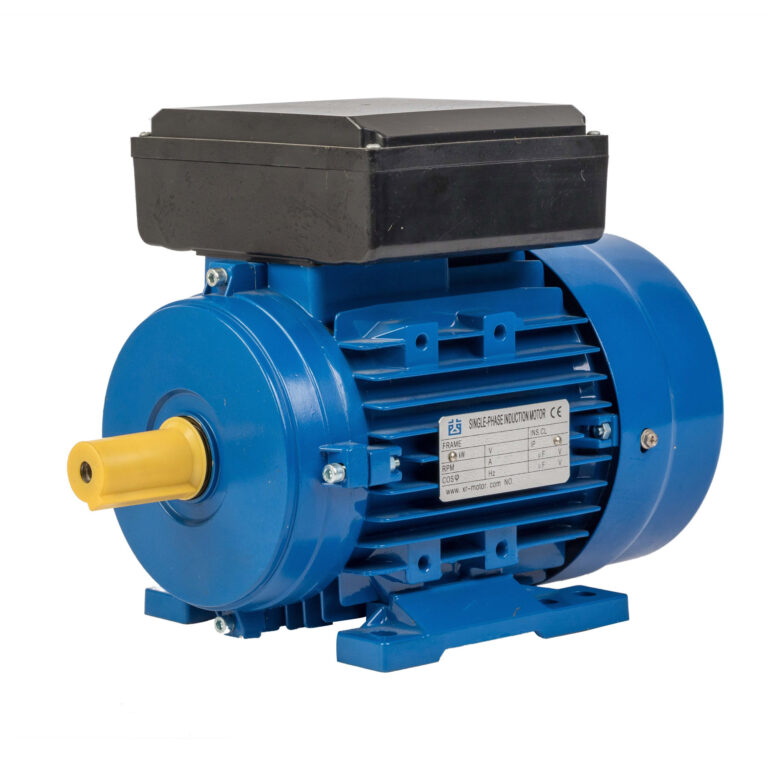
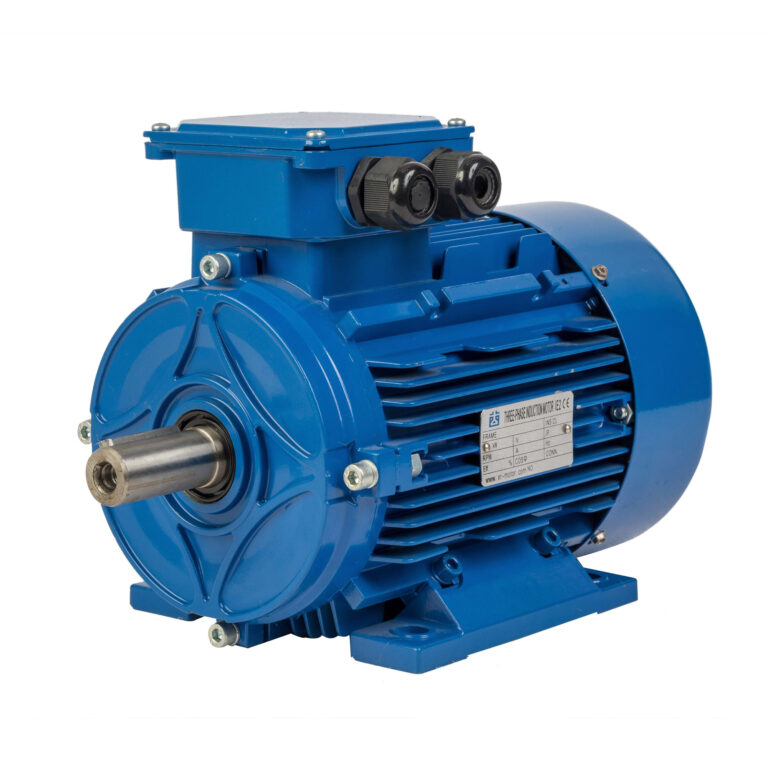
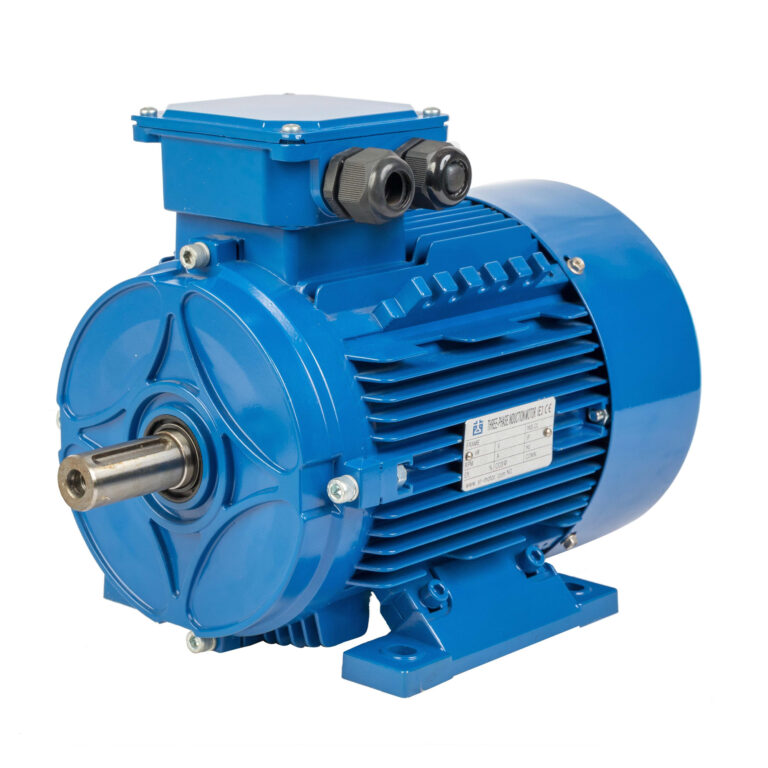
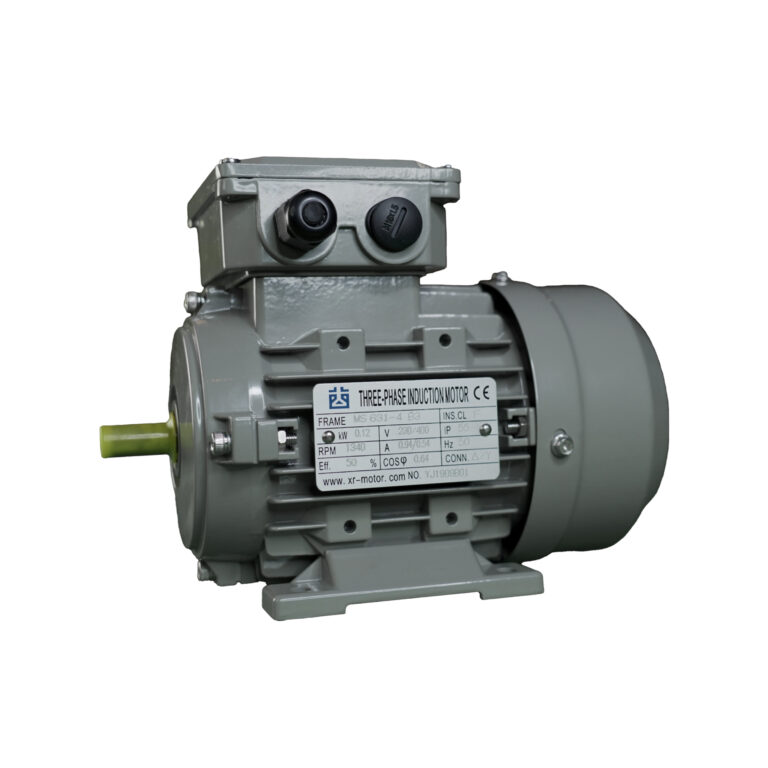
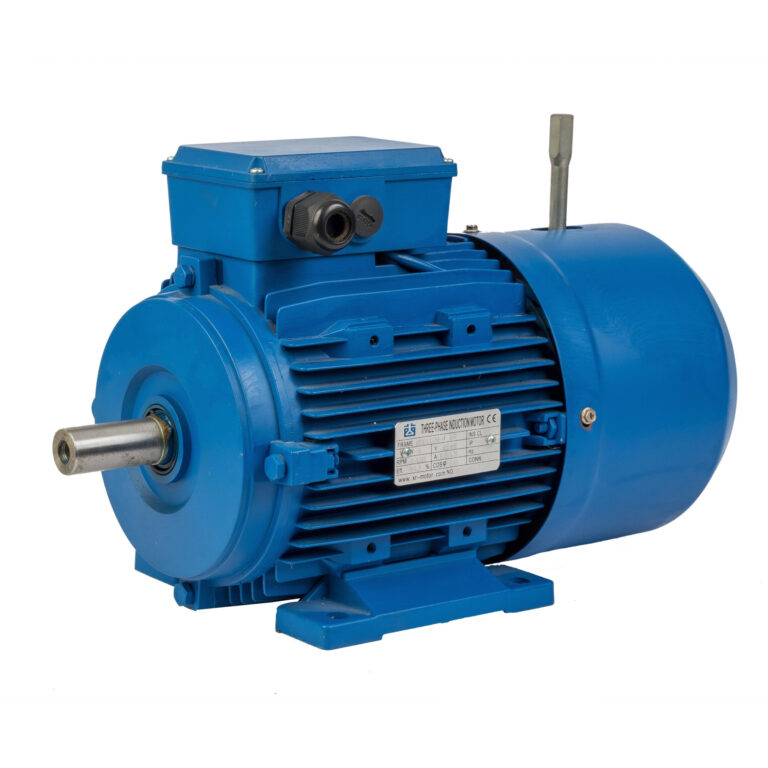
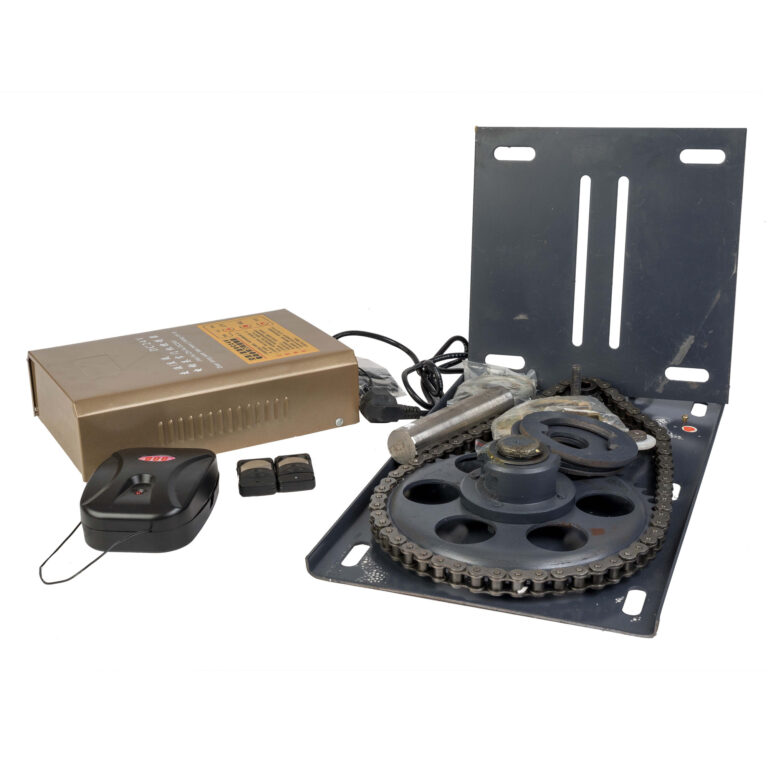
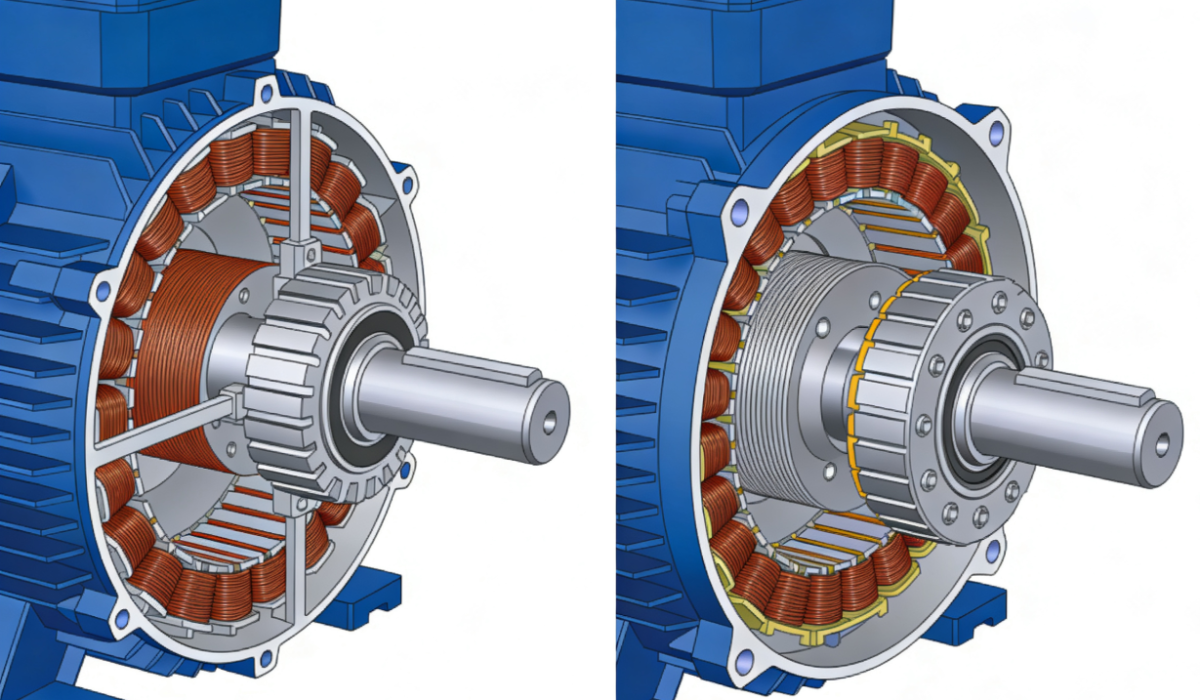
AC vs. DC Motors
For those with experience using motors, the difference between AC and DC motors should be familiar. If you are new to motors or want to review, we’ll explain. AC and DC motors are fundamentally different. They consist of different parts and components, but both generate energy through the directed flow of electrons.
To deepen this understanding, it’s helpful to consider how industrial environments choose between the two. Modern factories, renewable energy systems, and automated process lines rely heavily on these two motor technologies—each providing distinct advantages depending on torque requirements, efficiency goals, and speed control needs. The global shift toward electrification has only increased the relevance of understanding these motor types. Engineers selecting motors for manufacturing equipment, HVAC systems, robotics, or electric vehicles must understand not only how the motors function, but also how they respond to advanced control methods such as vector control, PWM modulation, or smart IoT-based monitoring systems.
Furthermore, AC and DC motors are foundational to nearly every industry. From small consumer appliances and air compressors to large-scale conveyor systems and power plants, the decision between AC and DC motors determines maintenance costs, motor lifespan, energy consumption, and operational reliability. This is why having a clear comparison—beyond just theoretical knowledge—is essential for design engineers, maintenance technicians, plant managers, and automation specialists.
Differences Between DC and AC Motors
At its simplest level, the difference between DC and AC motors is that they use different flows of electrons to transmit power on a line. We’ll analyze some of the main differences.
To help engineers quickly evaluate them, AC motors are typically preferred in high-power industrial applications requiring constant speed and durability. On the other hand, DC motors excel in variable-speed, high-starting torque applications. These distinctions become especially important in fields like robotics, electric mobility, CNC machinery, or any scenario requiring precise speed regulation.
DC Motors
In a DC motor, electrons are propelled forward in a single direction. These motors are capable of producing high outputs and are an excellent source for conversion to AC. DC power is stored more efficiently in batteries and is often used for energy storage. Learn more about DC solutions at Dayou Motor DC Motors.
Beyond this basic description, DC motors offer several advanced engineering advantages. One of their defining characteristics is precise speed control due to direct voltage regulation, making them highly desirable for servo-driven equipment, automated gates, adjustable industrial pumps, and laboratory machinery. The torque-to-inertia ratio of DC motors is often superior, enabling rapid acceleration and deceleration, essential for robotics and automated sorting systems.
However, DC motors also come with drawbacks, such as brush wear in brushed DC motors, which leads to noise, friction, and maintenance downtime. Brushless DC motors (BLDC) overcome these issues by using electronic commutation instead of mechanical brushes, resulting in higher efficiency, longer lifespan, and reduced heat generation—qualities especially valuable in electric vehicles, drones, advanced fans, and precision medical devices.
In energy storage systems, DC architecture remains the standard, as batteries inherently operate on direct current. This makes DC motors naturally compatible with solar systems, battery-driven emergency equipment, portable tools, and UPS systems. For engineers designing off-grid or hybrid energy systems, DC motors provide predictable performance and minimal conversion loss.
AC Motors
AC motors generate alternating current, meaning electrons can move forward or backward. AC is safer for long-distance power transmission because it retains more power when converted by transformers and distributed over a network.
AC motors are the workhorses of the industrial world. Their ruggedness and simplicity allow them to operate continuously for thousands of hours with minimal maintenance. Induction motors, the most common AC motor type, utilize electromagnetic induction to create torque, eliminating the need for brushes and commutators. This results in exceptional durability, stable speed performance, and cost-efficient operation over long periods.
Additionally, AC motors pair exceptionally well with Variable Frequency Drives (VFDs), enabling dynamic speed control, reduced start-up current, and enhanced energy optimization. Modern industrial processes—such as HVAC compressors, multi-stage pumps, fans, industrial mixers, and conveyors—benefit greatly from the improved power factor and energy savings offered by AC motors combined with VFD control.
Synchronous AC motors bring another layer of precision, achieving constant speed regardless of load fluctuations. These motors are widely used in high-accuracy applications such as power factor correction systems, clock mechanisms, precision actuators, and high-speed compressors.
Testing AC and DC Motors
Even with the best maintenance, the components in a motor have a lifespan and will eventually fail. Testing AC and DC motors is a critical step in ongoing maintenance to ensure continuous operation and optimal output. Even if a motor appears to be working well, undetected faults can lead to component or system failure if left unaddressed. Typical motor testing includes measurements:
- Shaft and housing vibration
- Component temperature
- Torque and winding conditions
- Component position and speed
- Current and voltage generation
To expand on these points, testing carries significant implications for operational efficiency and long-term asset preservation. In manufacturing plants, unexpected motor failure can halt production lines, resulting in substantial financial losses. Predictive maintenance—powered by advanced motor testing—helps reduce downtime by identifying early-stage faults such as insulation degradation, rotor bar defects, misalignment, and bearing wear.
Additionally, accurate testing helps avoid safety hazards. Overheated windings or loose electrical connections can lead to electrical fires, arc faults, and catastrophic equipment failure. Testing is therefore not merely a maintenance task but a central part of risk prevention programs in industrial environments.
Modern facilities increasingly rely on smart testing systems integrated into IoT networks. Continuous online monitoring allows technicians to track performance trends, detect anomalies early, and schedule repairs proactively. Pairing AC and DC motor systems with smart sensors offers real-time data on vibration harmonics, current waveform distortion, and thermal patterns—information essential for engineers who need precise insights into motor health.
AC vs. DC Motor Testing
While testing these motors essentially involves looking for the same readings, the testing methods differ.
Using modern equipment, you can test motors both with and without power. Each method has its own advantages.
This distinction reflects how both motor types operate under different electrical and mechanical conditions. Engineers must consider load profiles, duty cycles, insulation requirements, and environmental conditions such as humidity, temperature, and vibration intensity. For example, DC motors—which often have more sensitive commutation systems—require more frequent brush inspection and armature testing. AC motors, with their simpler construction, often require deeper analysis of insulation resistance and rotor bar integrity.
Power-on Testing
Power-on testing is performed when the equipment is under load to simulate normal operating conditions. This method helps to detect undetected or intermittent defects by generating the standard heat and vibration of motor operation. Power-on testing monitors the performance of all components, checking for wear and anomalies that may require attention.
Power-on testing replicates real-world workloads, making it essential for identifying subtle but dangerous issues such as intermittent bearing failure, loose mounts, thermal hotspots, shaft imbalance, and fluctuating torque output. Because motors behave differently when loaded, evaluating them under actual operating stress conditions provides the most realistic insights.
Engineers performing power-on tests may also use thermal imaging cameras, harmonic analyzers, oscilloscopes, and vibration spectrum analyzers to capture high-resolution data. These tools make it possible to pinpoint early degradation in stator windings, rotor eccentricity, shaft misalignment, belt tension imbalance, and cooling inefficiencies. Regular power-on testing significantly extends equipment lifespan and helps maintain stable plant productivity.
Power-on Testing
Power-on testing is performed when the equipment is under load to simulate normal operating conditions. This method helps to detect undetected or intermittent defects by generating the standard heat and vibration of motor operation. Power-on testing monitors the performance of all components, checking for wear and anomalies that may require attention.
Power-on testing replicates real-world workloads, making it essential for identifying subtle but dangerous issues such as intermittent bearing failure, loose mounts, thermal hotspots, shaft imbalance, and fluctuating torque output. Because motors behave differently when loaded, evaluating them under actual operating stress conditions provides the most realistic insights.
Engineers performing power-on tests may also use thermal imaging cameras, harmonic analyzers, oscilloscopes, and vibration spectrum analyzers to capture high-resolution data. These tools make it possible to pinpoint early degradation in stator windings, rotor eccentricity, shaft misalignment, belt tension imbalance, and cooling inefficiencies. Regular power-on testing significantly extends equipment lifespan and helps maintain stable plant productivity.
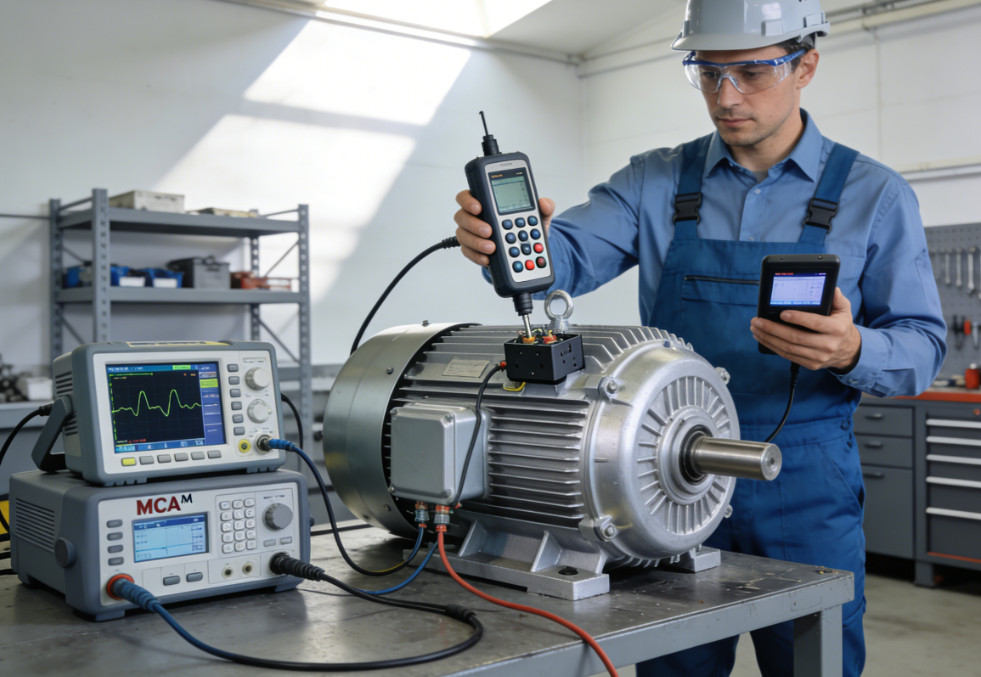
Power-off Testing
Power-off testing is performed when the machine is powered off. You can use power-off testing equipment to test a new motor or system before powering it on, or as part of a preventative maintenance program. Our advanced testing capabilities include MCA™ (Motor Circuit Analysis), providing a comprehensive check of your entire electrical system.
Power-off tests—which include insulation resistance testing, winding resistance measurement, surge testing, capacitance testing, and MCA—are critical for evaluating motor integrity without exposing technicians to rotating machinery hazards. This allows for safer and more comprehensive diagnostic procedures.
For example, MCA™ enables engineers to detect turn-to-turn shorts, contamination in windings, loose connections, and internal insulation deterioration—all before the motor is energized. This testing method is especially crucial in humid environments or locations with heavy dust exposure, such as mining operations, steel plants, and wastewater facilities.
Dayou Motors offers advanced motor products and diagnostic solutions. Please visit our product page or contact us.
Testing AC and DC Motors
A complete diagnostic check of your AC or DC motor typically involves multiple tests. Regardless of the type of testing, always ensure safety precautions are taken when working around electrical equipment. In most cases, testing AC and DC motors includes checking:
- Current – Measure the pull-in current by observing the arc shape and peak amplitude.
- Vibration – Look for excessive vibrations coming from motor components.
- Temperature – Read component temperatures to check for abnormalities.
- Alignment – For rotating motors, check shaft alignment to avoid performance issues.
- Windings – Inspect winding condition to find electrical shorts or physical damage.
- CDT – Track the Coast Down Time to monitor performance and degradation.
Each of these indicators provides a unique set of insights into motor health. Engineers often combine all of them to create a comprehensive motor performance profile. For instance, vibration analysis can detect early mechanical issues, while current signature analysis helps detect electrical anomalies.
Tracking CDT is particularly important in facilities with large rotating machinery. Changes in CDT over time indicate bearing wear, lubrication problems, or aerodynamic drag—helping maintenance teams intervene before full breakdown occurs.
Enhanced AC & DC Motor Reliability Backed by Professional In-House Testing
At Dayou Motor, our commitment goes far beyond delivering AC and DC motors — it extends to ensuring every motor meets strict performance and durability standards before reaching customers. While advanced diagnostic technologies are part of our internal quality-assurance process, they are not products we sell, but tools that help us guarantee the reliability of every motor we manufacture.
Our engineering team performs comprehensive power-on and power-off evaluations during production, allowing us to verify torque performance, thermal stability, insulation resistance, and long-term operational safety. These high-precision testing procedures ensure that each Dayou motor operates with optimal efficiency across demanding applications in HVAC, automotive systems, industrial machinery, energy infrastructure, and more.
By integrating advanced diagnostics into our quality workflow, Dayou Motor reinforces its reputation as a trusted global manufacturer of high-performance electric motors — delivering stable output, extended service life, and consistent reliability in every working environment.