


- Home
- Product
- GOST standard motor
- IEC standard motor
 MC Series single phase capacitor start asynchronous motor
- MY MYT series single phase capacitor running asynchronous motor
- ML Series single phase dual-capacitor asynchronous motor
- ME2 series three phase high efficiency aluminum housing motor(IE2)
- ME3 series three phase high efficiency aluminum housing motor(IE3)
- MS series three-phase aluminum housing motor (IE1)
- Y2 series three phase cast iron motor (IE1)
- YE2 series three phase high efficiency cast iron motor (IE2)
- YE3 series three phase high efficiency cast iron motor (IE3)
- Special application motor
- Rolling door motor
- Industry application
- News
- About us
- Contact us
- Certifications
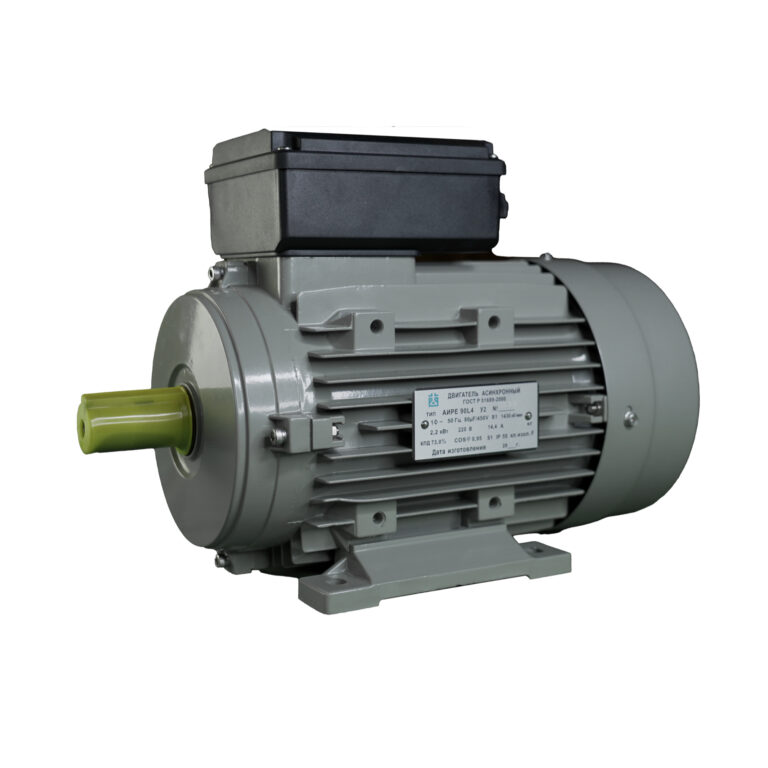
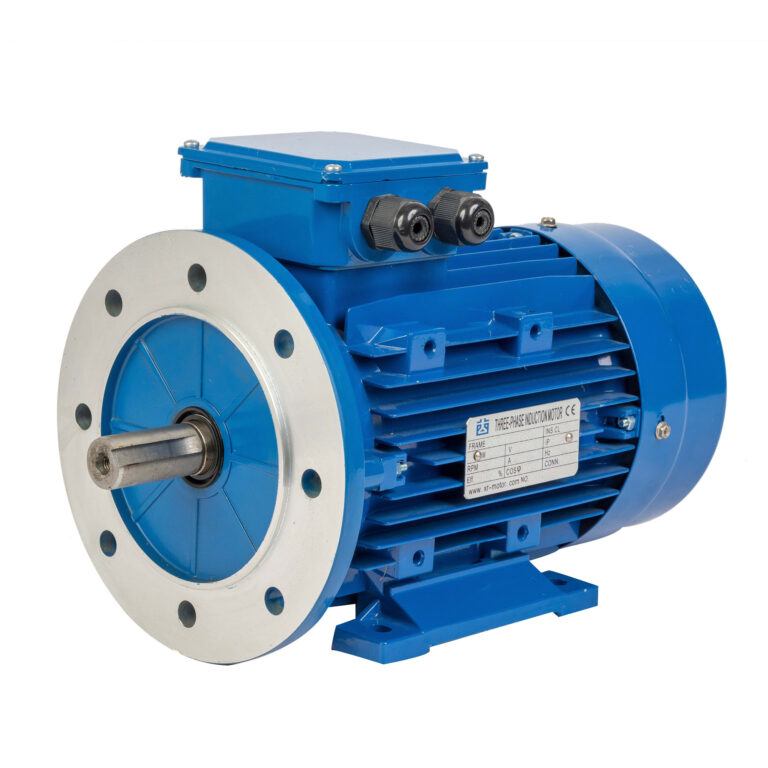
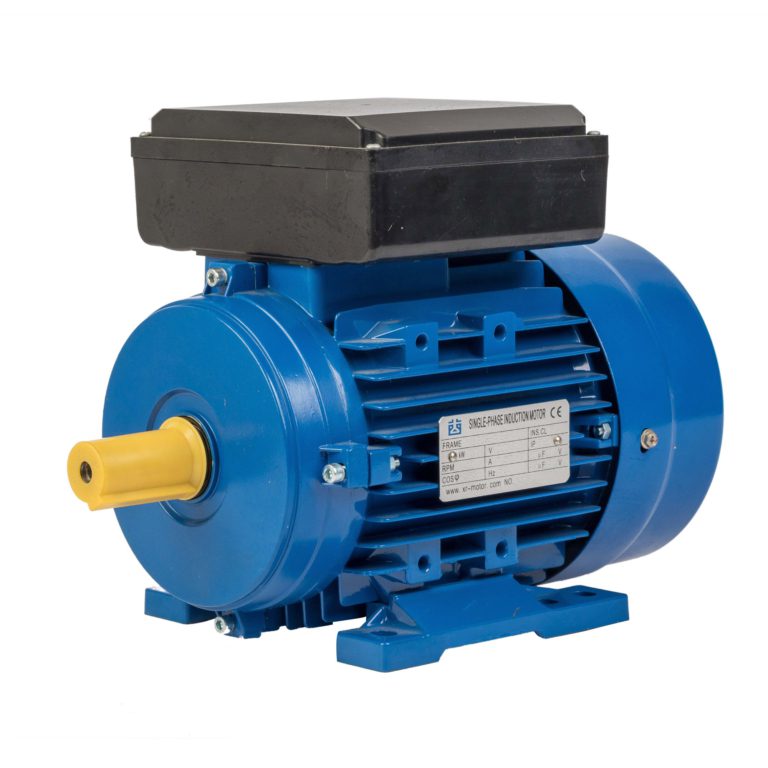
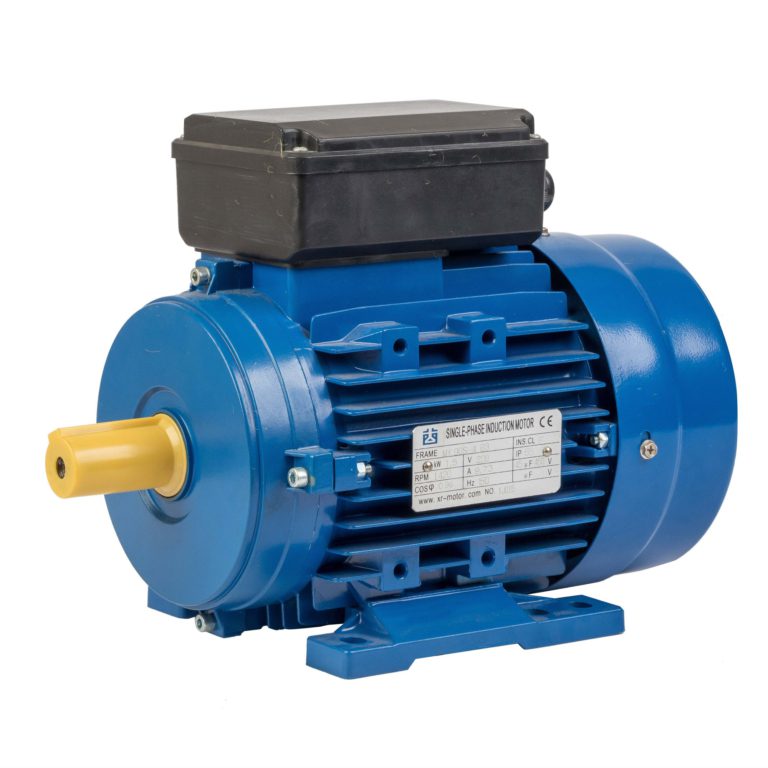
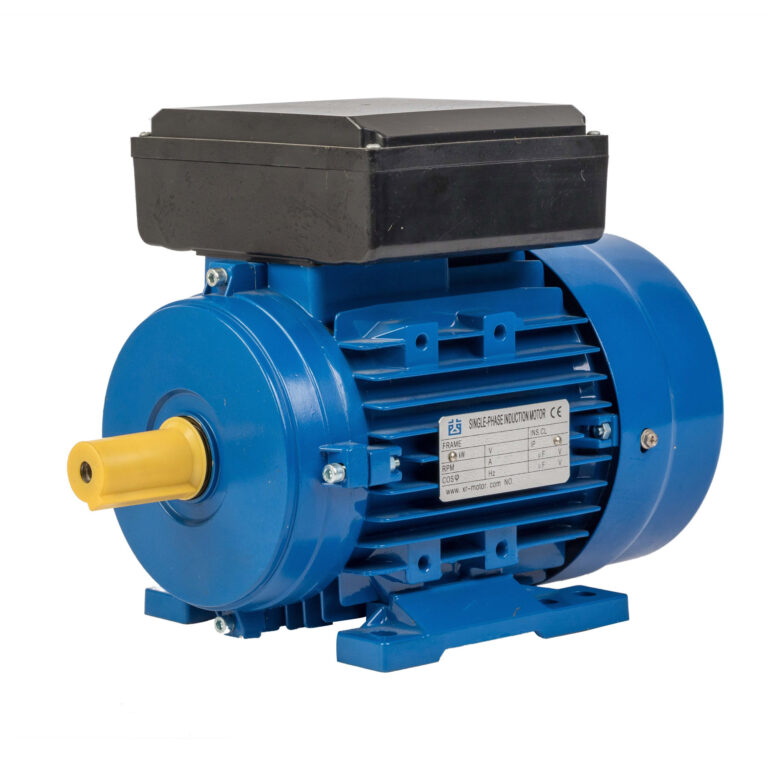
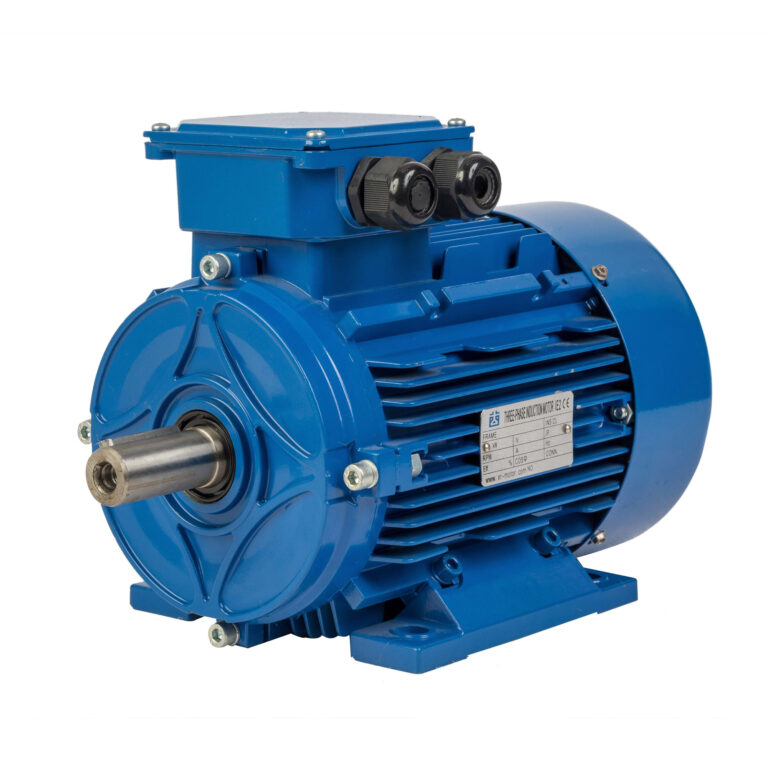
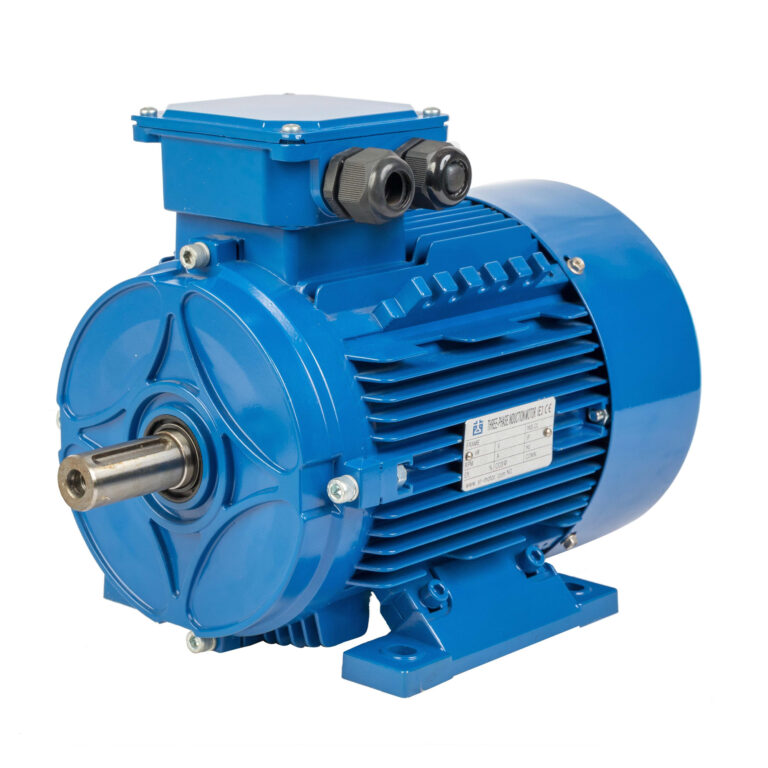
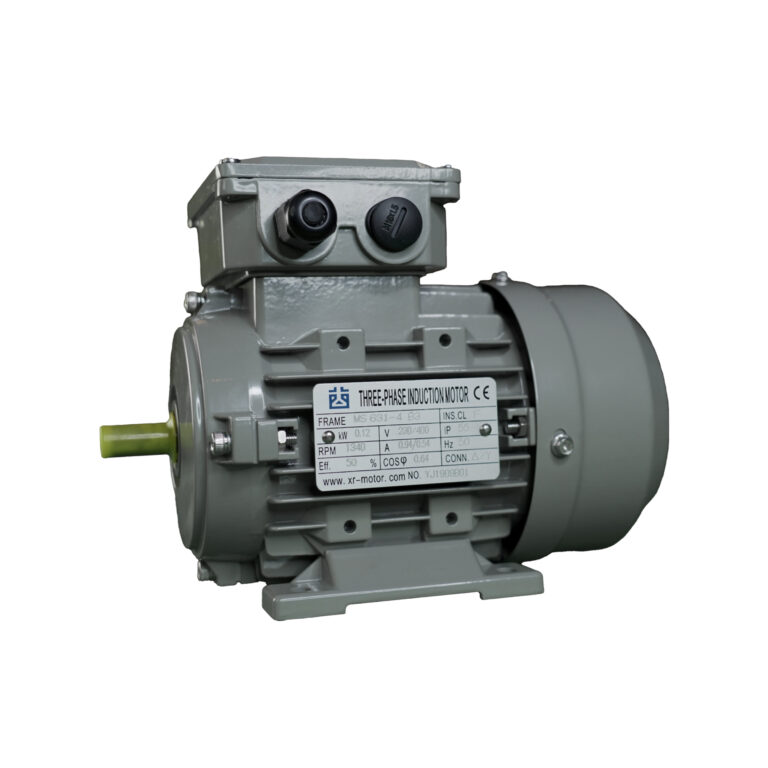
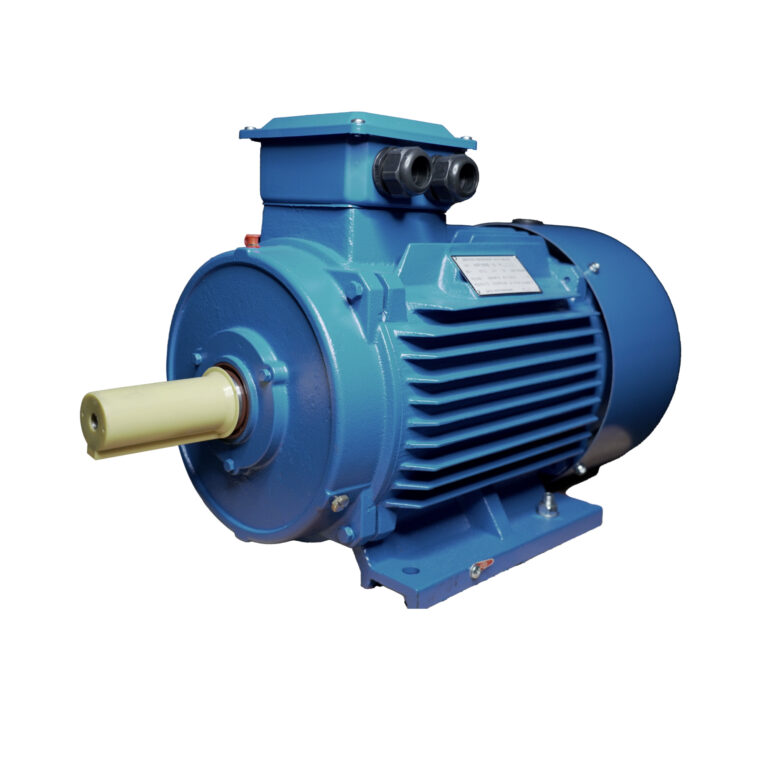
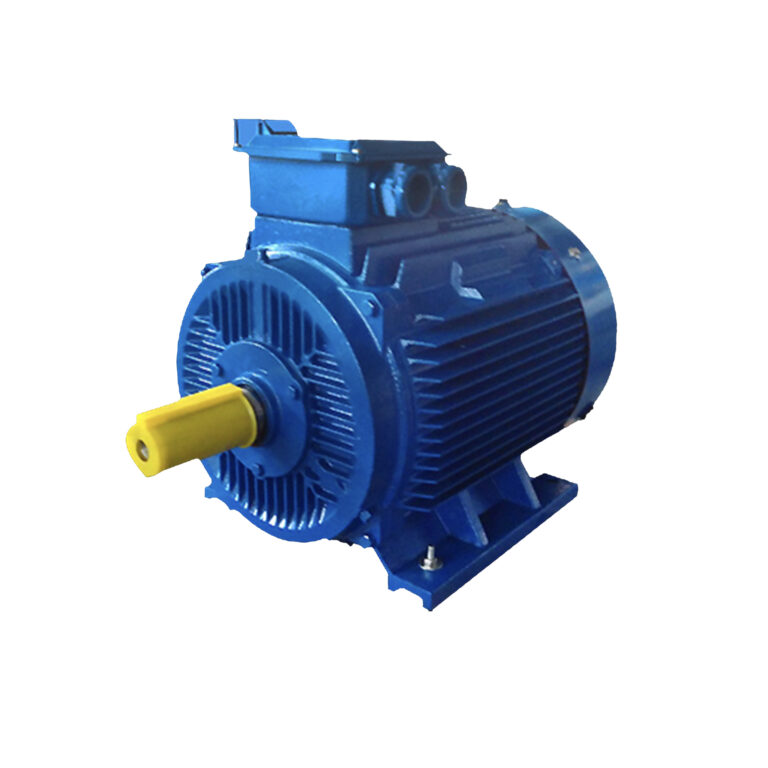
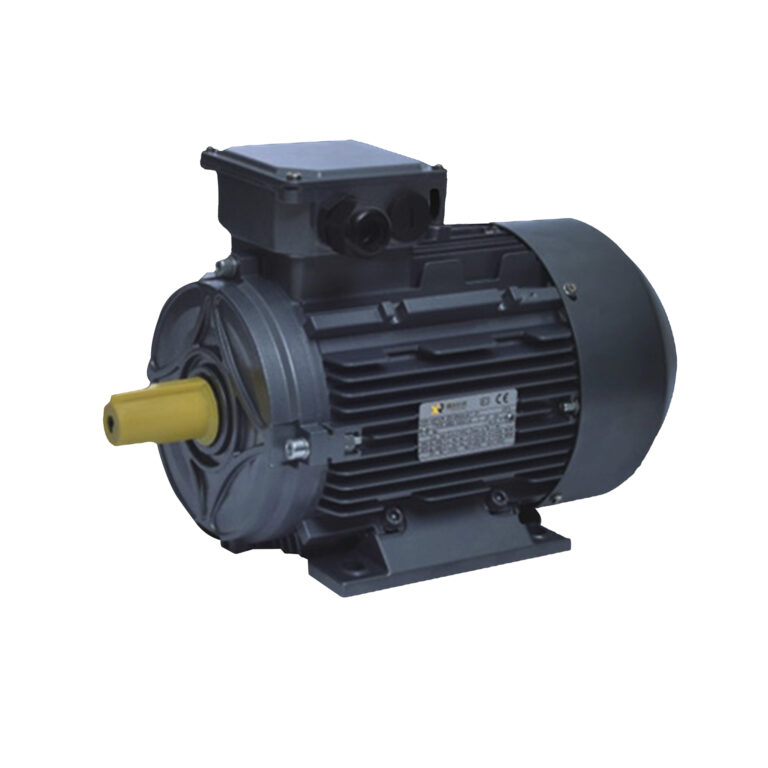
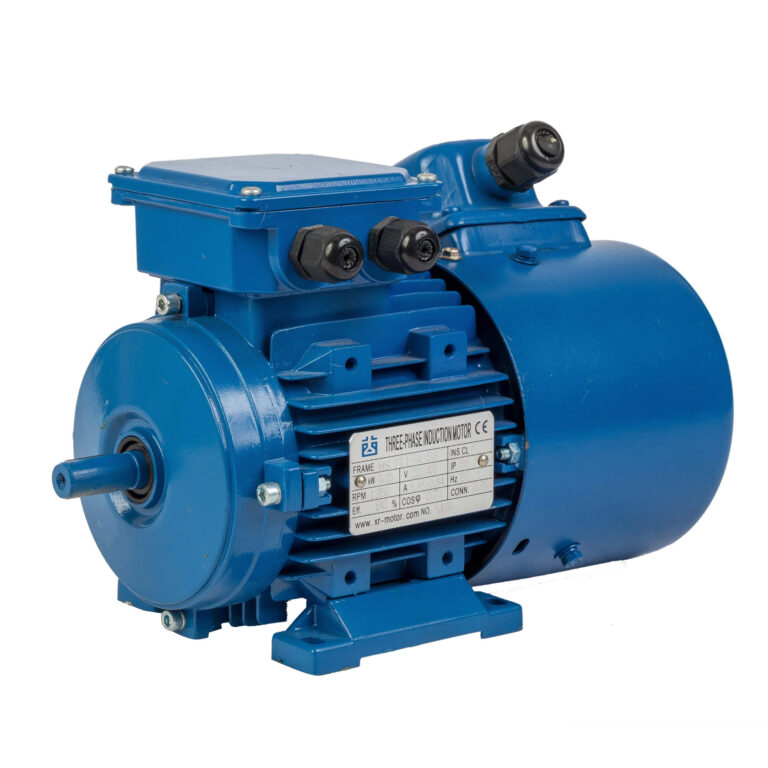
Electric Motor Export from China: Packaging, Shipping and Delivery Options
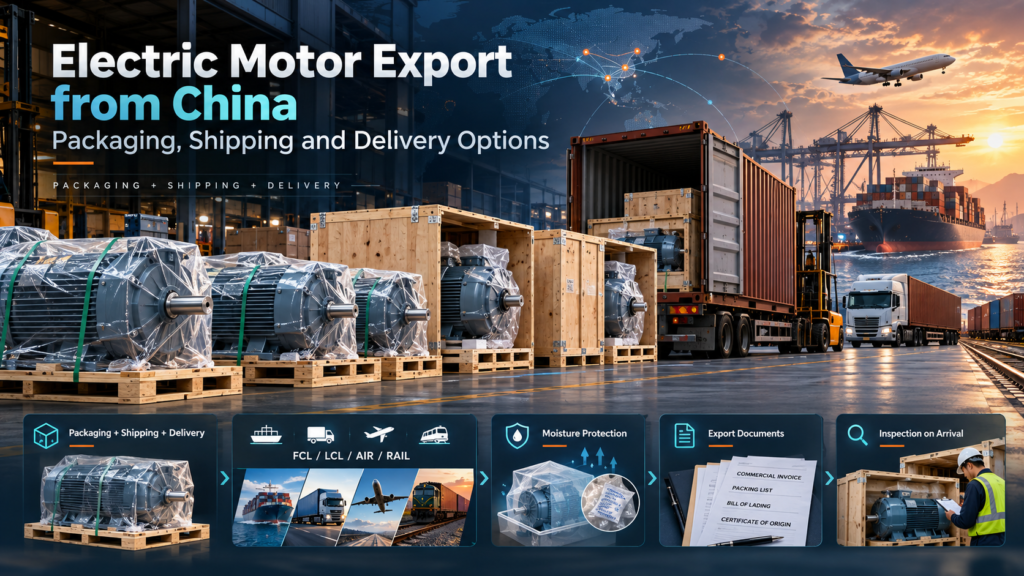
A successful electric motor export from China requires more than meeting technical specifications. Moisture, salt air, rough handling, poor securing, and incomplete documents can damage a motor during transport.
Packaging and logistics should be confirmed when the order is placed, especially for motors with brakes, encoders, cooling fans, heaters, or electronic controls. DAYOU MOTOR prepares export solutions based on motor size, transport method, destination, and storage conditions.
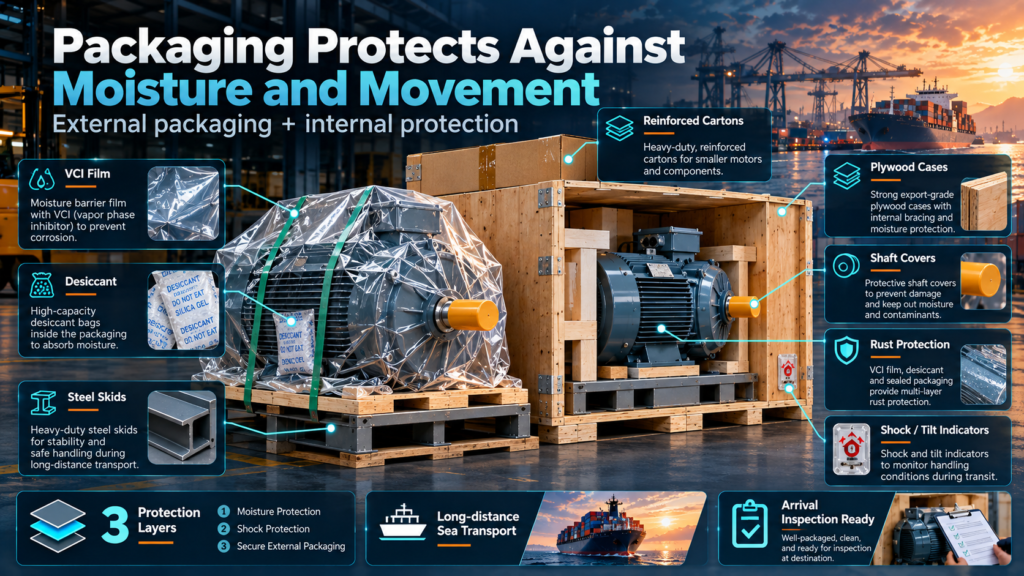
Packaging protects against moisture and movement
Packaging should match the motor’s weight, dimensions, center of gravity, lifting points, and transport conditions.
Small motors may use reinforced cartons on pallets. Medium and large motors usually require plywood cases, treated wooden cases, steel frames, or reinforced skids.
Common options include:
- Reinforced cartons for small motors
- Plywood cases for medium motors
- Treated wooden cases where required
- Steel skids for heavy equipment
- Open-top or flat-rack structures for oversized motors
- Custom supports for generators and high-voltage machines
The motor should be secured through its feet or an engineered support frame. Straps alone are not enough for heavy equipment.
Solid-wood pallets, supports, and dunnage may require treatment and marking. Buyers should confirm destination-country rules before shipment.
Internal protection is equally important
Shafts, keyways, flanges, and mounting surfaces should receive suitable rust protection. VCI film, moisture-barrier bags, and desiccant can help during long transport and storage.
Protection may also include:
- Covers for shaft extensions
- Caps for cable entries and terminal boxes
- Foam or engineered supports for accessories
- Shock and tilt indicators
- Clear lifting and center-of-gravity markings
Encoders, brakes, external fans, and terminal boxes need special care. The motor frame should carry the restraint force, not fragile accessories.
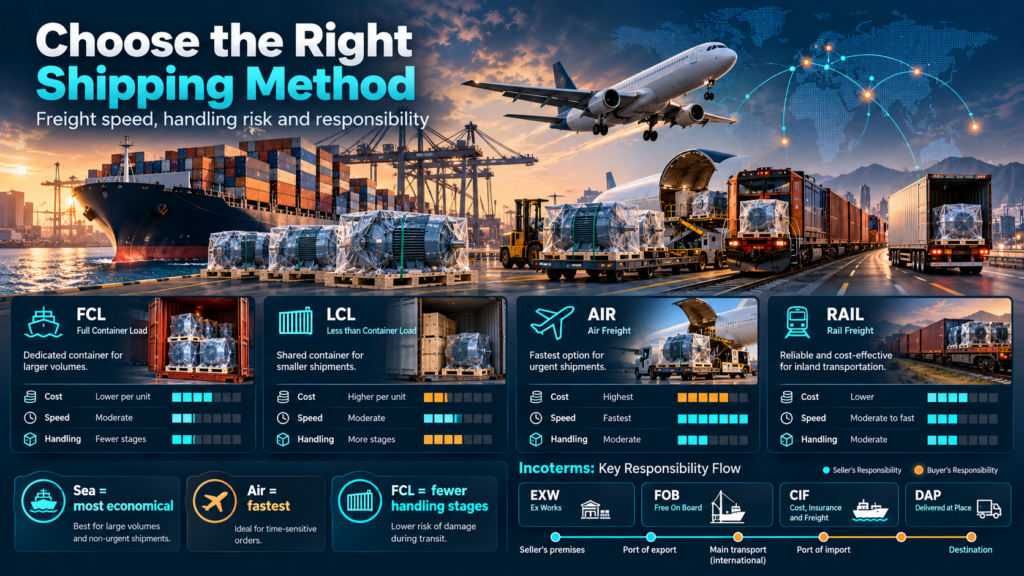
Choose the right shipping method
The best method depends on weight, volume, urgency, handling risk, and destination.
- FCL sea freight: Suitable for large or regular orders, with fewer handling stages.
- LCL sea freight: Suitable for smaller orders but involves more consolidation and handling.
- Air freight: Useful for samples, urgent replacements, and compact motors, but expensive for bulky cargo.
- Express courier: Suitable for small samples and spare parts.
- Rail freight: Available on selected routes between China, Europe, and Central Asia.
- Flat rack, open top, or breakbulk: Used for oversized or very heavy motors.
For electric motor shipping from China to Europe, sea freight is usually the most economical option. Rail or air may be considered when delivery speed is more important.
For deliveries to the Middle East or Southeast Asia, humidity, condensation, heat, and remote-site access should be considered.
Incoterms define responsibility
The quotation should clearly state the Incoterm, named place, unloading responsibility, and excluded charges.
- EXW: The buyer collects the goods and manages most transport and export procedures.
- FOB: The seller handles inland transport, export clearance, and loading on board. The buyer manages main freight and destination costs.
- CFR/CIF: The seller pays freight to the destination port. CIF also includes minimum cargo insurance. Risk transfer still follows the agreed Incoterm.
- DAP: The seller delivers to the named destination. The buyer normally handles import clearance, duties, and taxes.
- DDP: The seller handles most import responsibilities, but this should only be used when legally and practically workable.
Prepare documents before dispatch
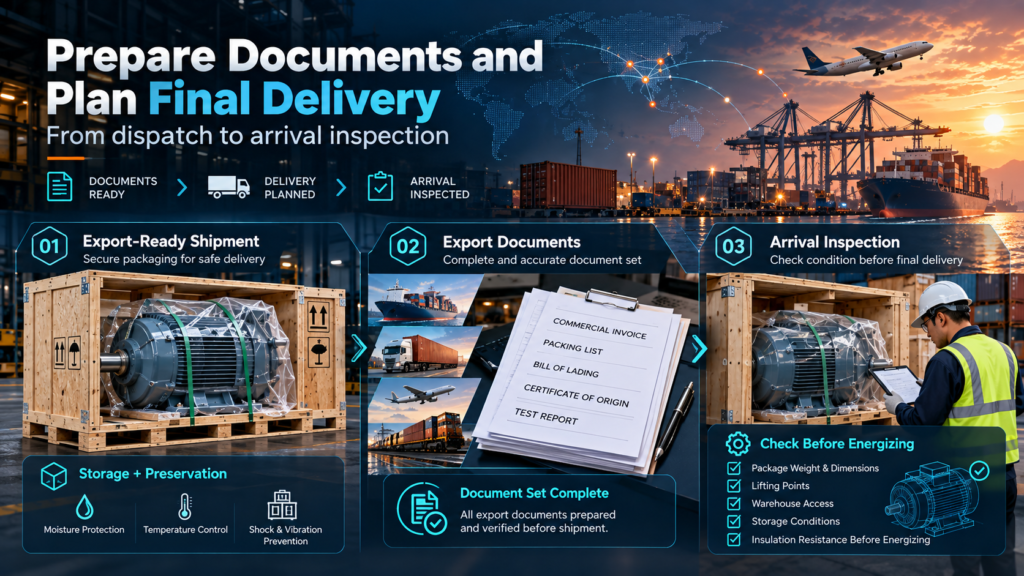
A typical export document package may include:
- Commercial invoice
- Packing list
- Bill of lading, air waybill, or rail document
- Certificate of origin
- Insurance certificate
- Product test report
- Packing declaration
- Dimensions and weight
- Nameplate information
- Operation and maintenance manual
- Required conformity documents
For African, South American, and other overseas projects, confirm voltage, frequency, language, import rules, nameplate requirements, wooden-packaging rules, and inland delivery conditions before production is completed.
Product compliance must match the exact destination and application. Efficiency registration, hazardous-area approval, and local safety requirements may apply.
Plan for final delivery
Arrival at the port does not mean the motor is ready for installation. Large motors may require cranes, forklifts, low-bed trailers, or special rigging.
Confirm the following before shipment:
- Package weight and dimensions
- Lifting points and center of gravity
- Crane and forklift capacity
- Warehouse access
- Road restrictions
- Unloading responsibility
- Storage location and duration
- Preservation and shaft-rotation requirements
Never lift a motor from the fan cover, terminal box, shaft, or other unapproved points.
Inspect the motor on arrival
Inspect the shipment as soon as possible. Photograph visible damage before moving or opening the case, especially if an insurance claim may be needed.
Check:
- Case condition and moisture
- Shock or tilt indicators
- Model and quantity
- Nameplate details
- Shaft and flange condition
- Fan cover and terminal box
- Accessories and loose parts
- Rust, condensation, or impact
- Insulation resistance before energizing
Motors stored for a long period may need insulation testing, bearing checks, lubrication, or drying before operation.
Frequently asked questions
Is a plywood case always exempt from treatment rules?
Manufactured wood is often exempt, but solid-wood pallets, supports, and dunnage may still require treatment and marking.
Is FCL always safer than LCL?
FCL usually involves less handling, but safety still depends on case design, loading, securing, and unloading.
Does every motor need vacuum packaging?
No. Protection should match the climate, journey, motor design, and storage period. A sealed moisture barrier with suitable desiccant is often sufficient.
Which Incoterm is suitable for a new importer?
DAP can simplify transport while leaving import clearance to the buyer. DDP is suitable only when the seller can legally manage import procedures.
What is the most economical shipping method?
Sea freight is usually the most economical for heavy or high-volume orders. Compare total costs, including destination charges, handling, storage, and inland delivery.
Reliable delivery starts at the factory
Effective electric motor export from China planning combines packaging, corrosion protection, freight selection, documentation, insurance, and destination handling.
DAYOU MOTOR supports international buyers with technical confirmation, export packaging, inspection records, shipping coordination, OEM identification, and delivery documents. Agreeing on logistics before production helps control costs and reduce damage, customs delays, and installation problems.