


- Home
- Product
- GOST standard motor
- IEC standard motor
 MC Series single phase capacitor start asynchronous motor
- MY MYT series single phase capacitor running asynchronous motor
- ML Series single phase dual-capacitor asynchronous motor
- ME2 series three phase high efficiency aluminum housing motor(IE2)
- ME3 series three phase high efficiency aluminum housing motor(IE3)
- MS series three-phase aluminum housing motor (IE1)
- Y2 series three phase cast iron motor (IE1)
- YE2 series three phase high efficiency cast iron motor (IE2)
- YE3 series three phase high efficiency cast iron motor (IE3)
- Special application motor
- Rolling door motor
- Industry application
- News
- About us
- Contact us
- Certifications
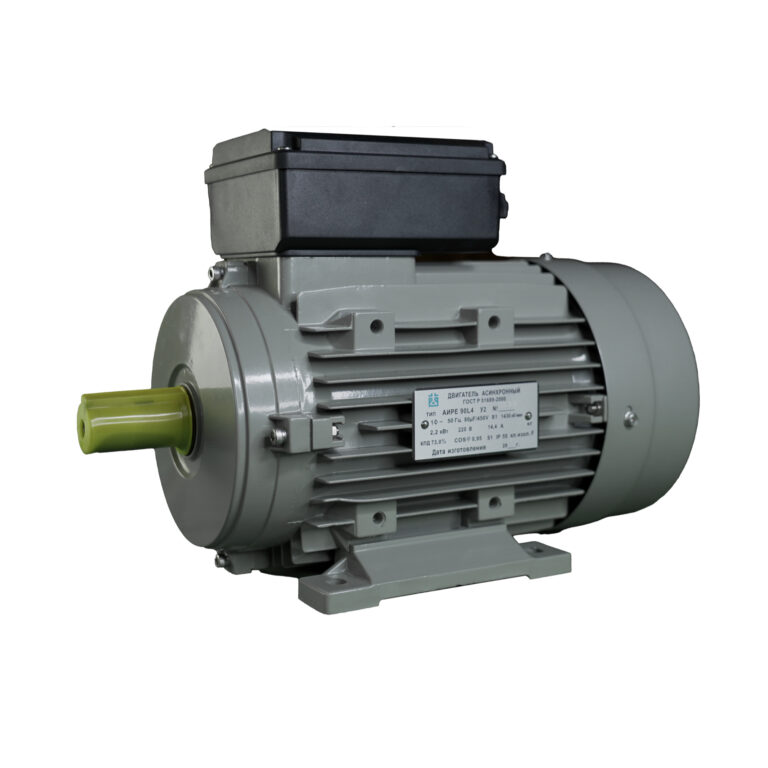
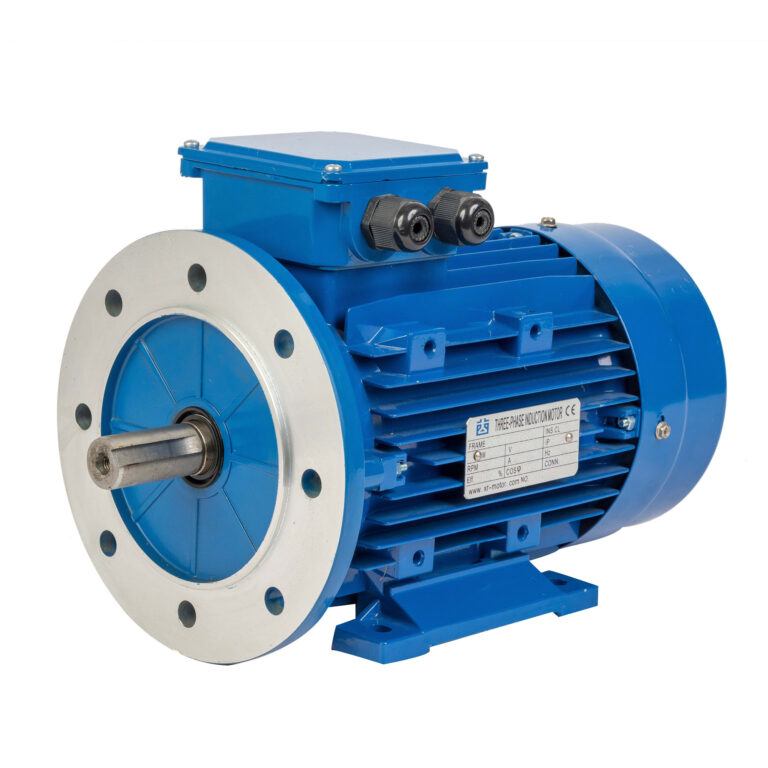
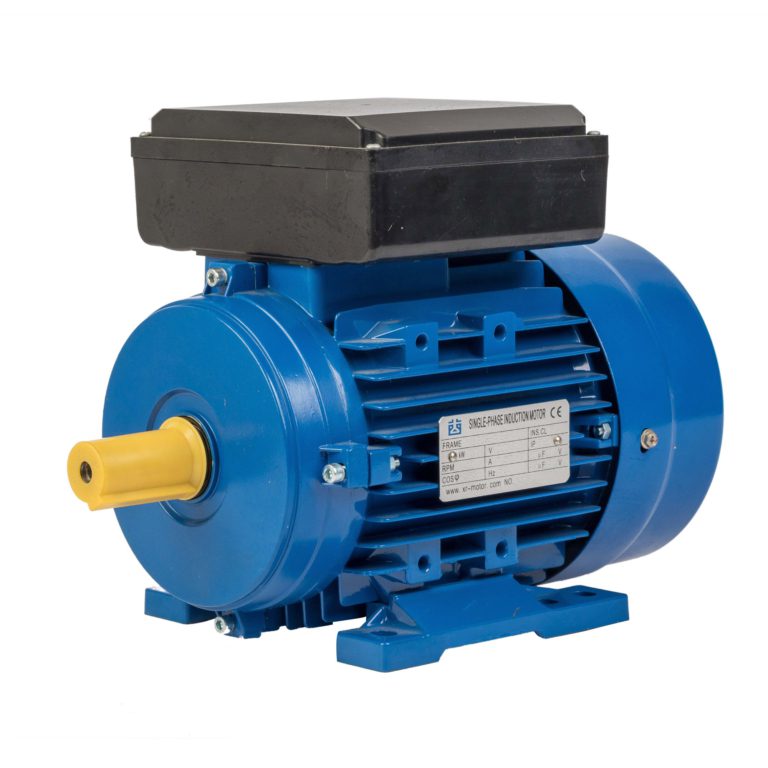
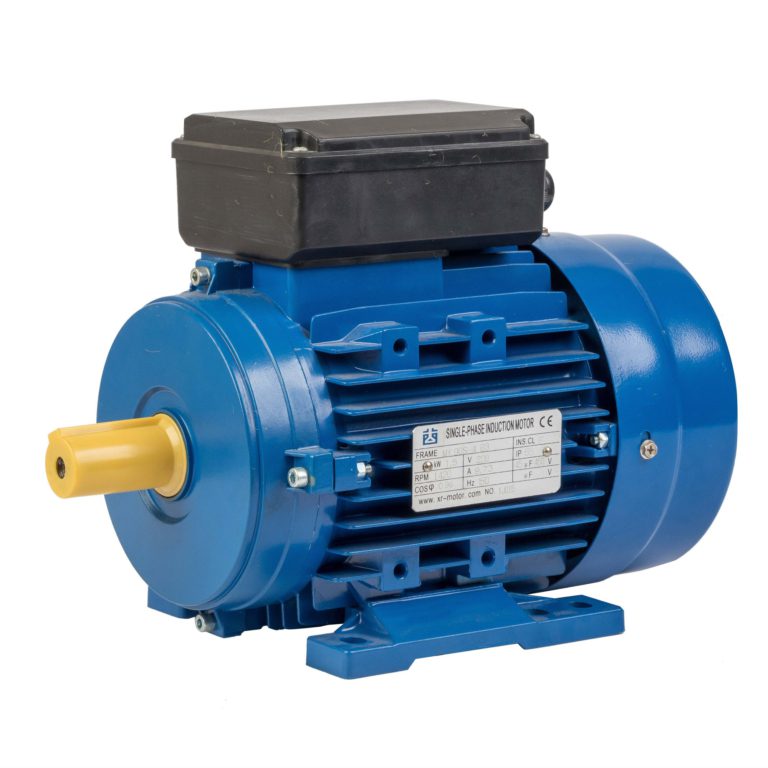
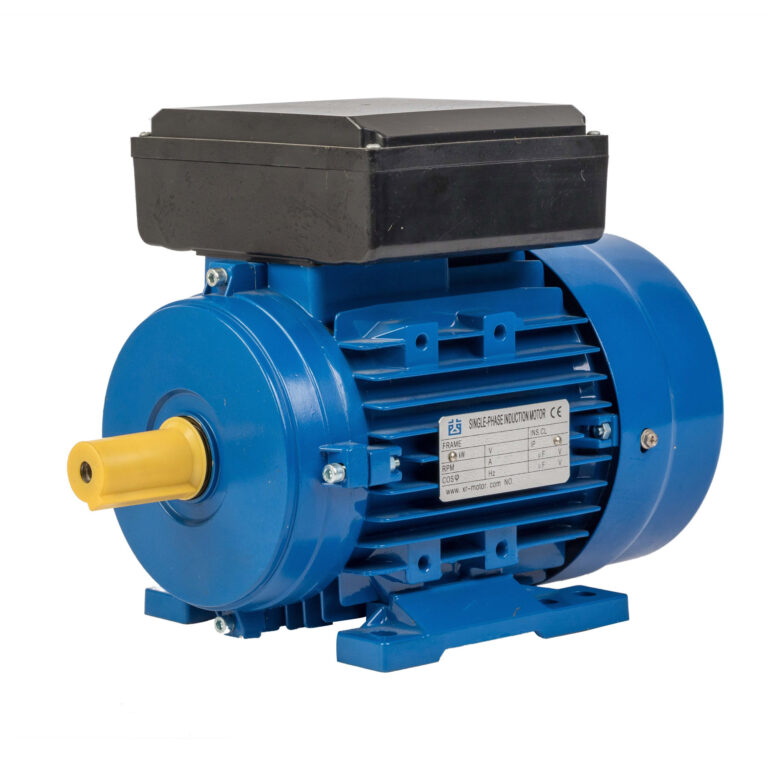
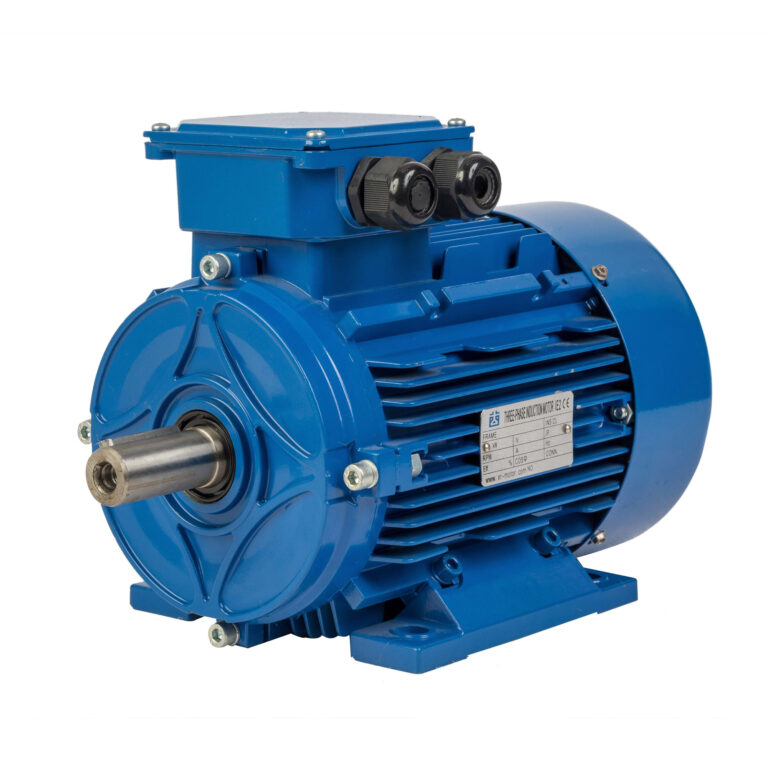
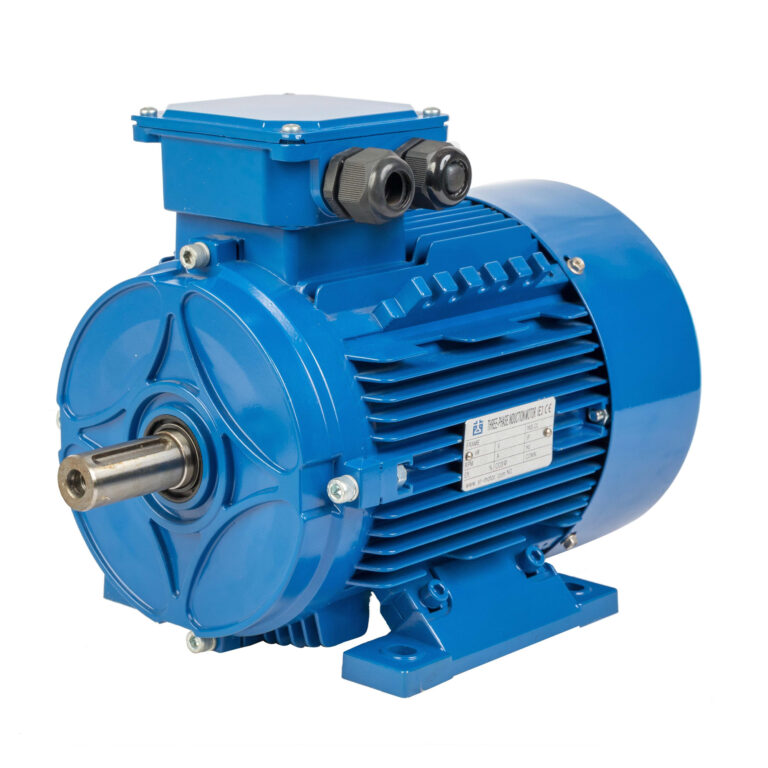
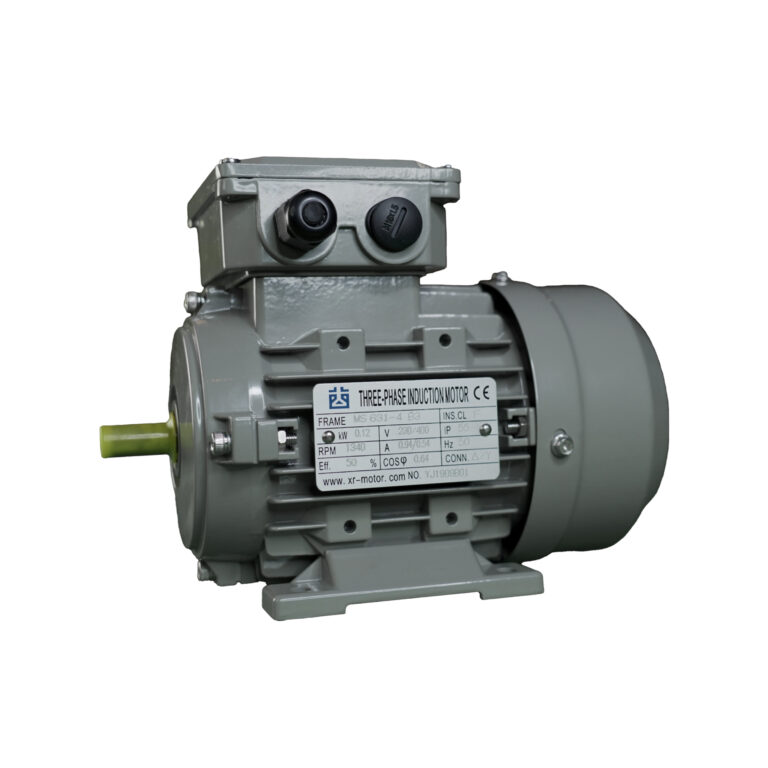
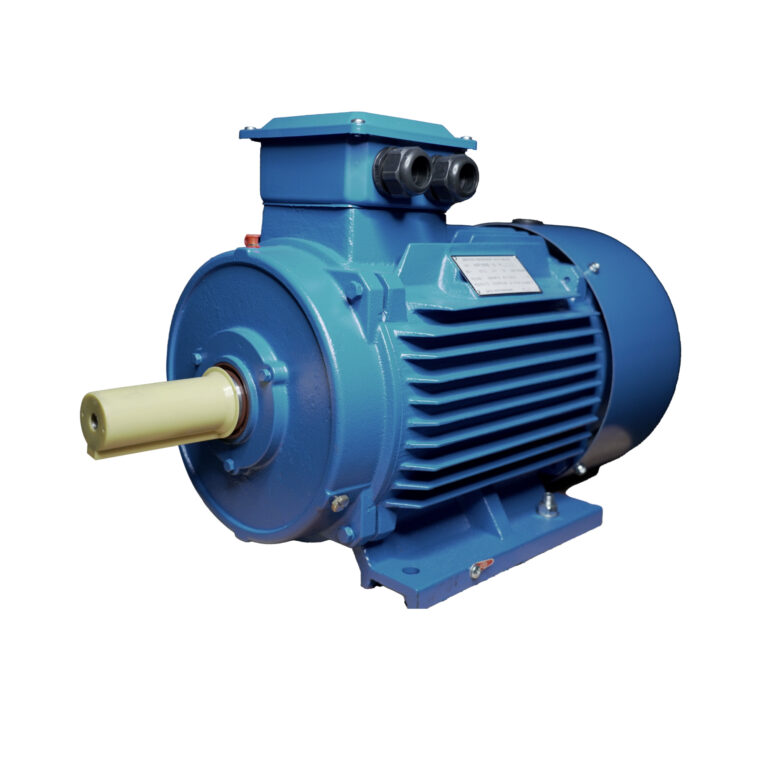
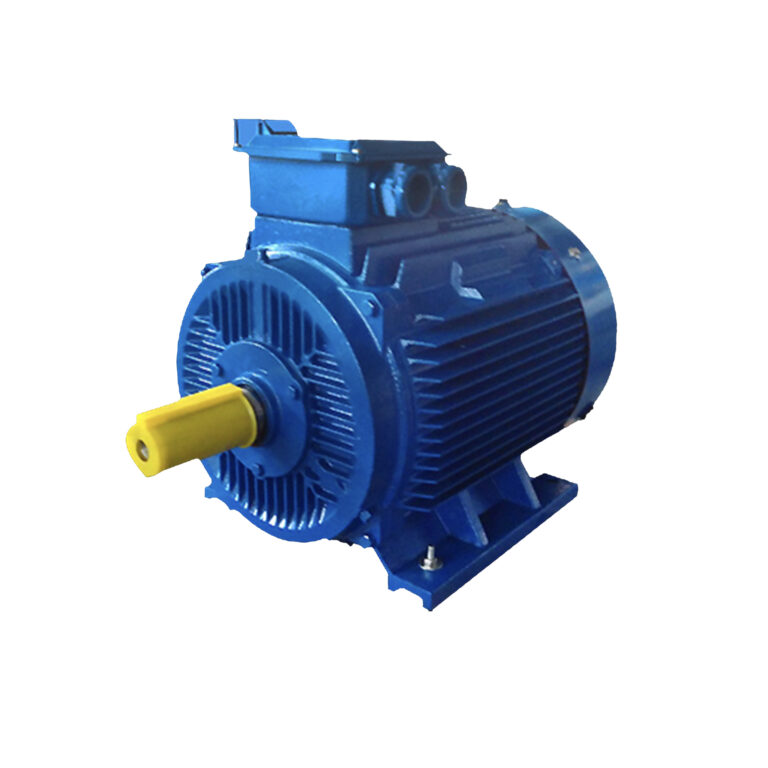
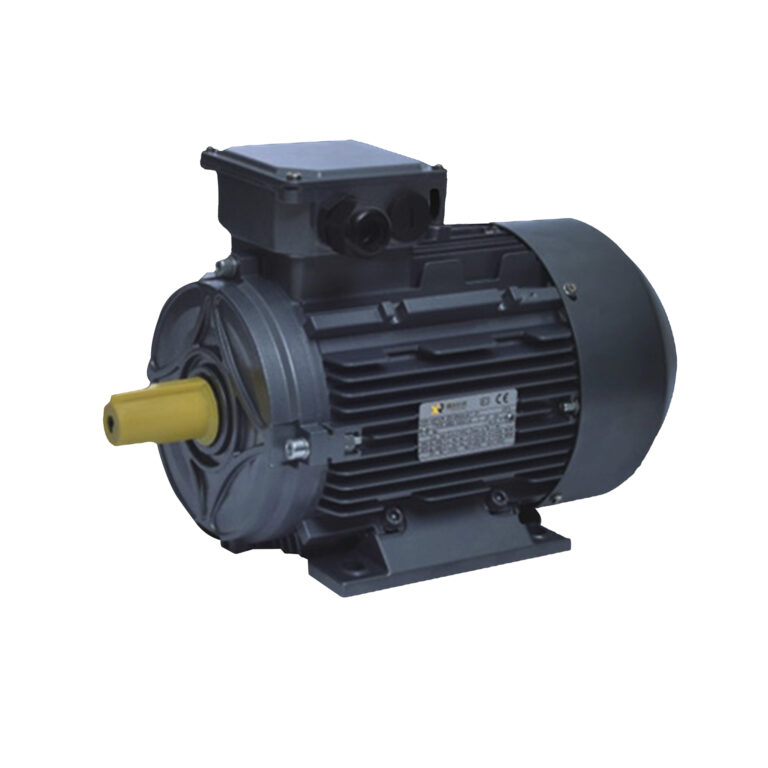
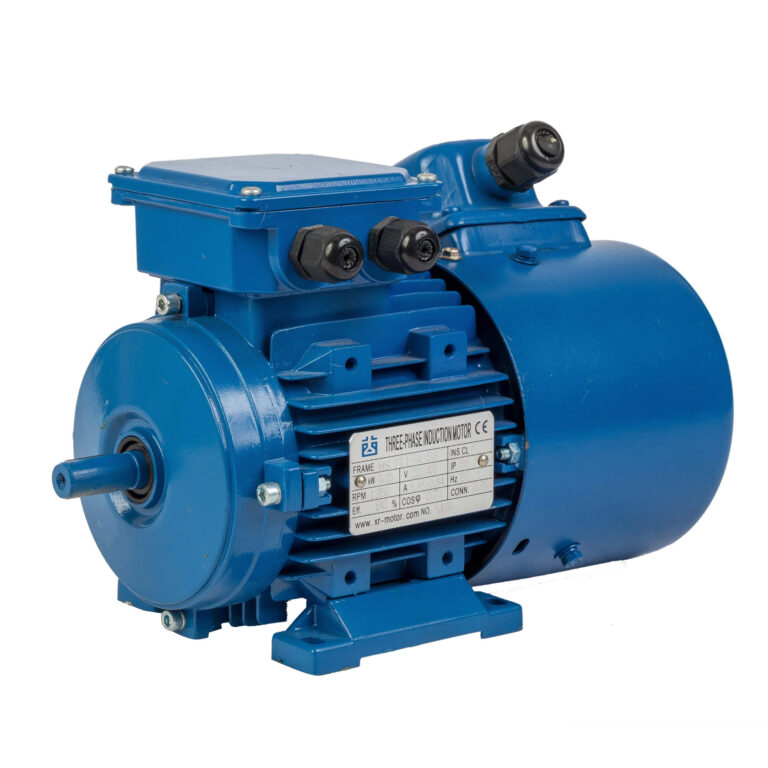
IE3 vs. IE4 Motor Efficiency Comparison and Application Selection
In modern industrial production and various civilian equipment, electric motors have always played the role of the “power heart.” From fans, pumps, and compressors in factories to central air conditioning, conveying equipment, and large commercial equipment, almost all rely on electric motors. In daily life, electric motors provide continuous power for our daily production and life. However, electric motors consume a large amount of electrical energy during operation, and their efficiency directly determines how much energy is wasted, how much operating cost is incurred, and the lifespan of the equipment. With the increasing global demands for energy conservation, emission reduction, and low-carbon development, motor energy efficiency ratings have gradually become a focus of industry attention. IE3 and IE4, as the current mainstream high-efficiency motor standards, are widely used in new projects and the renovation of old equipment.
Many people are not familiar with the concepts of IE3 and IE4, and even think that there is only a difference in efficiency between them, which is not worth worrying about. However, in actual long-term operation, seemingly small efficiency differences will be amplified over time and with the scale of use, eventually forming huge differences in energy consumption and economic benefits.
1.IE3 and IE4: Basic Concepts of Motor Energy Efficiency Ratings
Let’s start by explaining the concept of IE! IE stands for International Efficiency, a standard for motor energy efficiency ratings established by the International Electrotechnical Commission (IEC). It’s used to uniformly classify the energy efficiency levels of three-phase asynchronous motors. Currently, the common standard divides motor energy efficiency into five levels: IE1, IE2, IE3, IE4, and IE5. A higher number indicates higher efficiency and lower energy consumption.
In the domestic market, the YE3 series motors correspond to the IE3 energy efficiency rating, while the YE4 series corresponds to the IE4 rating. Simply put, IE3 is currently the “passing grade” and mainstream choice for high-efficiency motors, while IE4 is a further optimized and energy-saving upgrade based on IE3. The core difference between the two is the different proportions of electrical energy conversion, aiming for less loss, lower heat generation, and more energy-efficient operation.
Many people mistakenly believe that efficiency improvements are simply a matter of adjusting parameters. In reality, the upgrade from IE3 to IE4 involves comprehensive optimization of materials, design, and manufacturing processes. The goal is to minimize wasted energy during motor operation, ensuring that every unit of electricity is used for actual work.
2.How significant is the efficiency difference between IE3 and IE4 motors?
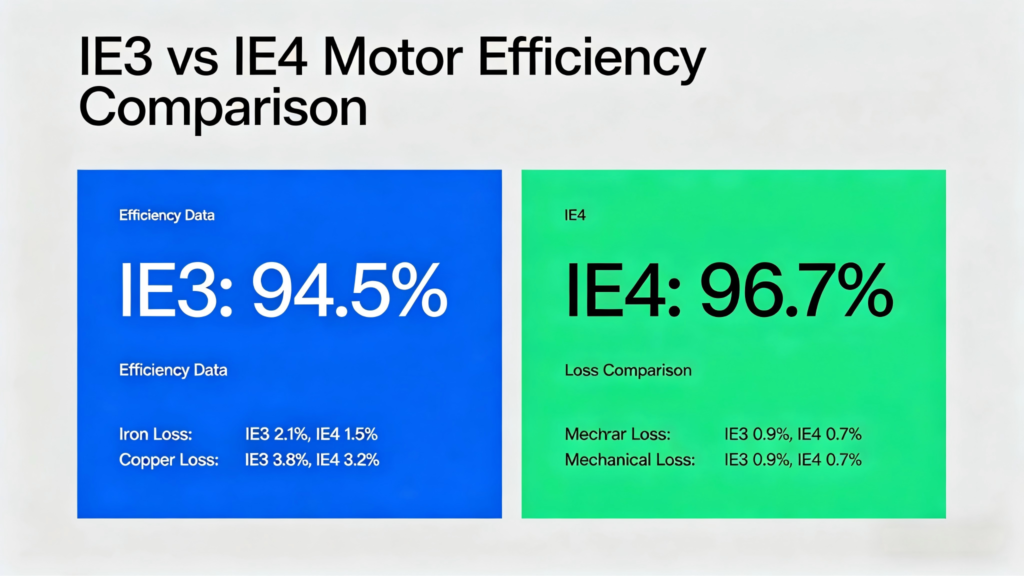
Numerically, IE4 motors are typically 1% to 3% more efficient than IE3 motors, with losses reduced by 15% to 20%. This difference may seem small, but in long-term industrial applications, the effects are very noticeable.
Efficiency standards vary slightly depending on motor power. For example, for a small 5.5kW motor, the IE3 efficiency is approximately 89.6%, while the IE4 can reach 92%; for a medium-sized 55kW motor, the IE3 efficiency is approximately 95%, while the IE4 can reach 96.5%; the efficiency difference for high-power motors also remains within this range. Motor losses mainly include iron losses, copper losses, mechanical losses, and stray losses. The IE3 has already reduced these losses through optimized design, while the IE4 controls them to an even more extreme level.
We can more intuitively feel the difference through actual electricity usage. Taking a 55kW motor as an example, operating for 6000 hours per year, and calculating based on an industrial electricity price of 0.7 yuan/kWh:
The IE3 motor consumes approximately 347,368 kWh annually, costing approximately 243,000 yuan;
The IE4 motor consumes approximately 341,969 kWh annually, costing approximately 239,000 yuan.
A single motor can save approximately 4,000 kWh of electricity per year, resulting in a significant difference in electricity costs. For equipment with higher power and longer operating times, such as a 160kW motor operating for up to 8000 hours per year, the IE4 can save tens of thousands of kWh of electricity annually compared to the IE3, with a cost difference exceeding 100,000 yuan. For factories, water plants, and chemical plants with dozens or even hundreds of motors, the total annual savings in electricity costs are considerable.
Besides energy savings, the increased efficiency brings additional advantages. IE4 motors have lower losses and a 5-10°C lower operating temperature rise than IE3 motors. Since motor insulation life is closely related to temperature, a 10°C decrease in temperature significantly extends insulation life. Therefore, IE4 motors are not only more energy-efficient but also more durable, with fewer malfunctions, lower maintenance costs, and greater overall stability.
Furthermore, IE4 motors have a wider efficient operating range, maintaining high efficiency even under complex conditions such as load fluctuations and variable frequency speed control. Unlike ordinary motors, their efficiency drops significantly under light loads, making them suitable for various common equipment such as fans, pumps, and compressors.
3.Where Does the Efficiency Improvement Come From: The Technological Upgrade Logic of IE4 Motors
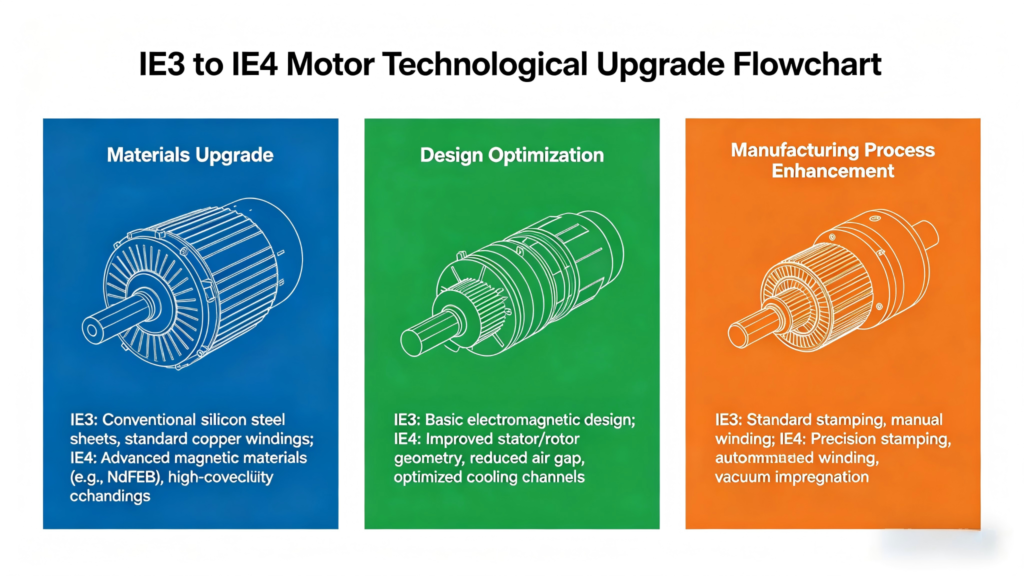
The higher efficiency of IE4 compared to IE3 is not simply due to design adjustments, but rather a comprehensive upgrade from materials and structural design to manufacturing processes.
In terms of materials, the IE4 motor uses higher-grade, low-loss silicon steel sheets, resulting in better magnetic permeability and lower iron loss. The windings utilize high-purity copper, and the increased cross-sectional area reduces copper losses due to resistance. Some high-end IE4 motors also employ copper rotor technology to further reduce rotor losses. Furthermore, low-friction bearings and low-resistance fans further reduce mechanical losses through meticulous attention to detail.
In terms of design, engineers optimized the stator and rotor slot shapes and air gap dimensions through electromagnetic simulation, resulting in a more uniform magnetic field distribution while reducing stray losses. They also shortened the winding end lengths to reduce ineffective losses and optimized the heat dissipation structure to prevent efficiency degradation due to overheating. Compared to the IE3, the IE4’s design is more refined, focusing on high efficiency under all operating conditions.
In terms of manufacturing processes, the IE4 demands higher precision. The core is stacked more tightly, the winding wiring is neater, and the rotor dynamic balance is more precise, reducing vibration and friction losses. In short, while the IE3 is a mature solution balancing cost and efficiency, the IE4 is a high-end solution pursuing ultimate energy savings.
4.How to Choose Between IE3 and IE4 in Practical Applications
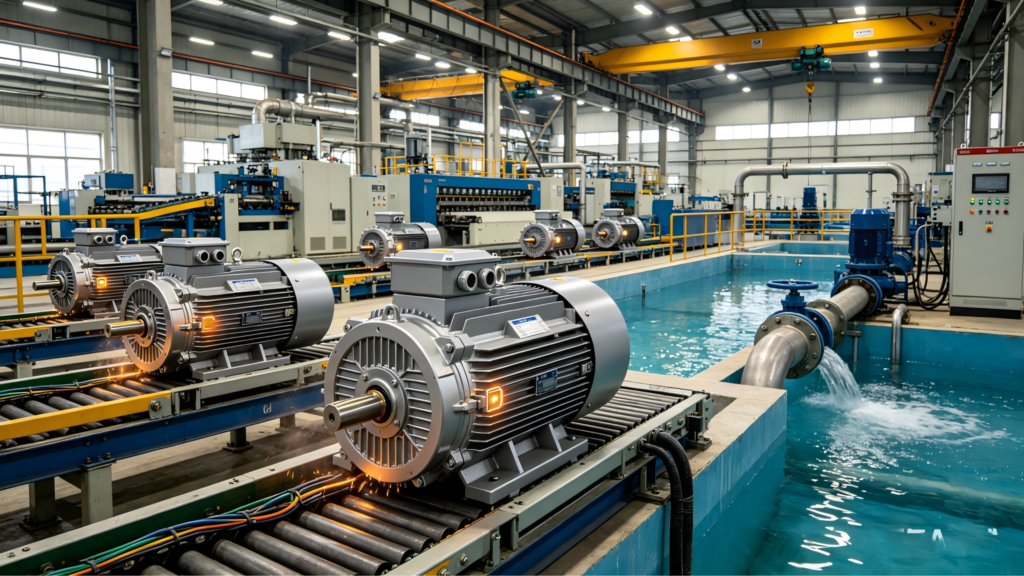
In practice, choosing between IE3 and IE4 doesn’t necessarily mean blindly pursuing a higher rating. The key factors are operating time, load type, and economic cost.
The advantages of IE3 motors lie in their mature technology, moderate price, and high cost-effectiveness. They are suitable for most common industrial scenarios, such as machine tools, ordinary fans and pumps, and conveyors, with an annual operating time of 3000-5000 hours, not continuous 24-hour operation. These types of equipment can already meet energy-saving requirements with IE3 motors, requiring lower initial investment and having a shorter payback period, making them a prudent choice for small and medium-sized enterprises and general projects.
While IE4 motors have a higher purchase cost, their energy-saving benefits are more lasting, making them suitable for scenarios requiring long-term continuous operation. Examples include water plants, power plants, chemical plants, core mining equipment, large central air conditioning systems, and air compressors, with an annual operating time of 6000-8000 hours or even 24/7 operation. In these scenarios, the electricity savings from IE4 can quickly cover the price difference, typically recovering the cost within 1-3 years, making it very cost-effective in the long run.
Furthermore, IE4 is more advantageous in projects with high industrial electricity prices and stringent green and low-carbon requirements. It effectively reduces carbon emissions, helping companies build green factories and meet environmental policies and energy-saving subsidies. It’s important to note that in the total cost of a motor’s lifecycle, procurement costs account for only about 2%, while electricity costs account for over 97%. Simply pursuing low-priced, inefficient motors may seem economical, but it will actually lead to higher electricity and maintenance costs in the long run. Upgrading from IE2 to IE3, and then from IE3 to IE4, essentially involves using a small initial investment to achieve long-term cost savings and stable operation.
5.Trends and Industry Significance of Motor Energy Efficiency Upgrades
Globally, improving motor energy efficiency is an irreversible trend. The EU, the US, and China are all continuously tightening energy efficiency standards for motors. my country has clearly defined IE3 as the minimum energy efficiency requirement for new projects, and IE4 will be promoted and popularized in more fields in the future.
Motors consume more than 60% of the total energy consumption in industry, making them a key link in industrial energy conservation. The widespread adoption of IE3 and IE4 can effectively reduce overall energy consumption and carbon emissions, contributing to the achievement of “dual-carbon” goals. With technological maturity and large-scale production, the cost of IE4 motors is gradually decreasing, and their cost-effectiveness is constantly improving, making them likely to become the mainstream choice in more scenarios in the future.
Meanwhile, the combination of high-efficiency motors and variable frequency control technology can further amplify the energy-saving effect. IE4 motors paired with frequency converters can automatically adjust their speed according to the load, maintaining high efficiency even under partial load conditions, achieving more than 10% energy savings compared to ordinary motors, making them an ideal combination for industrial energy conservation.
6.Conclusion
The seemingly small improvements in energy efficiency figures for IE3 and IE4 motors represent a significant advancement in energy utilization efficiency. A 1% efficiency difference may seem insignificant for a single motor, but within the broader industrial system, it translates to billions of dollars in electricity savings and carbon emission reductions annually.
For users, the choice between IE3 and IE4 should be made rationally based on their equipment’s operating conditions. Under normal operating conditions and with moderate running times, the more cost-effective IE3 should be prioritized; however, in continuous operation and high-energy-consuming scenarios, the IE4, with its superior long-term benefits, should be prioritized. For the industry, promoting the replacement of inefficient motors with high-efficiency ones is an inevitable path to green development.
Although small, motors are crucial to energy security and a low-carbon future. The shift from IE3 to IE4 is not merely a product upgrade, but also a practical implementation of energy-saving principles. In today’s pursuit of sustainable development, rationally choosing high-efficiency motors to ensure every kilowatt-hour of electricity is used efficiently is both a practical need for cost reduction and a concrete manifestation of social responsibility. With continuous technological advancements, motor efficiency will continue to improve, and more efficient and economical products will enter various industries in the future, providing a continuous and stable driving force for green development.