


- Home
- Product
- GOST standard motor
- IEC standard motor
 MC Series single phase capacitor start asynchronous motor
- MY MYT series single phase capacitor running asynchronous motor
- ML Series single phase dual-capacitor asynchronous motor
- ME2 series three phase high efficiency aluminum housing motor(IE2)
- ME3 series three phase high efficiency aluminum housing motor(IE3)
- MS series three-phase aluminum housing motor (IE1)
- Y2 series three phase cast iron motor (IE1)
- YE2 series three phase high efficiency cast iron motor (IE2)
- YE3 series three phase high efficiency cast iron motor (IE3)
- Special application motor
- Rolling door motor
- Industry application
- News
- About us
- Contact us
- Certifications
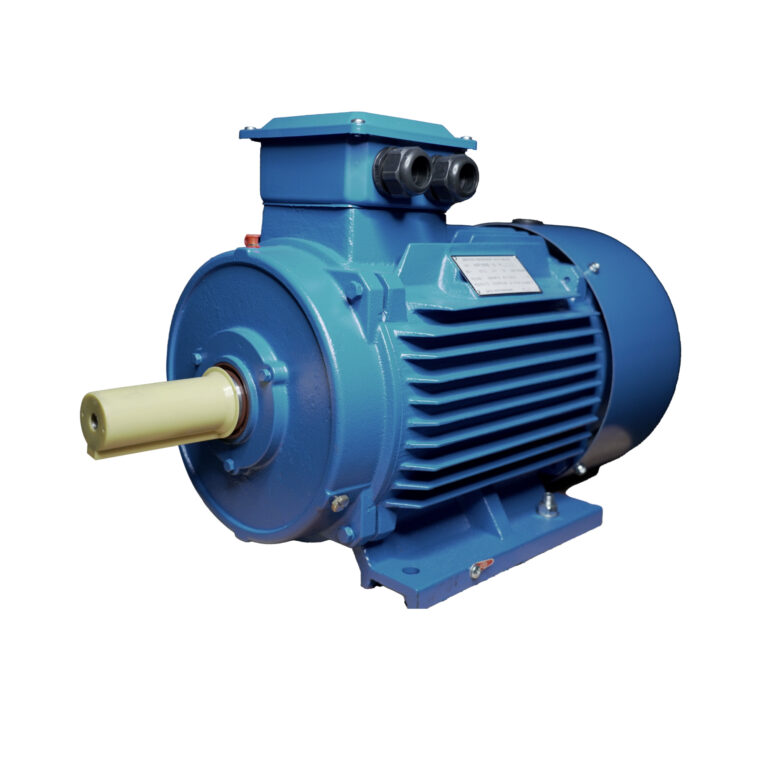
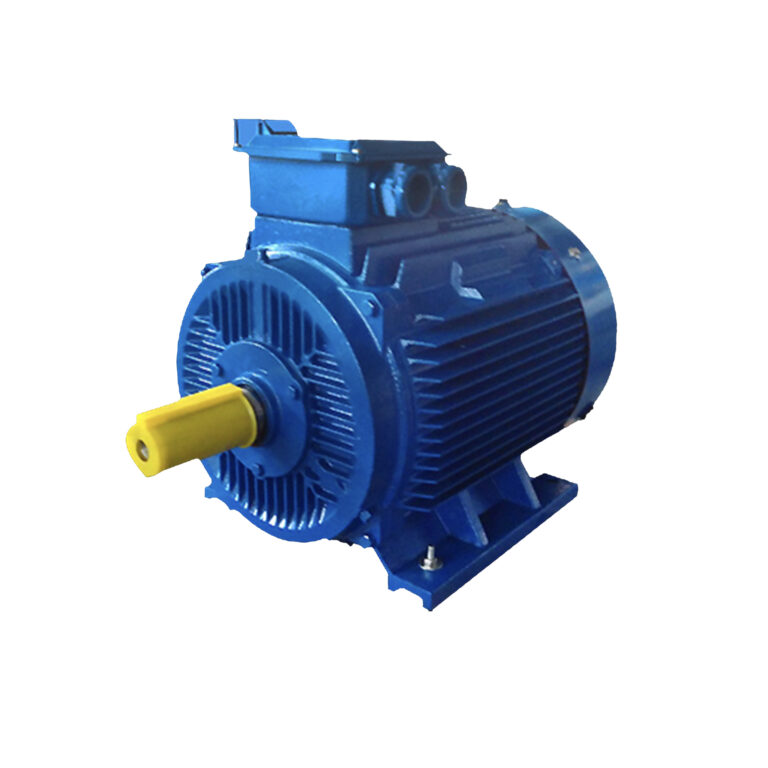
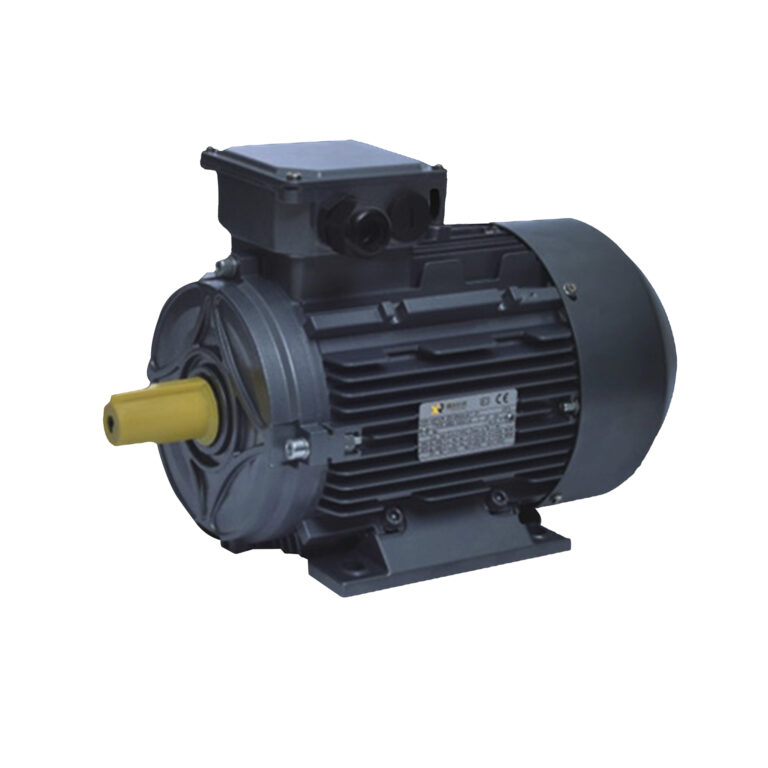
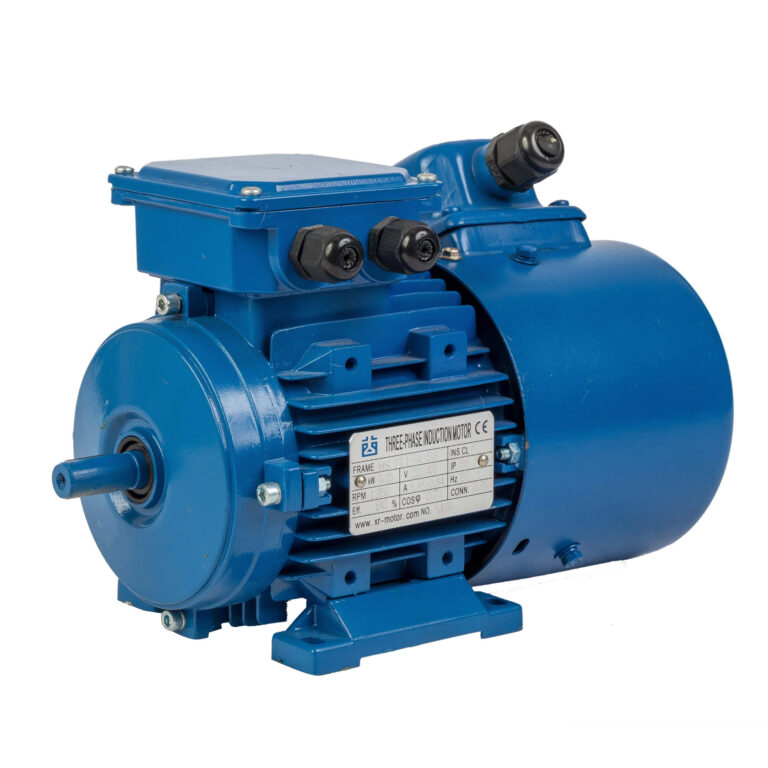
Squirrel Cage Rotor: What It Is and How It Affects Motor Performance
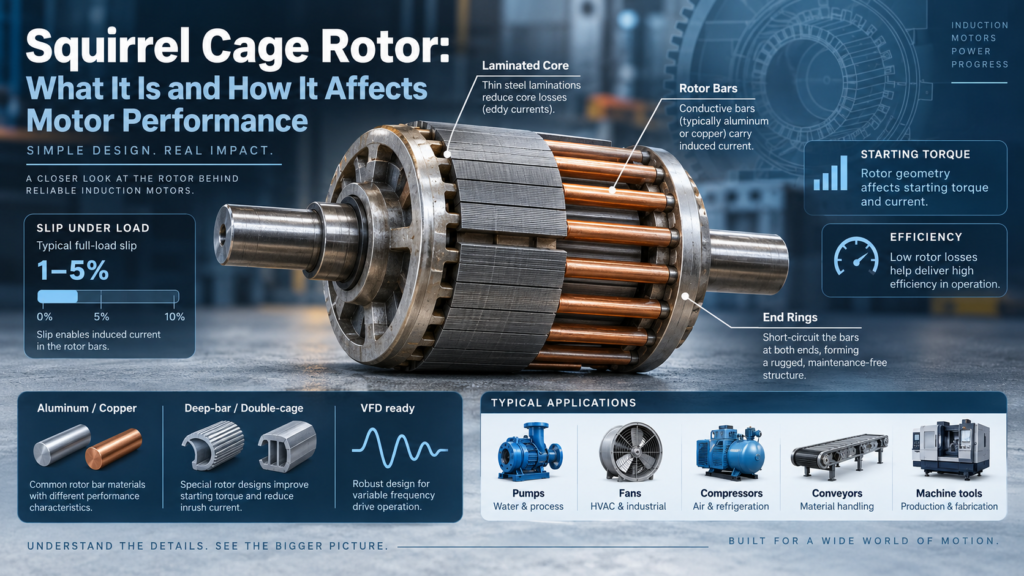
A squirrel cage rotor is the rotating part used in most industrial induction motors. Its simple construction, strong mechanical design, and lack of brushes or slip rings make it suitable for pumps, fans, compressors, conveyors, machine tools, and many other applications.
Although the rotor looks relatively simple, its bar material, slot geometry, resistance, reactance, balance, and manufacturing quality have a direct effect on motor torque, current, speed, efficiency, temperature, noise, and service life.
DAYOU MOTOR supplies induction motors with rotor designs suited to general industrial use, high-efficiency operation, heavy-starting loads, and VFD applications.
The rotor has three main components
The squirrel cage rotor is made up of a laminated steel core, conductive bars, and short-circuiting end rings.
Laminated rotor core
The core consists of thin electrical-steel laminations pressed together and mounted on the shaft. Slots around the outer surface hold the conductive bars.
Using insulated laminations instead of a solid steel core helps limit eddy-current losses and reduce heating. Steel grade, lamination thickness, slot shape, and core length all influence the motor’s magnetic performance.
Conductive rotor bars
Aluminum or copper bars are installed in the rotor slots. In small and medium-sized motors, aluminum bars are often die-cast together with the end rings and cooling features.
Larger or specialized motors may use fabricated copper bars. The material and shape of the bars affect rotor resistance, leakage reactance, starting torque, current, slip, and efficiency.
End rings
End rings connect the rotor bars at both ends, creating a permanently short-circuited circuit. As a result, the rotor does not need an external electrical supply, brushes, or slip rings.
The connection between the bars and end rings must be strong and consistent. Cracks, porosity, or weak joints can lead to uneven current distribution, local heating, torque pulsation, and vibration.
Electromagnetic induction produces torque
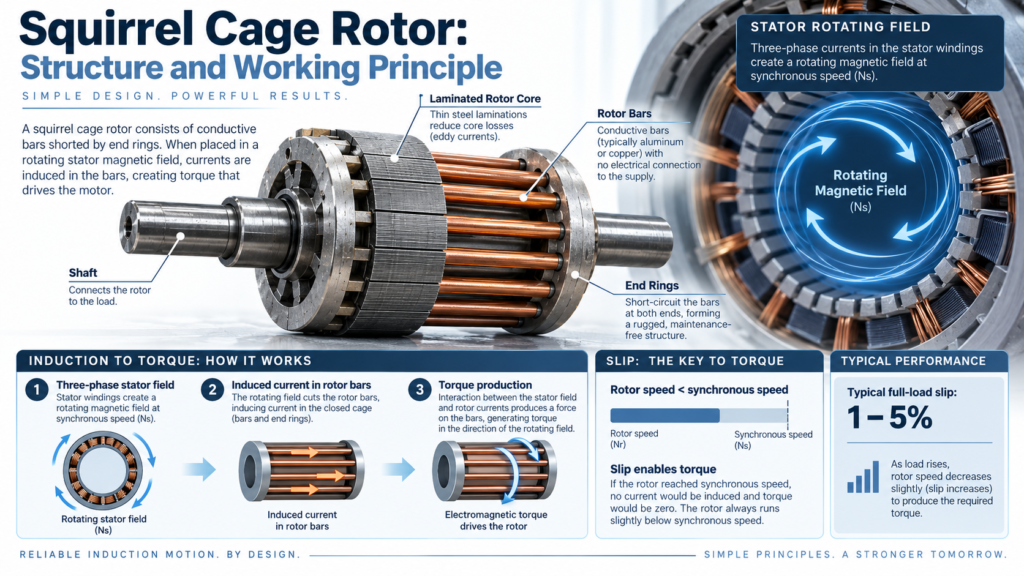
The squirrel cage rotor has no direct electrical connection to the power supply. When three-phase current flows through the stator windings, it creates a rotating magnetic field.
At startup, the rotor turns more slowly than this field. The relative movement causes voltage and current to be induced in the rotor bars. The interaction between the rotating stator field and the induced rotor current produces torque.
During normal operation, rotor speed remains slightly below synchronous speed. This difference is known as slip, and it is necessary for rotor current and torque production.
Slip is small at light load and normally increases as the mechanical load rises. Excessive slip may indicate overload, low voltage, a rotor fault, or an unsuitable motor design.
Rotor geometry affects starting performance
The geometry of the squirrel cage rotor helps determine how much torque and current the motor produces from standstill to full speed.
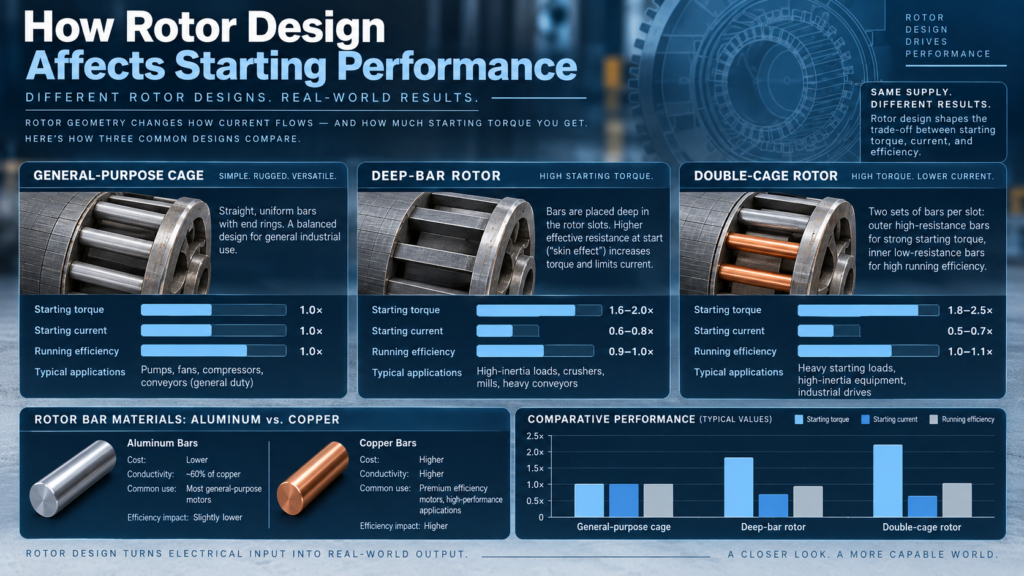
A general-purpose cage design usually provides moderate starting torque and relatively high current during direct starting. This is suitable for many pumps, fans, and machines that start with little load.
Loaded conveyors, compressors, crushers, and mixers may require stronger starting performance. Deep-bar and double-cage designs can improve the balance between starting torque and starting current.
Deep-bar design
At startup, rotor-current frequency is high. The skin effect causes more current to flow near the upper part of a deep bar. This increases its effective resistance and helps improve starting torque.
As the motor accelerates, rotor frequency decreases and current spreads through more of the bar. The effective resistance then falls, supporting better efficiency during normal operation.
Double-cage design
A double-cage rotor contains two conductive sections with different electrical characteristics. The outer cage helps provide stronger starting performance, while the inner cage carries more current during normal running.
A high starting torque rotor for Southeast Asian conveyors should still be evaluated against the complete load curve, inertia, acceleration time, starts per hour, and available power supply.
Claims about high starting torque should be supported by torque-current data rather than by the rotor description alone.
Aluminum and copper offer different advantages
Aluminum is widely used because it can be die-cast efficiently into complex slot shapes. It offers competitive cost, low weight, and reliable production for many motor sizes.
An aluminum cage rotor manufacturer in China for European pump OEMs should control casting temperature, porosity, bar filling, end-ring quality, dimensions, and balance to maintain consistent motor performance.
Copper has lower electrical resistance than aluminum, which can reduce rotor losses and support higher efficiency. However, copper material and manufacturing processes are generally more expensive and technically demanding.
A copper rotor motor for Middle East industrial projects may be suitable where energy consumption, compact construction, or long operating hours justify the additional cost. The complete motor design should be assessed because rotor material alone does not determine total efficiency.
Main differences between aluminum and copper rotor bars
Aluminum bars generally cost less, weigh less, and are well suited to die-casting processes. Their electrical resistance is higher, so rotor losses may also be higher in some designs.
Copper bars offer lower resistance and may reduce rotor losses, but they increase material cost and can make manufacturing more demanding. They are often considered for high-efficiency or specialized motors where the operating conditions justify the investment.
The final choice depends on motor size, efficiency target, duty cycle, starting requirements, thermal limits, and budget.
Skewed bars improve smooth operation
Rotor bars are often installed or cast at a slight angle relative to the shaft. This skew helps reduce magnetic locking between the stator and rotor teeth.
It can also reduce torque pulsation, electromagnetic noise, vibration, harmonic torque, and cogging during startup.
Skew must be designed carefully. Excessive skew can reduce available torque and may also affect efficiency.
The design influences running performance
Rotor resistance and reactance affect more than starting. They also influence rated slip, full-load speed, running current, power factor, maximum torque, efficiency, rotor temperature, overload capability, and torque stability.
A high-resistance rotor can provide better starting torque, but it may produce more losses and slip during operation. A low-resistance rotor can support higher efficiency, but it may not provide enough starting performance for a difficult load.
The best design is therefore not simply the rotor with the lowest resistance. It is the design that balances starting, running, thermal, and efficiency requirements.
An induction motor rotor supplier for African mining equipment should consider shock loads, dust, starting frequency, power quality, cooling conditions, and the difficulty of field maintenance.
VFD operation changes rotor requirements
A VFD can provide smooth acceleration, controlled starting current, and adjustable speed. However, the rotor must still be suitable for the required torque and speed range.
Important factors include continuous low-speed torque, rotor heating, acceleration time, maximum frequency, mechanical overspeed, balance quality, load inertia, and the number of starts or reversals per hour.
The VFD must supply enough current throughout acceleration. It cannot compensate for a rotor design that lacks the required torque or for a motor that is undersized for the load.
Manufacturing quality affects reliability
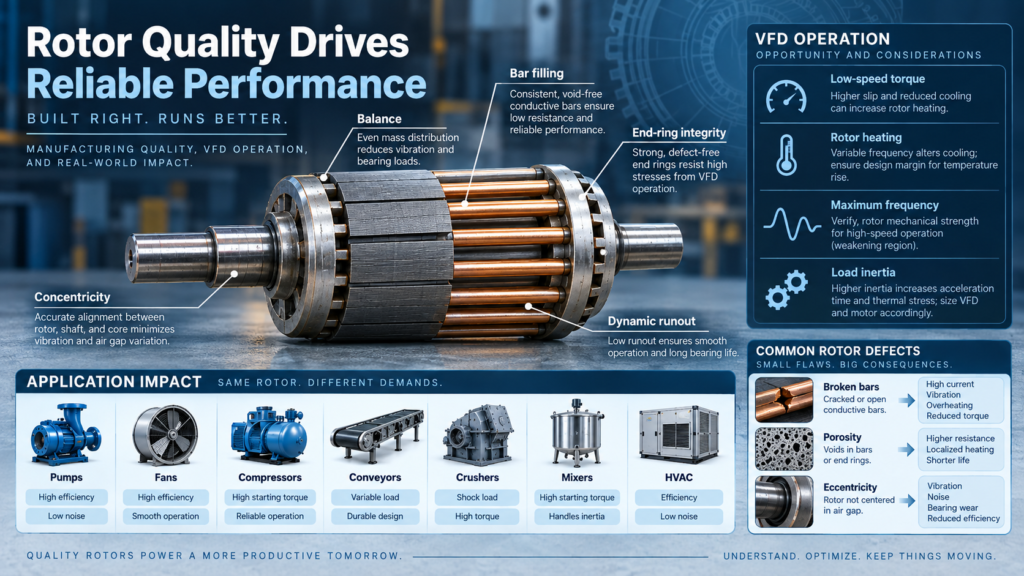
Because the squirrel cage rotor rotates at high speed, casting quality, concentricity, shaft fit, and dynamic balance are critical.
Common rotor problems include broken or partially filled bars, cracked end rings, casting porosity, loose laminations, shaft eccentricity, incorrect skew, poor dynamic balance, and uneven rotor-to-stator air gaps.
These defects can cause high current, reduced torque, overheating, vibration, unusual noise, and unstable speed.
Production control may include dimensional inspection, casting checks, electrical testing, balance correction, runout measurement, vibration testing, and no-load current comparison.
An IEC motor manufacturer in China for South American factories should maintain traceable records for materials, machining, balancing, assembly, and testing, especially when supplying repeat orders.
Application requirements determine the rotor type
Different equipment places different demands on the rotor.
Pumps usually require efficiency, stable speed, and reliable continuous operation. Fans often place greater emphasis on low noise, balance, efficiency, and VFD compatibility. Compressors may need strong starting torque, sufficient thermal capacity, and the ability to accelerate a high-inertia load.
Conveyors commonly require loaded starting and good acceleration performance. Crushers may need high starting torque and resistance to shock loads. Mixers can experience changing loads and short-term overloads. Machine tools generally require low vibration and stable speed, while HVAC equipment often prioritizes efficiency, quiet operation, and variable-speed control.
Motor selection should be based on the complete torque-speed curve rather than on the application name alone.
Frequently asked questions
Why does the rotor need slip?
Slip creates relative movement between the rotating magnetic field and the rotor bars, allowing voltage and current to be induced. Without slip, the motor cannot produce normal torque.
Does a cage rotor contain electrical windings?
It contains conductive bars and end rings rather than insulated wound coils. The closed cage circuit carries the induced current.
Is copper always better than aluminum?
No. Copper can reduce rotor losses, but aluminum offers lower cost and efficient manufacturing. The correct choice depends on motor design, efficiency target, power, duty, starting requirements, and budget.
What causes broken rotor bars?
Possible causes include casting defects, repeated heavy starts, excessive thermal cycling, mechanical stress, vibration, and poor manufacturing quality.
Can rotor design improve starting torque?
Yes. Bar material, resistance, slot geometry, deep-bar construction, and double-cage designs can all influence starting torque and current.
Rotor design must match the complete duty
A well-designed squirrel cage rotor balances starting torque, starting current, rated slip, efficiency, temperature, noise, and mechanical strength. No single bar material or slot shape is ideal for every application.
DAYOU MOTOR supplies induction motors with different cage materials, rotor geometries, power ratings, efficiency classes, pole numbers, and starting characteristics. Providing complete load and operating information helps ensure that the rotor design matches the equipment rather than only the rated power.