


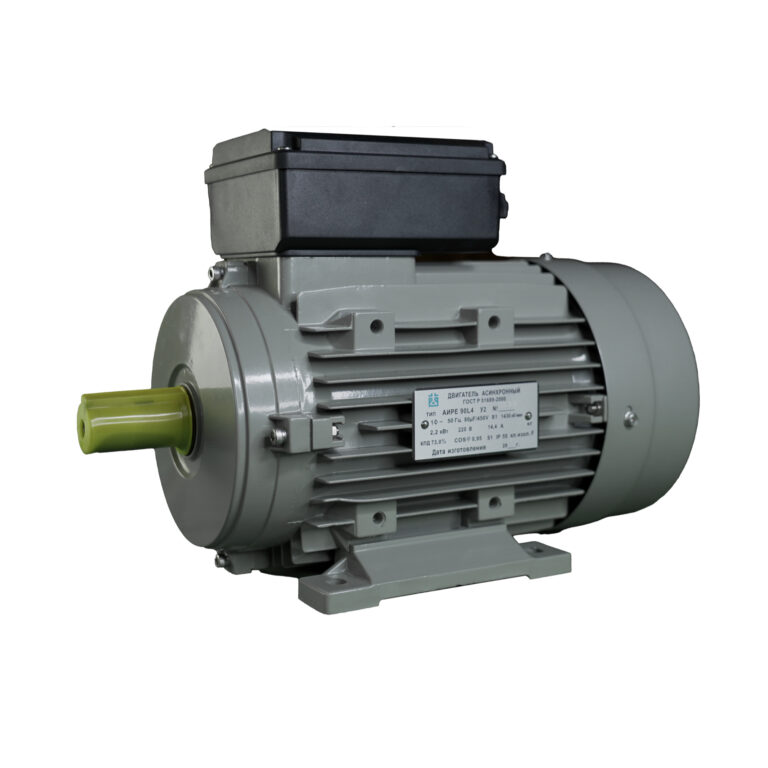
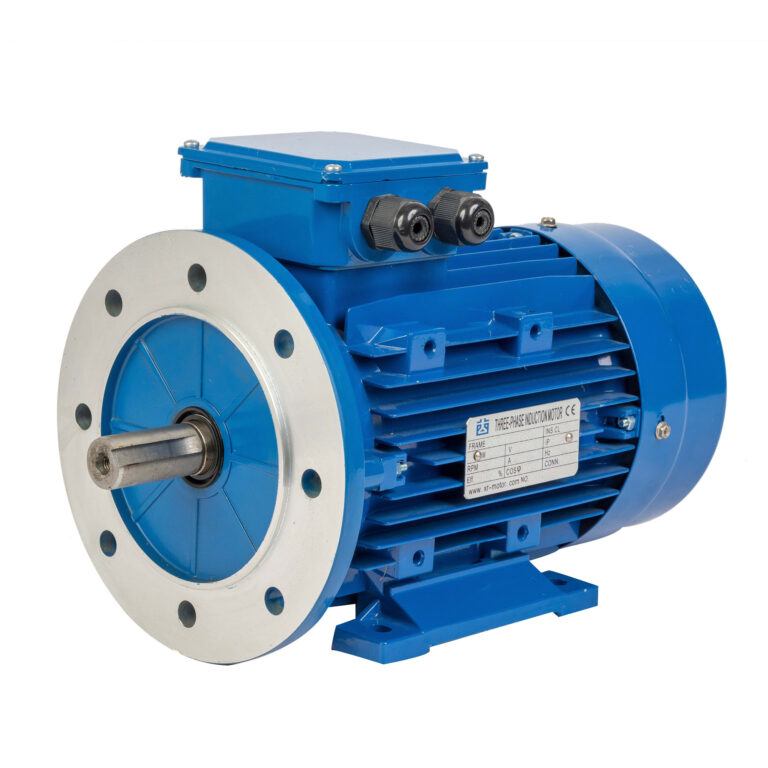
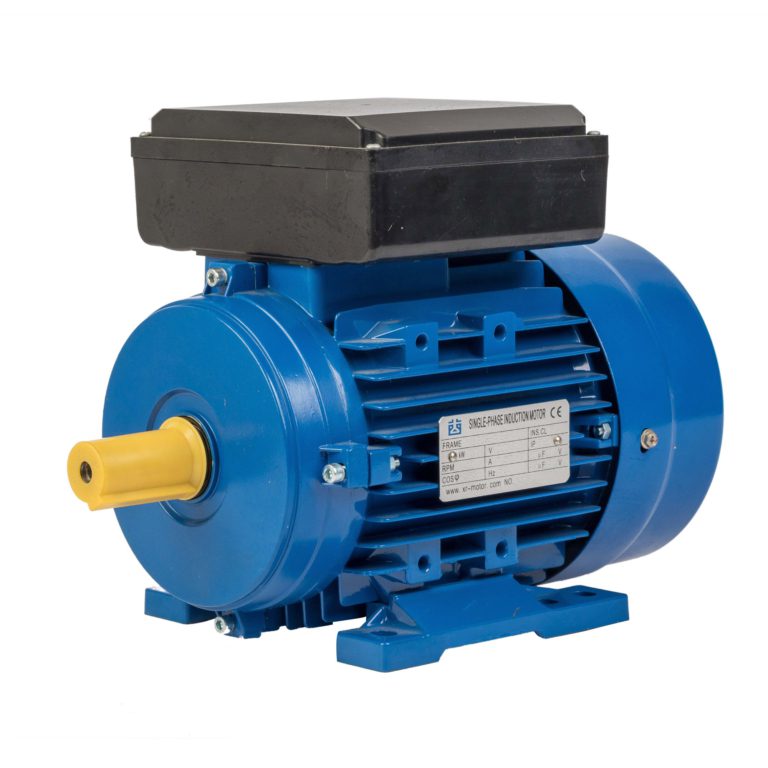
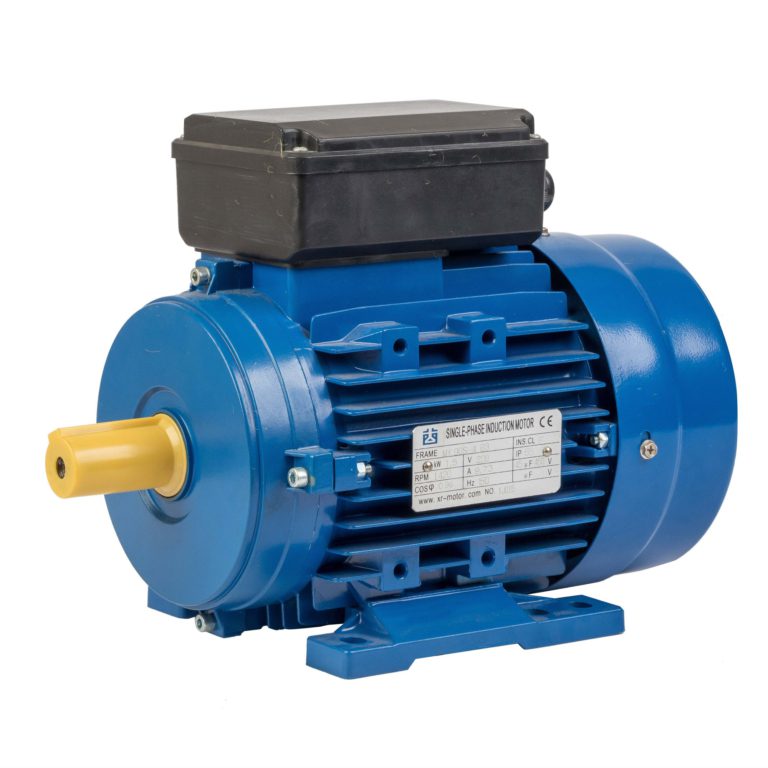
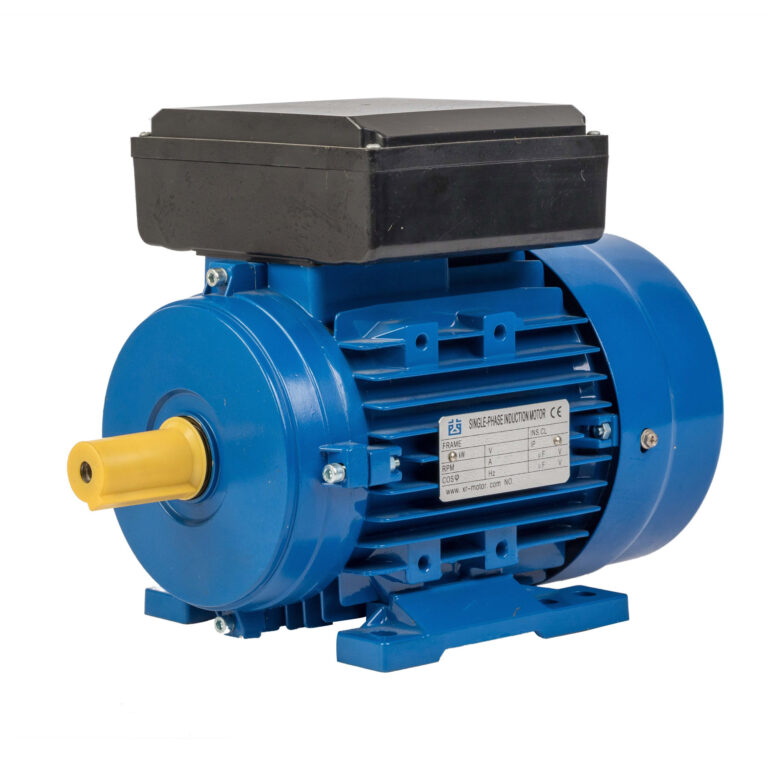
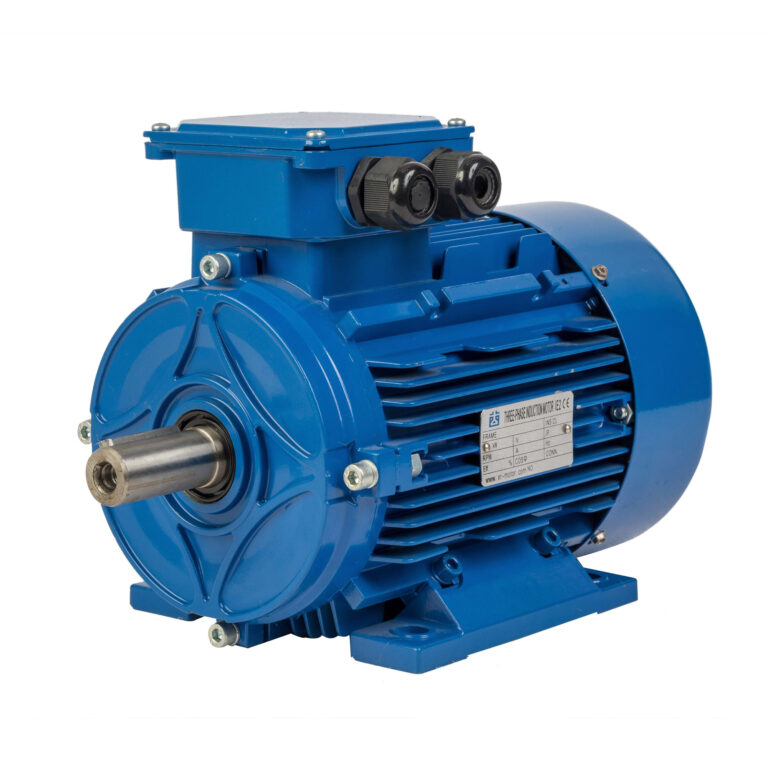
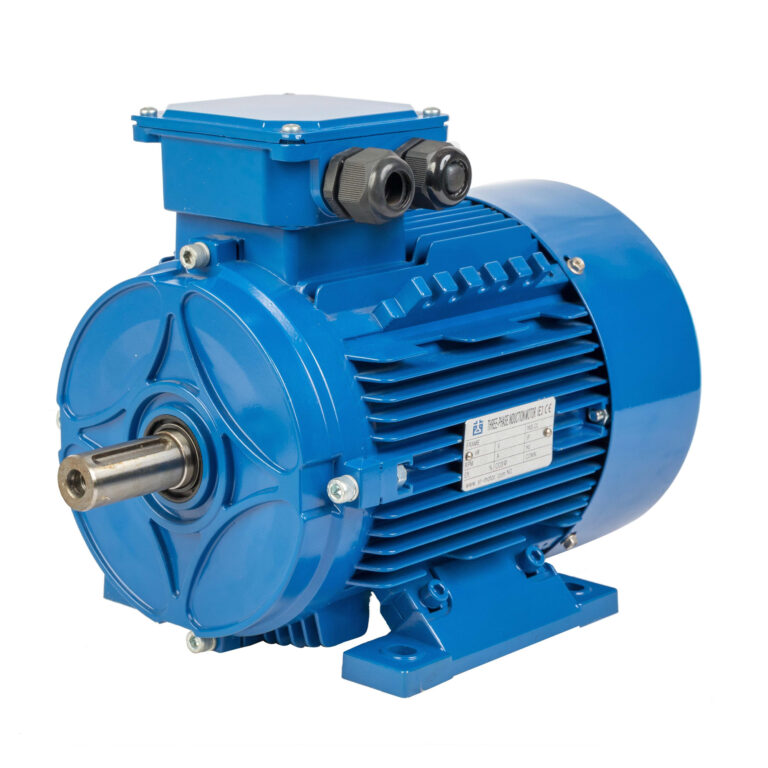
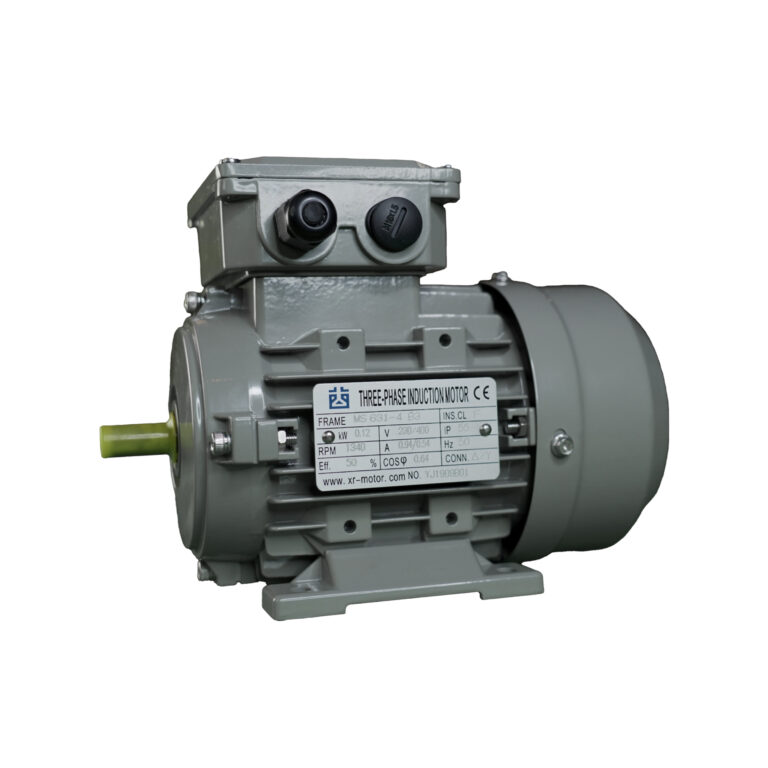
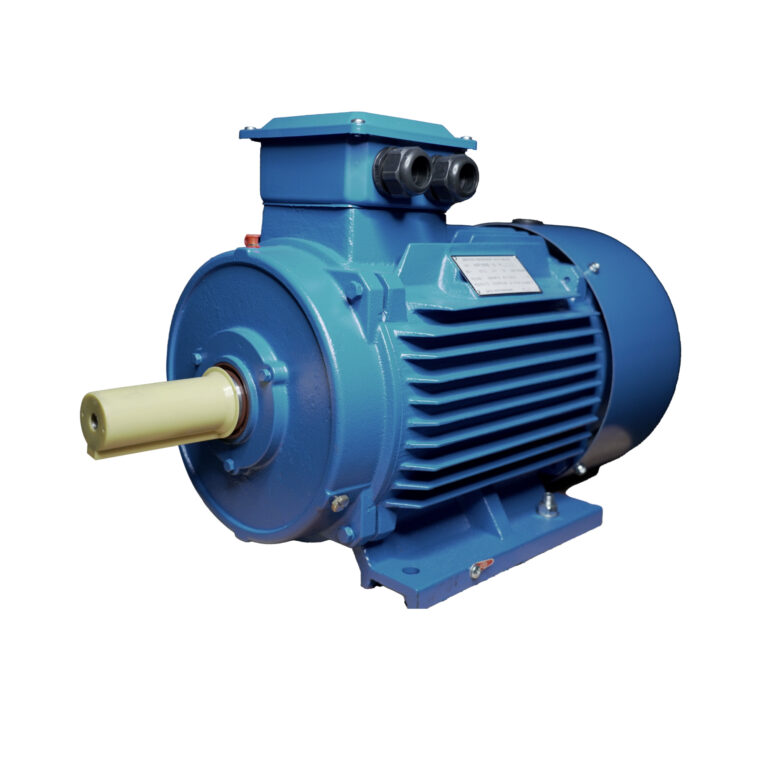
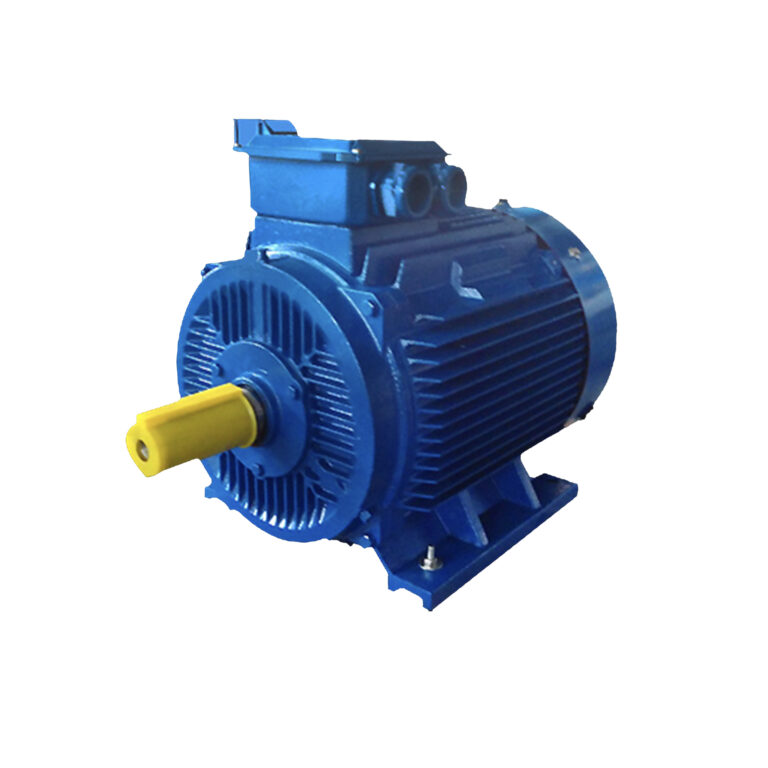
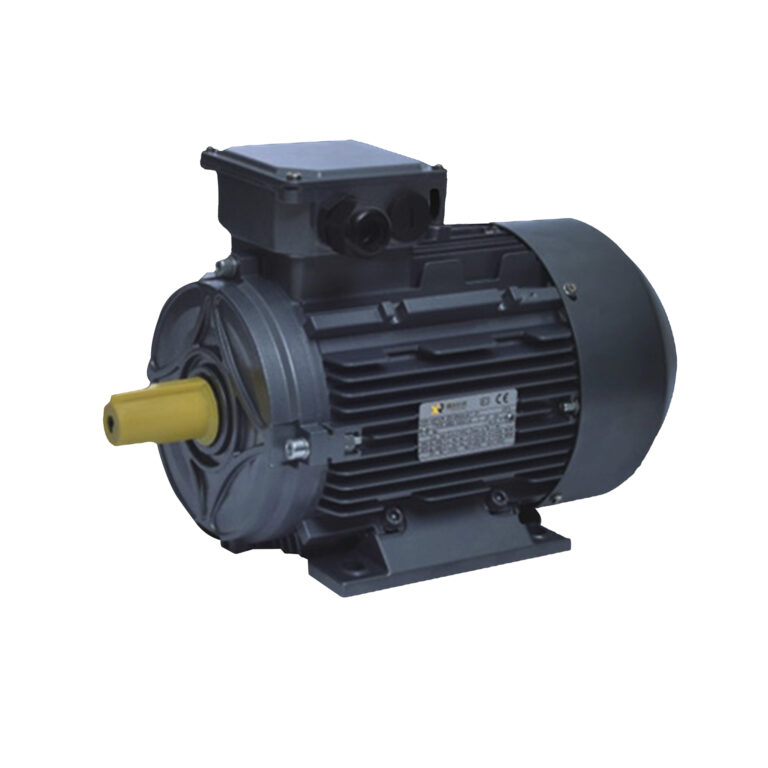
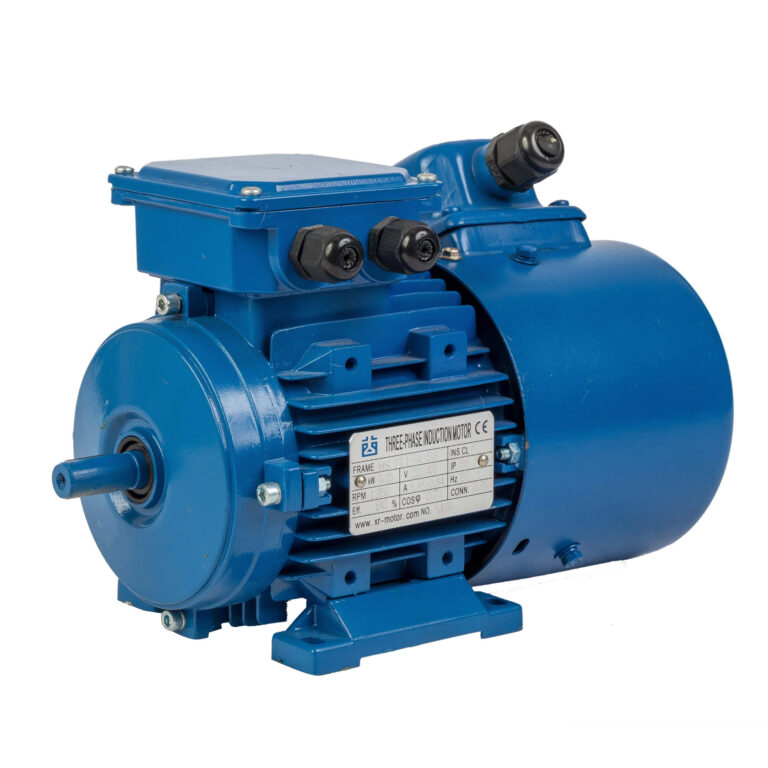
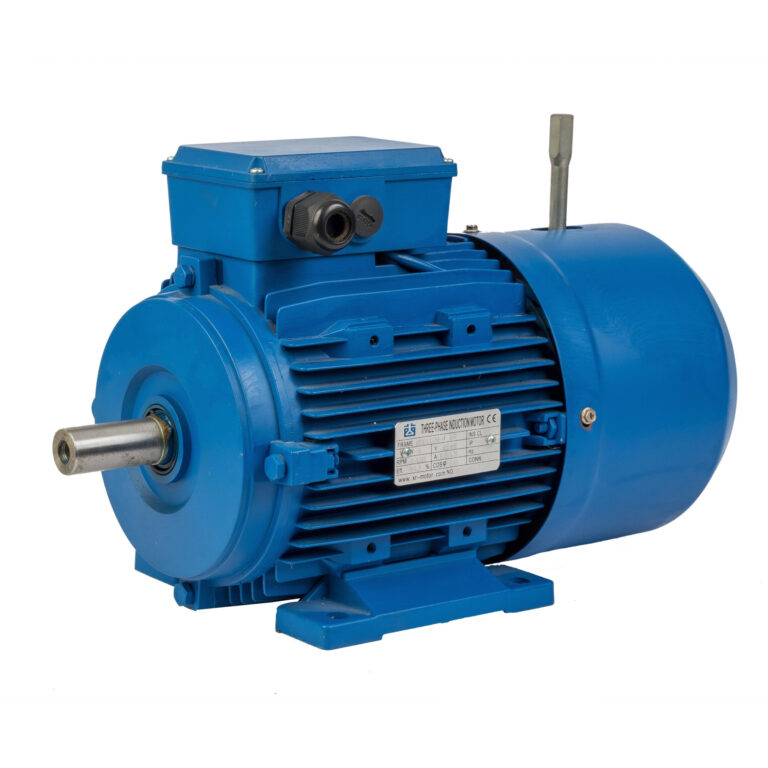
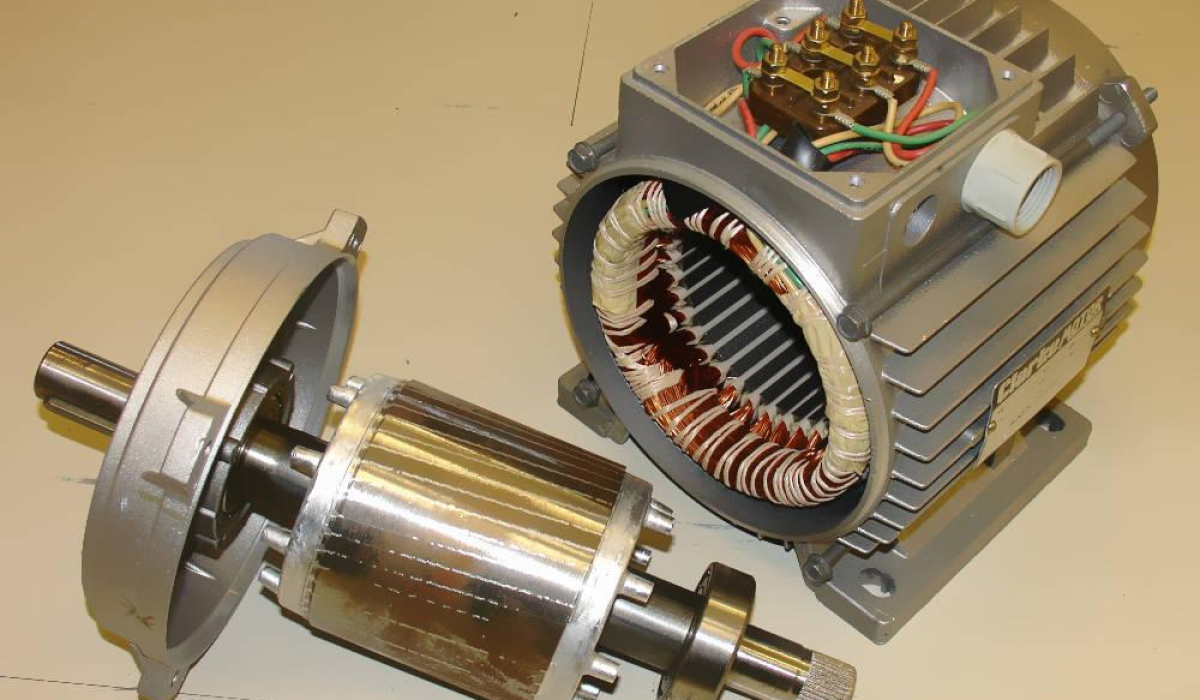
A squirrel cage induction motor is one of the most widely used types of AC electric motors. It is well known for its simple design, strong construction, and reliable performance.
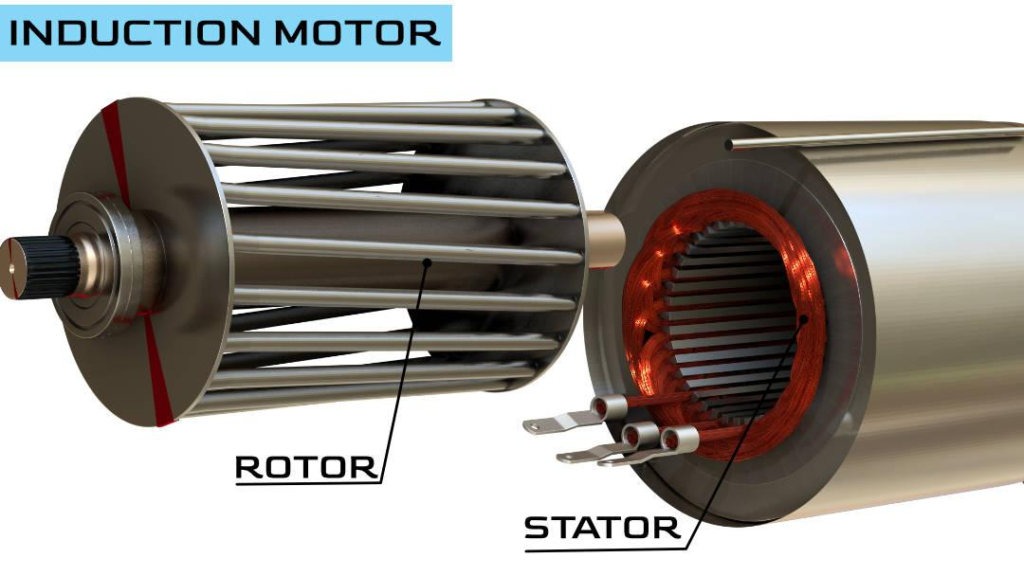
The rotor of this motor is made of conductive bars (usually aluminum or copper) connected by end rings. This forms a structure that looks like a “cage”, which is why it is called a squirrel cage motor.
When AC power is applied, a rotating magnetic field is created in the stator. This field induces current in the rotor bars, producing torque and causing the rotor to rotate. The rotor always runs slightly slower than the stator magnetic field.
Because there are no brushes or slip rings, this motor is low cost, durable, and requires very little maintenance. It is commonly used in pumps, fans, compressors and many industrial systems.
How Does a Squirrel Cage Induction Motor Work?
A squirrel cage induction motor works based on electromagnetic induction.
When an AC power supply is applied to the stator windings, it produces a rotating magnetic field. This rotating field cuts across the rotor bars and induces current in them.
The interaction between the stator magnetic field and the induced rotor current creates a force, which generates torque. This torque makes the rotor rotate in the same direction as the magnetic field.
However, the rotor never reaches the exact same speed as the magnetic field. It always runs slightly slower. This difference is called slip, and it is necessary for torque to keep being produced.
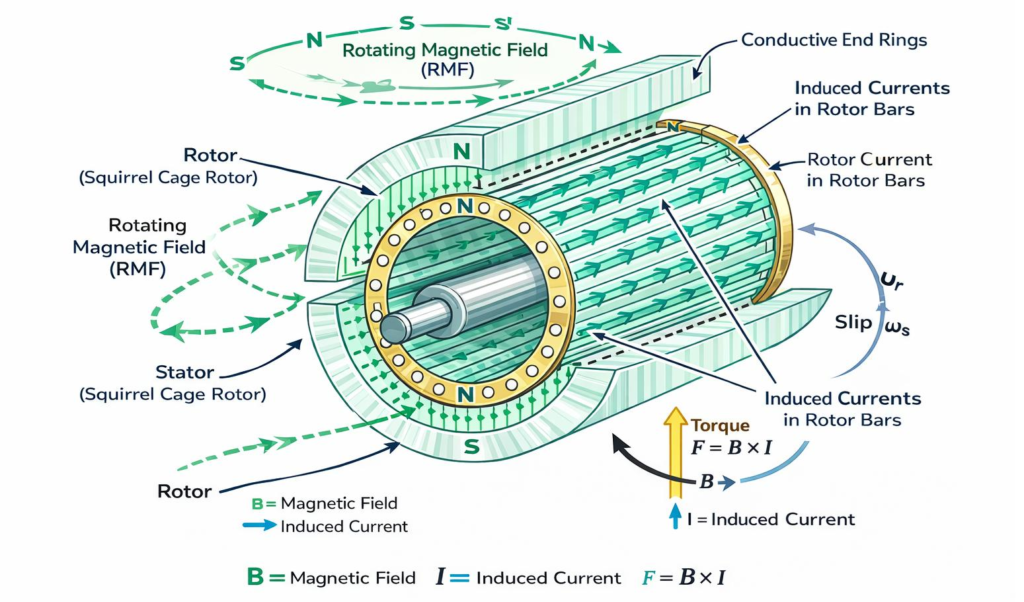
Main Parts of a Squirrel Cage Motor
A typical squirrel cage motor consists of the following components:
Stator
The stationary outer part made of laminated steel, with three-phase windings that generate a rotating magnetic field.
Rotor
The rotating inner part made of aluminum or copper bars short-circuited by end rings. This is where current is induced.
Air Gap
A small space between stator and rotor that allows magnetic interaction without physical contact.
Shaft
A steel rod connected to the rotor, used to transfer mechanical power to external loads.
Bearings
Support the shaft and allow smooth and low-friction rotation.
Cooling Fan
Mounted on the shaft to circulate air and remove heat during operation.
Key Features of Squirrel Cage Induction Motors
- Simple and rugged construction
- Lower cost compared to many other motor types
- Very low maintenance requirement
- High efficiency under normal operation
- Nearly constant speed under load
- Strong mechanical strength and durability
- No brushes, slip rings, or commutators
- Moderate starting torque
- High starting current
Applications of Squirrel Cage Induction Motors
Squirrel cage motors are used almost everywhere in industry and daily life.
Pumps
Used in water supply systems, irrigation, wastewater treatment, and industrial pumping.
Fans and Blowers
Common in ventilation systems, cooling towers, and HVAC applications due to stable speed and low noise.
Compressors
Used in refrigeration, air conditioning, and compressed air systems.
Conveyors
Widely used in material handling for smooth and continuous transport.
Machine Tools
Applied in lathes, drilling machines, milling machines, and grinders where constant speed is important.
Elevators and Escalators
Used in modern systems for reliable operation.
Textile and Paper Industry
Suitable for continuous operation with constant load.
Household Appliances
Used in washing machines, refrigerators, air conditioners and more.
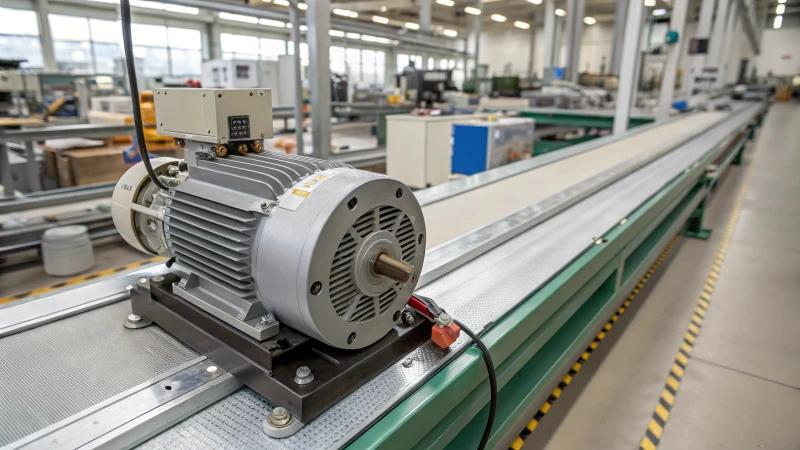
Common Problems in Squirrel Cage Motors
Even though they are reliable, some problems may still happen:
Overheating
Caused by overload, blocked ventilation, high ambient temperature, or voltage imbalance.
Bearing Failure
Due to poor lubrication, misalignment, overload, dust, or moisture. This can cause noise and vibration.
Broken Rotor Bars
Cracks or breaks in rotor bars reduce torque and efficiency, sometimes causing abnormal noise.
Stator Winding Faults
Insulation breakdown or short circuits due to aging, moisture, or repeated overheating.
Unbalanced Voltage Supply
Leads to uneven current, extra losses, and overheating.
Excessive Vibration and Noise
Usually caused by imbalance, worn bearings, or improper installation.
Starting Problems
High starting current or insufficient torque may cause slow acceleration under heavy load.
Cooling Fan Failure
Damaged or blocked fan reduces airflow and causes overheating.
Advantages of Squirrel Cage Induction Motors
- Simple construction (no brushes or slip rings)
- High reliability even in harsh environments
- Low maintenance cost
- Cost-effective over long-term use
- Good efficiency, especially near rated load
- Almost constant speed
- Easy to install and operate
- Long service life
Types of Squirrel Cage Induction Motors
Single Cage Rotor Motor
The most common type. It uses a single set of rotor bars.
Simple, low cost, and reliable. Suitable for general applications like fans, pumps, and compressors.
Double Cage Rotor Motor
Has two layers of rotor cages:
- Outer cage (high resistance)
- Inner cage (low resistance)
This design provides high starting torque and better performance under heavy load.
Deep Bar Rotor Motor
Uses deep rotor bars that change effective resistance during startup and operation.
Offers improved starting torque and reduced starting current.
High Resistance Rotor Motor
Designed with higher rotor resistance to improve starting torque and control starting current.
Used in applications requiring smooth starting.
Causes of Overheating in Squirrel Cage Motors
- Overload operation
- Poor ventilation or blocked airflow
- Unbalanced or low voltage supply
- Frequent start-stop cycles
- Bearing issues
- High ambient temperature
- Stator winding faults
- Mechanical misalignment
| Feature | Squirrel Cage Motor | Slip Ring Motor |
|---|---|---|
| Construction | Simple and compact | More complex with slip rings |
| Starting Torque | Medium | High |
| Starting Current | High | Lower (with external resistance) |
| Maintenance | Very low | Higher |
| Cost | Lower | Higher |
| Efficiency | Higher in normal operation | Slightly lower |
| Speed Control | Difficult without VFD | Easier |
| Reliability | Very high | Lower due to wear parts |
| Applications | Pumps, fans, conveyors | Cranes, hoists, heavy loads |
Future Trends of Squirrel Cage Motors
- Higher efficiency designs to reduce energy loss
- Use of advanced materials like copper rotors and improved insulation
- Wider adoption of Variable Frequency Drives (VFDs)
- Smart motors with sensors for condition monitoring
- More compact and lightweight designs
- Improved cooling technologies
- Integration with industrial automation systems
- Enhanced reliability and reduced maintenance needs
Conclusion
Squirrel cage induction motors are popular because of their simple design, low cost, and reliable performance.
They are widely used in both industrial and household applications. With proper selection and maintenance, these motors can offer long service life and stable efficiency.
As technology keeps improving, squirrel cage motors will continue to play an important role in modern electrical and industrial systems.