


- Home
- Product
- GOST standard motor
- IEC standard motor
 MC Series single phase capacitor start asynchronous motor
- MY MYT series single phase capacitor running asynchronous motor
- ML Series single phase dual-capacitor asynchronous motor
- ME2 series three phase high efficiency aluminum housing motor(IE2)
- ME3 series three phase high efficiency aluminum housing motor(IE3)
- MS series three-phase aluminum housing motor (IE1)
- Y2 series three phase cast iron motor (IE1)
- YE2 series three phase high efficiency cast iron motor (IE2)
- YE3 series three phase high efficiency cast iron motor (IE3)
- Special application motor
- Rolling door motor
- Industry application
- News
- About us
- Contact us
- Certifications
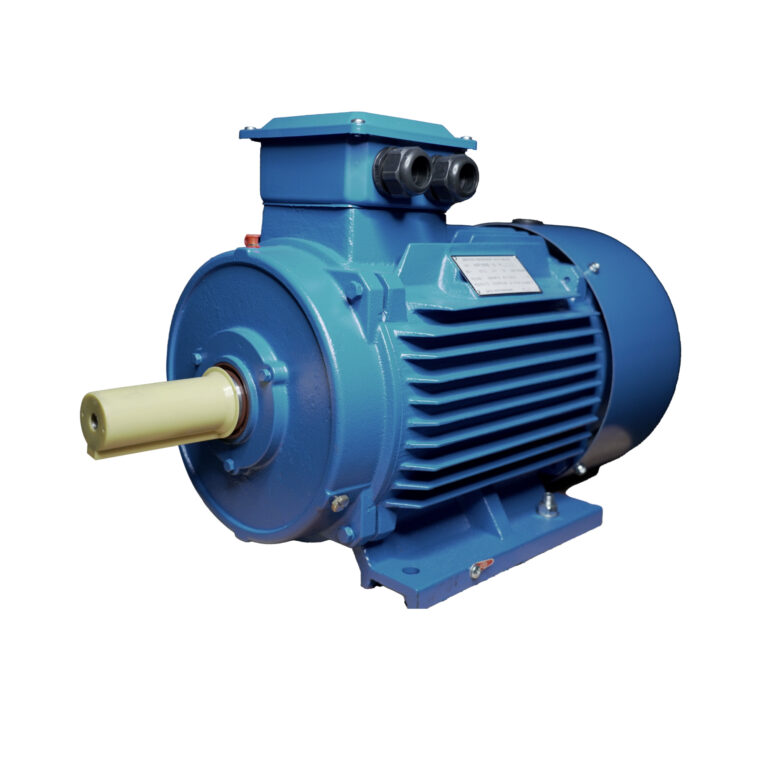
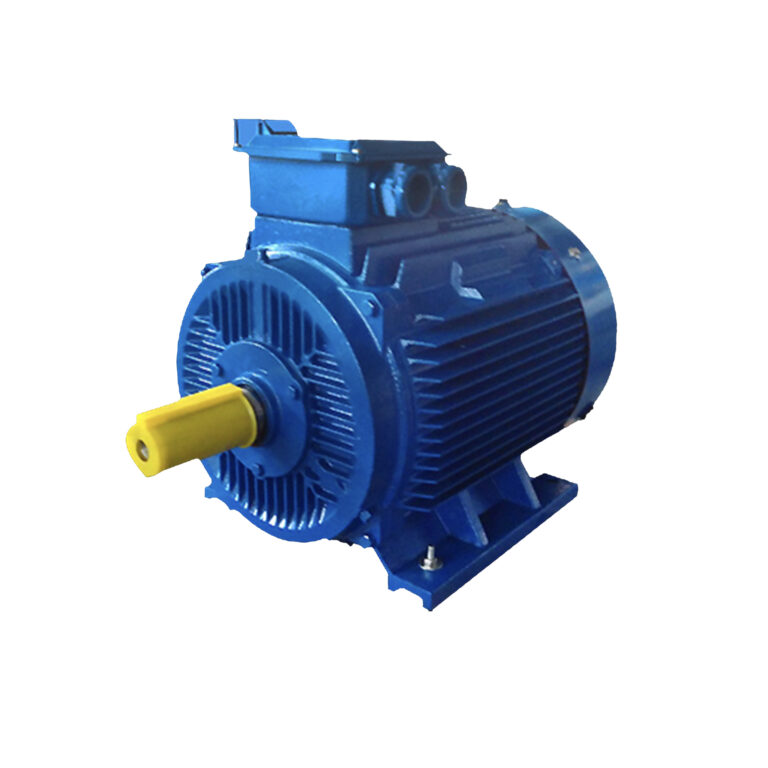
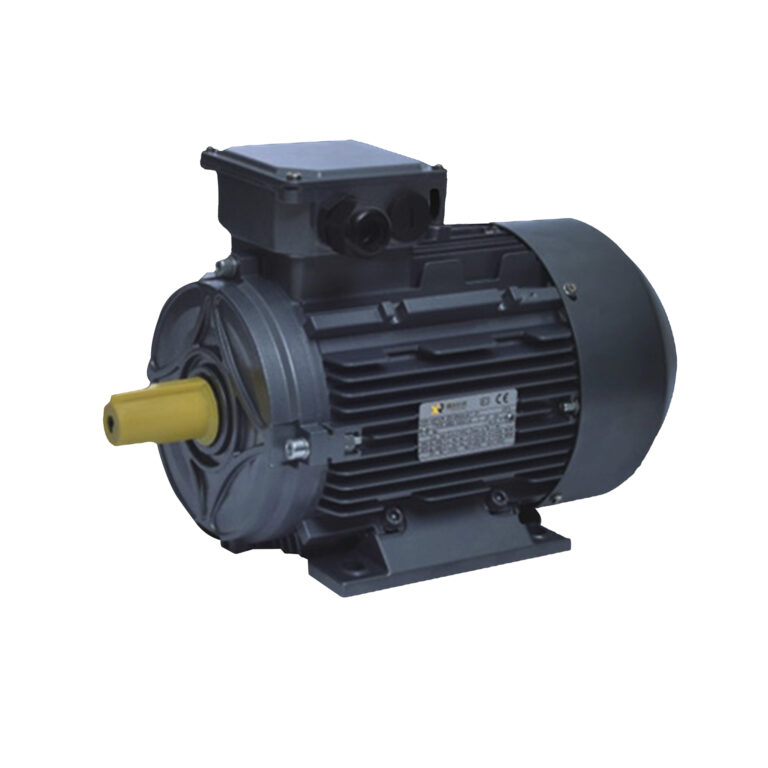
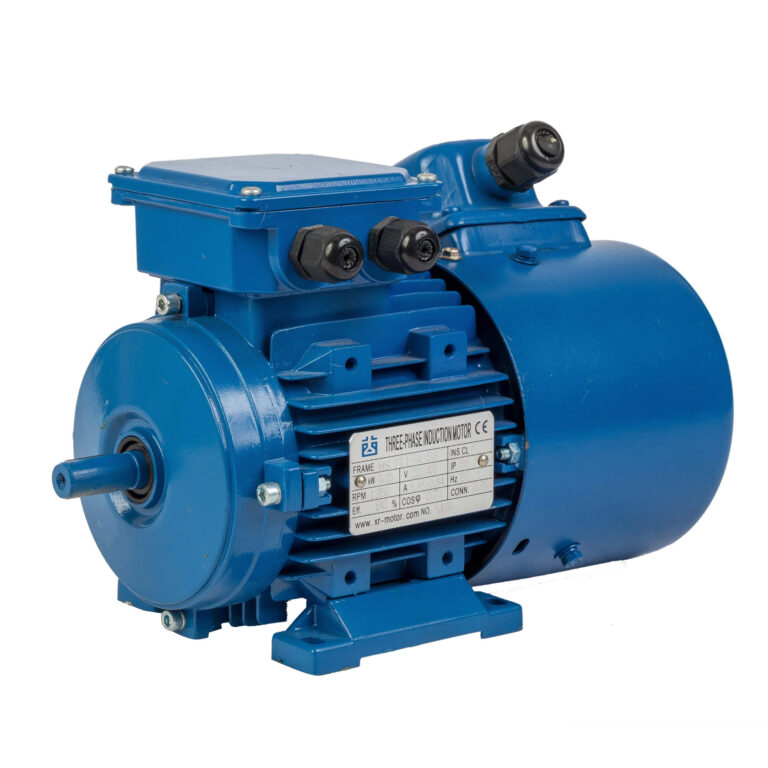
Why Industrial Motors Overheat and How to Prevent It
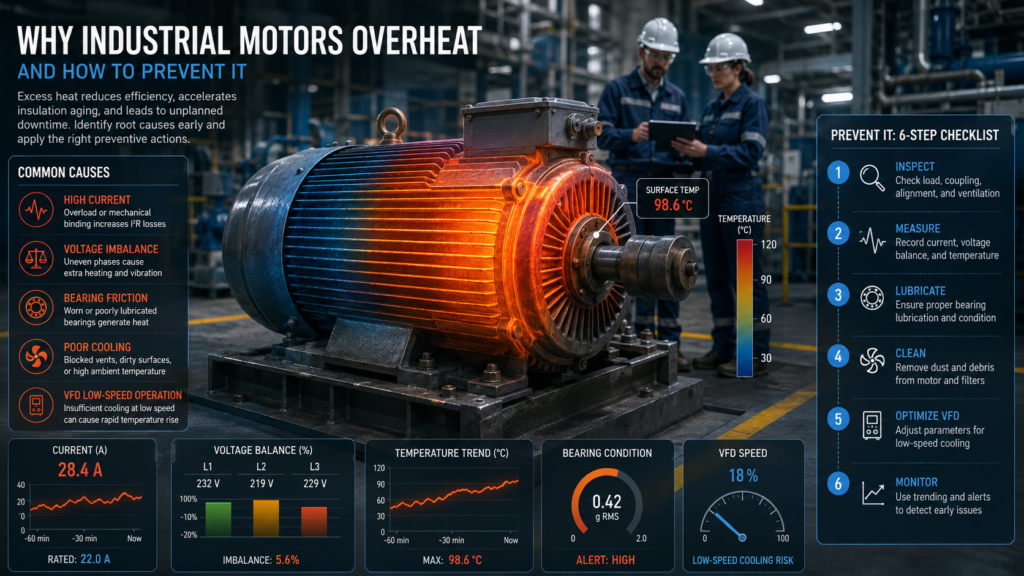
Motor overheating is a common warning sign in factories. It may appear as a hot motor housing, a burning smell, repeated VFD trips, high current, or unexpected shutdowns. If the cause is not found early, excess heat can damage winding insulation, shorten bearing life, and lead to industrial motor failure.
In most cases, overheating is not caused by one issue alone. Mechanical load, power quality, cooling conditions, and VFD settings should all be checked before replacing the motor.
Excessive Load Makes the Motor Draw More Current
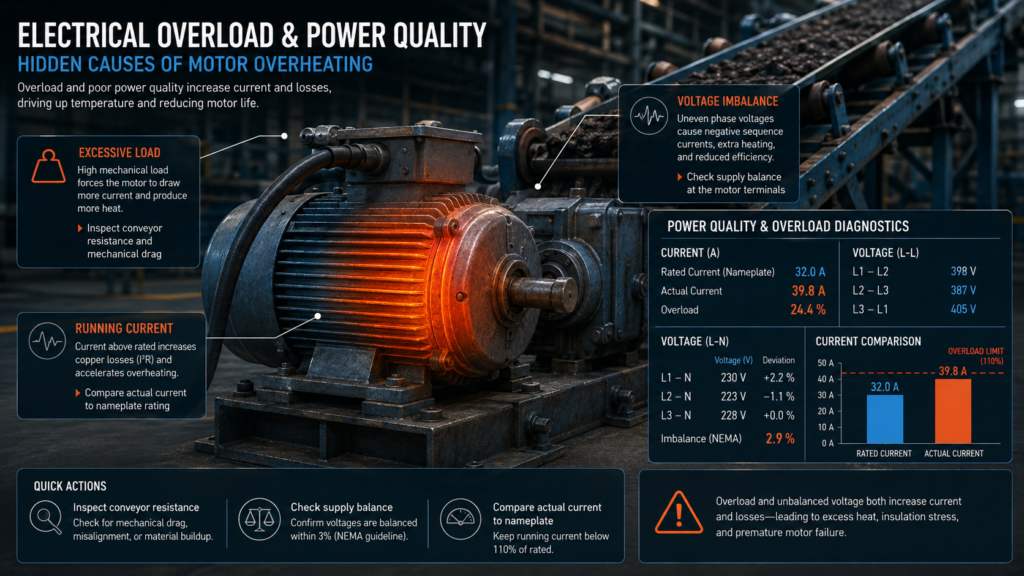
When a motor drives more load than it was designed for, it draws higher current and produces more heat. This often happens with overloaded conveyors, blocked pumps, worn gearboxes, or incorrectly tensioned belts.
A motor may have the correct kW rating on paper but still overheat when the driven machine requires too much torque. In one conveyor project, repeated motor overheating was caused by seized rollers and poor alignment rather than a defective motor. Once the mechanical resistance was removed, the operating current returned to a normal range.
Check the actual running current and compare it with the rated current on the nameplate. If the current remains above the rated value, inspect the full drive system before ordering a replacement.
Voltage Imbalance Can Increase Winding Temperature
Three-phase motors require a stable and balanced power supply. Low voltage, voltage fluctuation, loose terminals, damaged cables, or phase imbalance can create unequal current between phases and cause additional heat.
A motor can therefore run hot even when the mechanical load is normal. During troubleshooting, measure voltage and current on all three phases while the equipment is operating. Testing only when the motor is stopped may miss a voltage drop that occurs under load.
For an industrial motor supplier in South America, voltage options and local power conditions should be confirmed before shipment, especially where replacement motors are installed into older equipment.
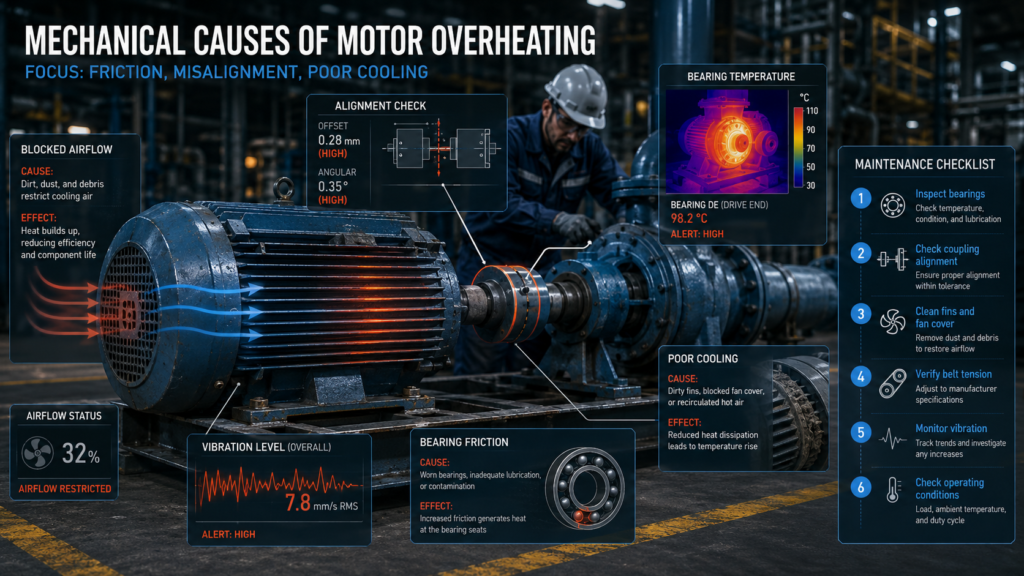
Bearing and Alignment Problems Create Extra Friction
Damaged bearings, insufficient lubrication, misaligned couplings, rotor rubbing, and excessive belt tension all increase mechanical friction. The motor then converts more electrical energy into unwanted heat, which can eventually cause industrial motor failure.
Warning signs include rising vibration, unusual noise, a hot bearing housing, or a shaft that does not turn smoothly after safe isolation. In my experience, early bearing inspection often prevents a small maintenance issue from becoming a winding repair or a full production stoppage.
Poor Cooling Can Overheat a Healthy Motor
Cooling fins, fan covers, and ventilation paths must remain clear. Dust, oil, damaged fans, blocked air passages, or limited installation space can prevent heat from leaving the motor body.
This issue is especially important for a motor overheating solution for Middle East factories, where high ambient temperature and airborne dust can reduce cooling performance quickly. Regular cleaning and sufficient airflow around the motor are simple measures, but they are frequently overlooked during routine maintenance.
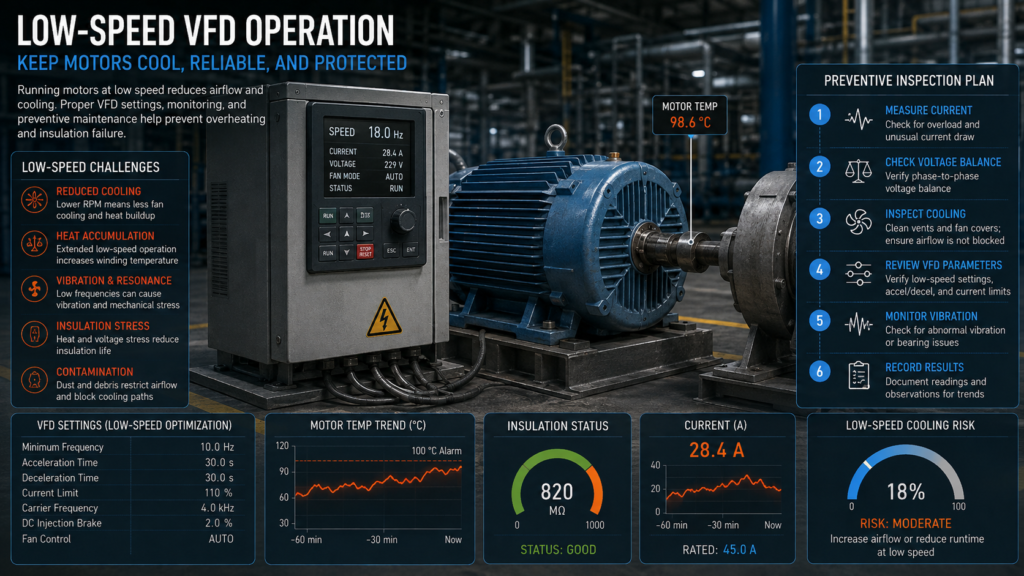
Low-Speed VFD Operation Needs Additional Cooling Checks
A VFD helps control speed and save energy, but it can also affect cooling. A standard self-cooled motor uses a shaft-mounted fan, so airflow falls as motor speed decreases. If the machine requires high torque at low speed, the motor may overheat even though the VFD is operating normally.
For a VFD motor overheating solution in Southeast Asia, check the speed range, load torque, cable length, insulation system, and cooling arrangement. Some applications may require an independent cooling fan, inverter-duty winding insulation, insulated bearings, or a larger motor frame.
VFD parameters should also match the motor nameplate, including rated voltage, rated current, frequency, RPM, and overload setting. Incorrect data can cause nuisance trips or inadequate protection.
Use a Simple Fault-Finding Process
When motor overheating occurs, begin with a structured inspection:
- Compare running current with the nameplate current.
- Measure voltage and current on all three phases.
- Inspect the fan, cooling fins, air passages, and installation clearance.
- Check bearings, coupling alignment, belts, gearbox, and driven load.
- Review VFD alarms and motor parameter settings.
- Record temperature, vibration, and current after corrective work.
This process helps distinguish between an electrical fault, mechanical overload, cooling problem, and control issue. It also reduces the risk of replacing a good motor while the original cause remains in the system.
Preventive Maintenance Reduces Failure Risk
The most reliable way to prevent industrial motor failure is to monitor operating data before alarms occur. Current, voltage balance, vibration, bearing temperature, insulation resistance, and VFD fault history are all useful maintenance records.
An industrial motor repair service in Europe should be able to use these records to diagnose repeated failures, while a motor overheating troubleshooting guide for North American plants should also consider local power and control-system requirements.
DAYOU MOTOR recommends establishing regular inspection intervals for production-critical motors, especially those operating continuously, in dusty environments, or under frequent starting loads. DAYOU MOTOR can also help customers select motor configurations that better match real operating conditions.
FAQ
Can a motor overheat even when the current is normal?
Yes. Blocked cooling paths, poor ventilation, high ambient temperature, bearing friction, and low-speed VFD operation can cause motor overheating without an obvious current overload.
Should I increase the VFD overload setting to stop nuisance trips?
Not before finding the cause. Raising the protection setting may hide an overload condition and increase the chance of industrial motor failure.
When should a motor be replaced?
Replacement should be considered when insulation damage, repeated bearing failure, winding faults, severe vibration, or repair cost makes continued operation unreliable. The source of the original overheating must still be corrected.
A motor runs reliably when its load, supply, cooling, mechanical condition, and control settings work together. That is the practical focus DAYOU MOTOR brings to industrial motor selection and fault prevention.