


- Home
- Product
- GOST standard motor
- IEC standard motor
 MC Series single phase capacitor start asynchronous motor
- MY MYT series single phase capacitor running asynchronous motor
- ML Series single phase dual-capacitor asynchronous motor
- ME2 series three phase high efficiency aluminum housing motor(IE2)
- ME3 series three phase high efficiency aluminum housing motor(IE3)
- MS series three-phase aluminum housing motor (IE1)
- Y2 series three phase cast iron motor (IE1)
- YE2 series three phase high efficiency cast iron motor (IE2)
- YE3 series three phase high efficiency cast iron motor (IE3)
- Special application motor
- Rolling door motor
- Industry application
- News
- About us
- Contact us
- Certifications
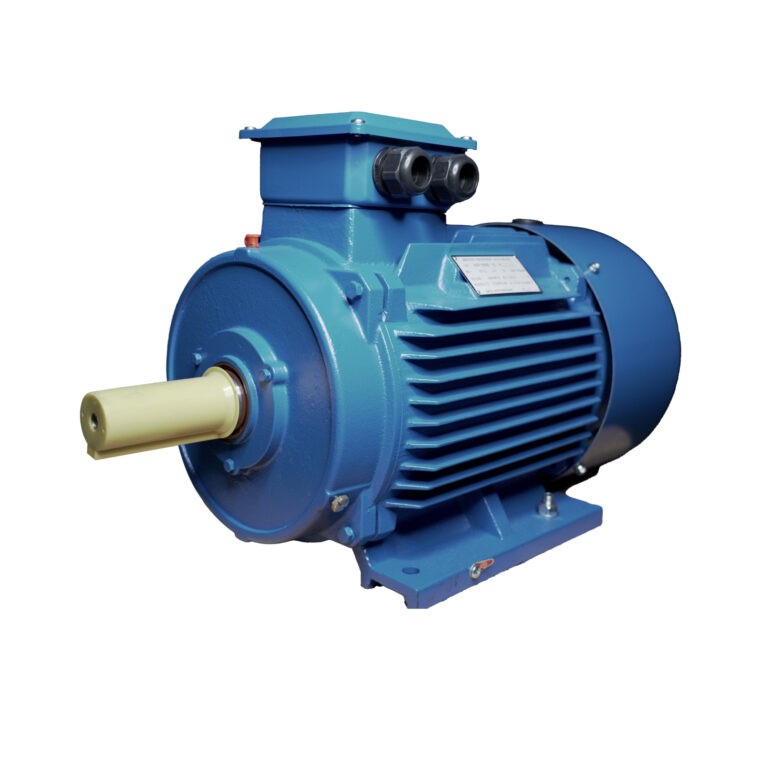
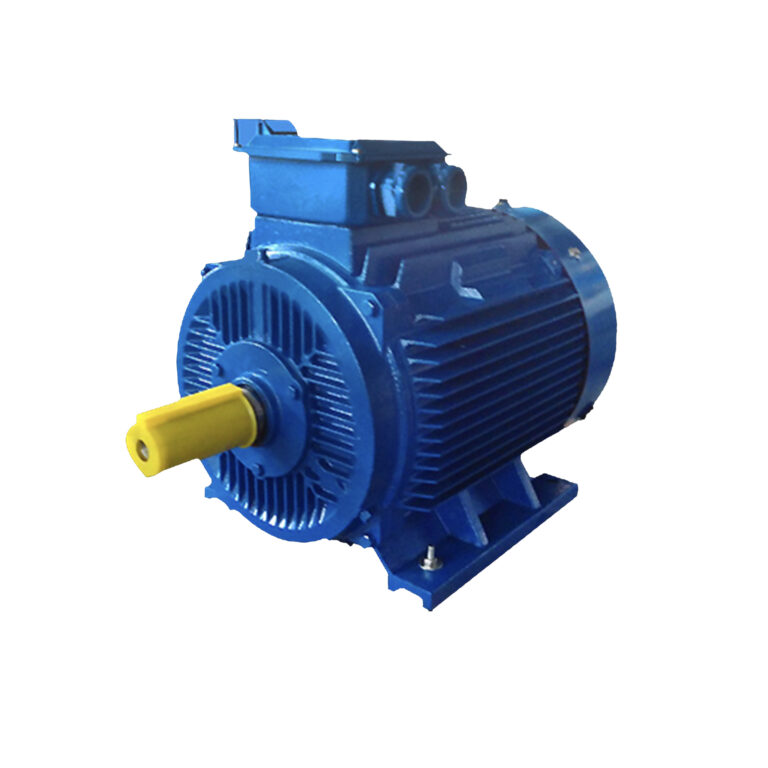
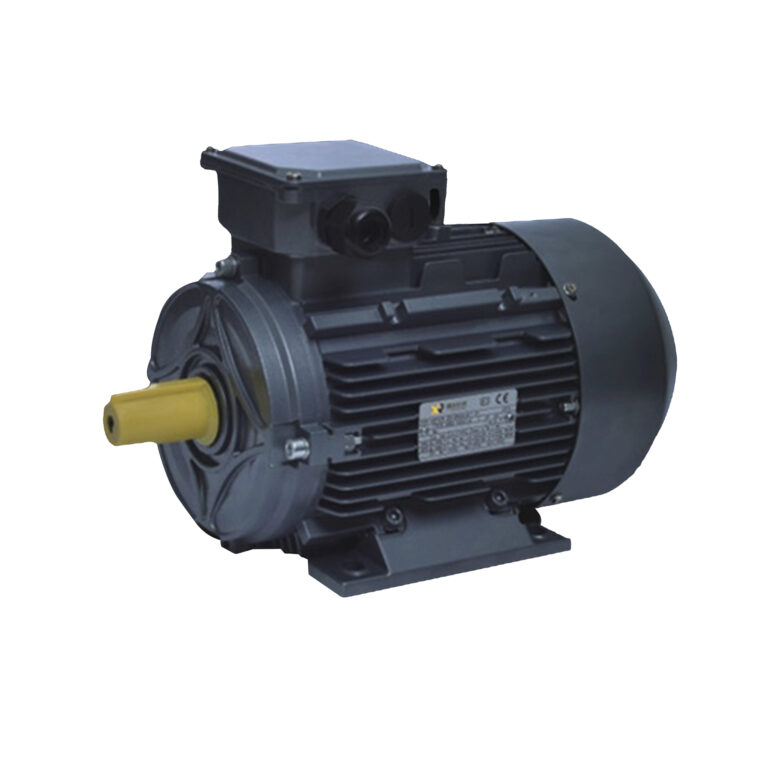
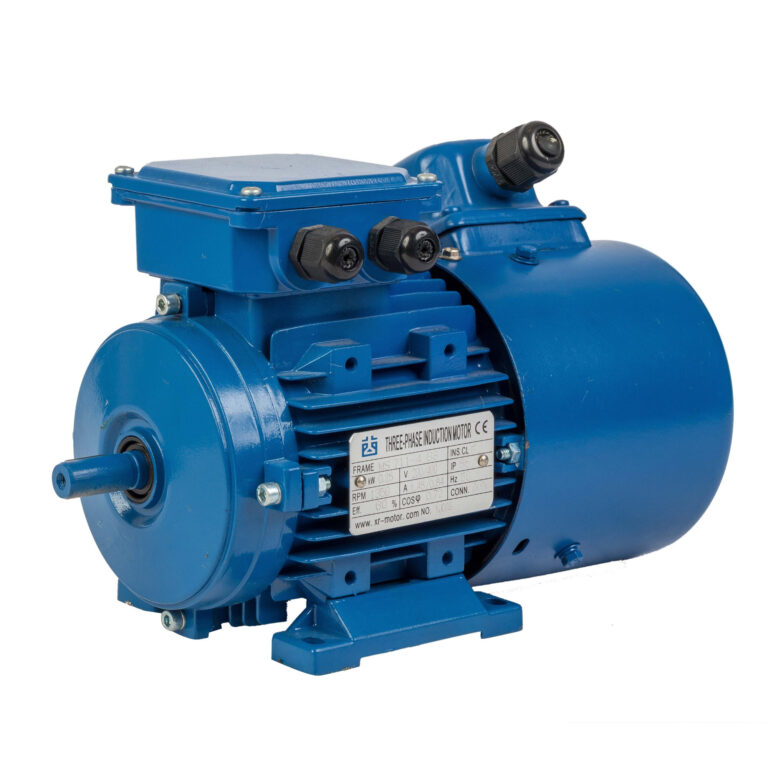
Synchronous Speed Formula for Electric Motors

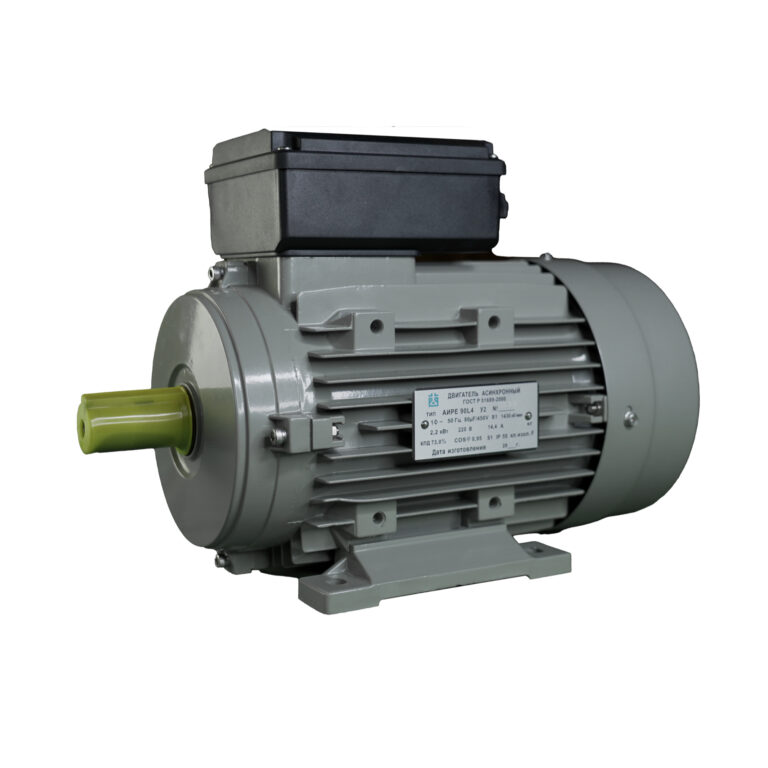
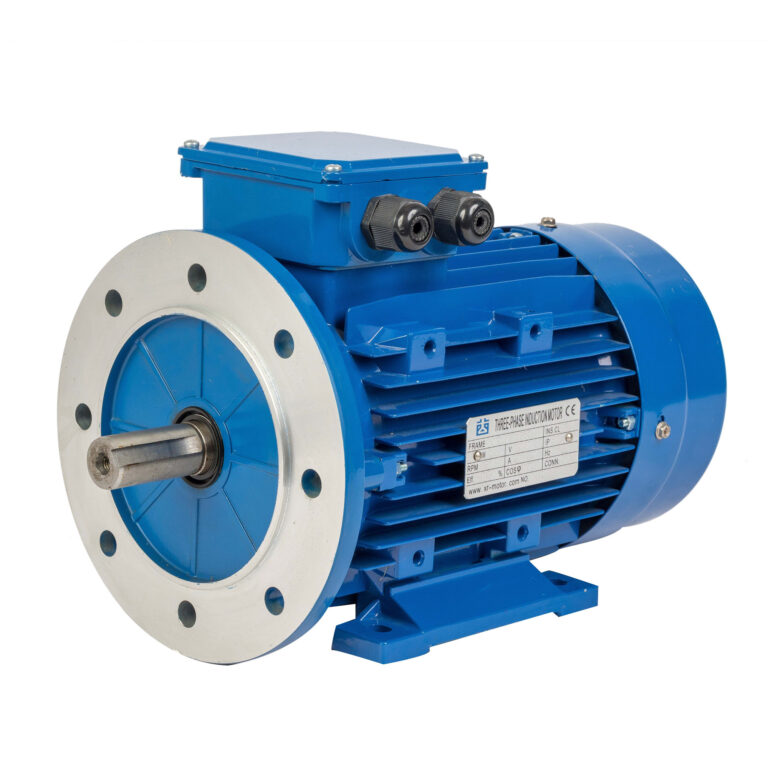
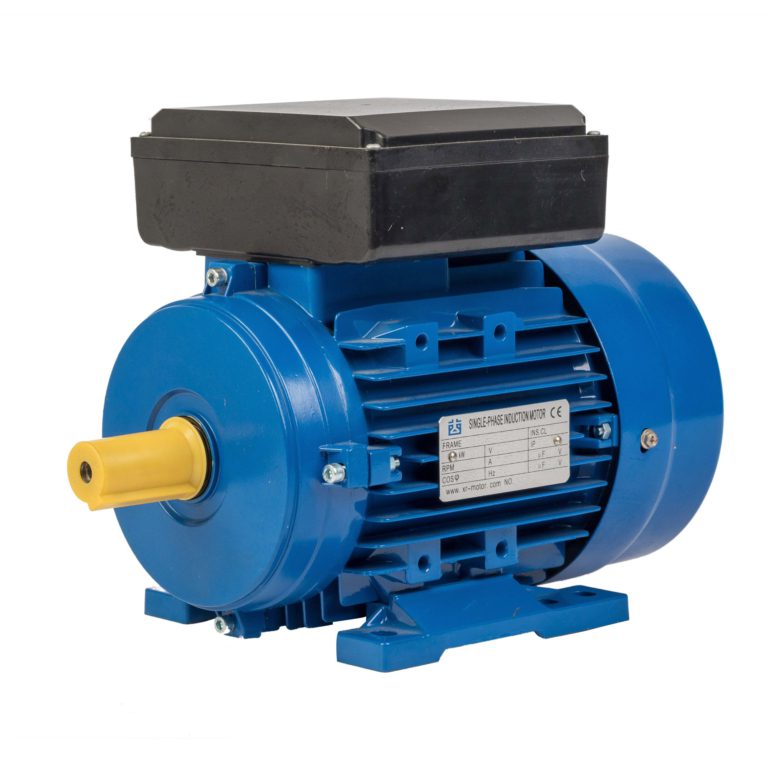
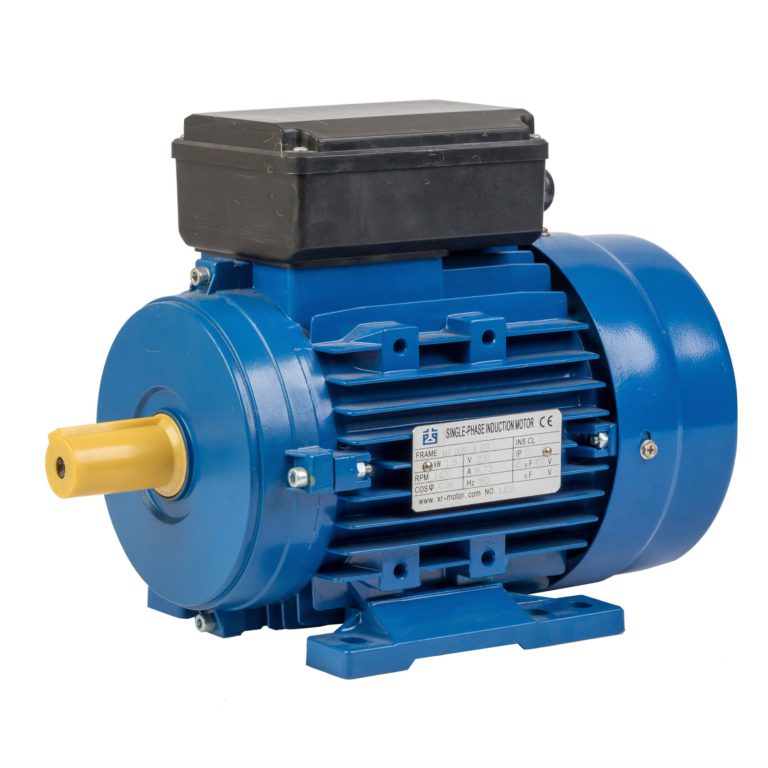
The synchronous speed formula calculates the speed of the rotating magnetic field in an AC motor. It helps with motor selection, pump and fan matching, and VFD setup.
For an induction motor, actual shaft speed is slightly lower because slip is required to produce torque. A synchronous motor normally follows the rotating field.
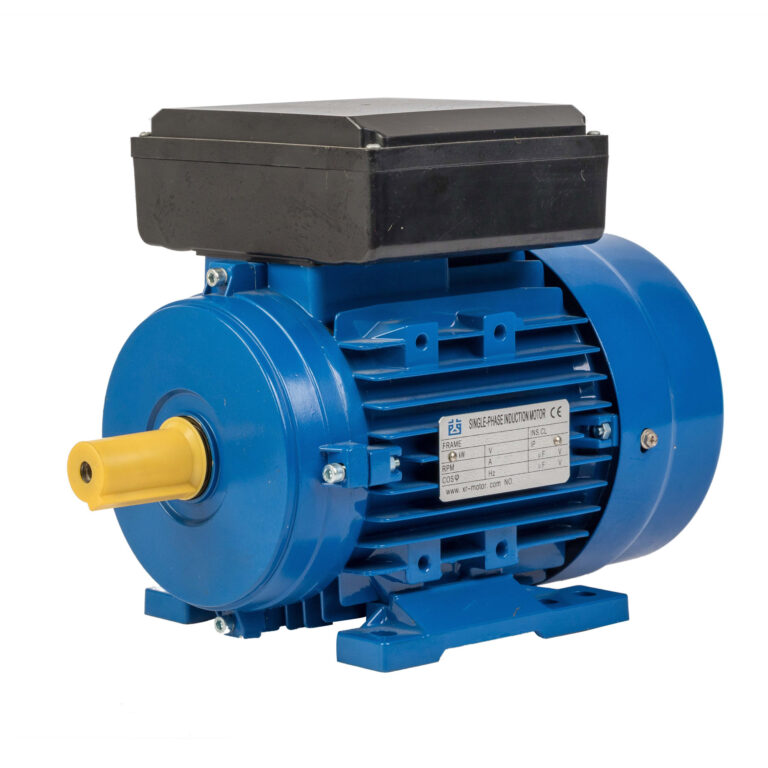
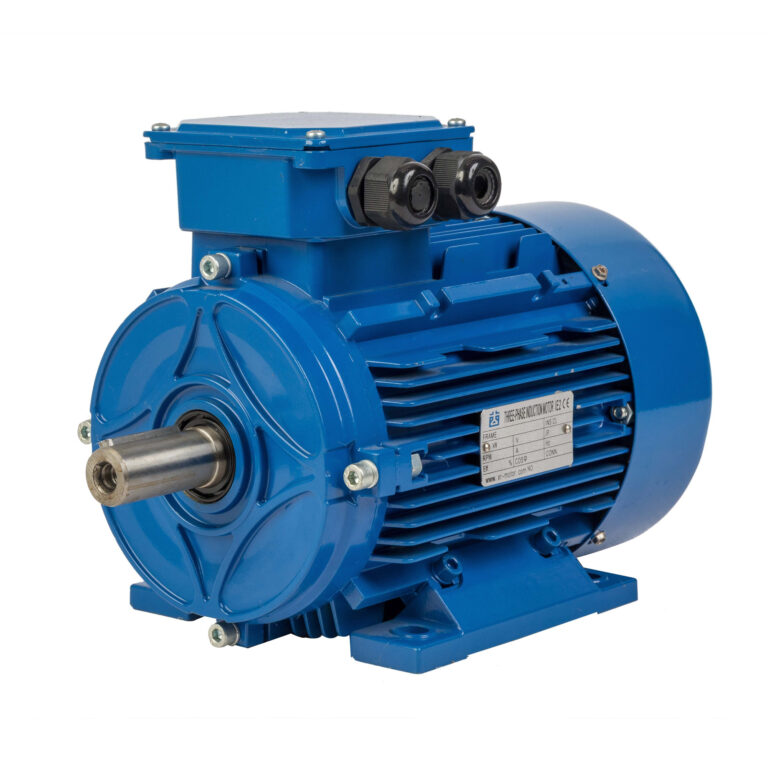
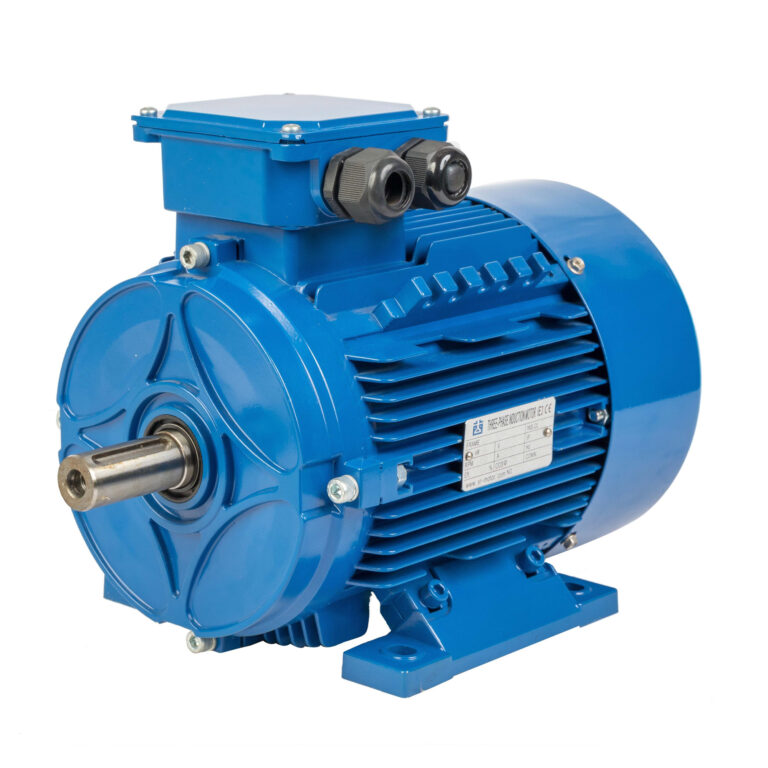
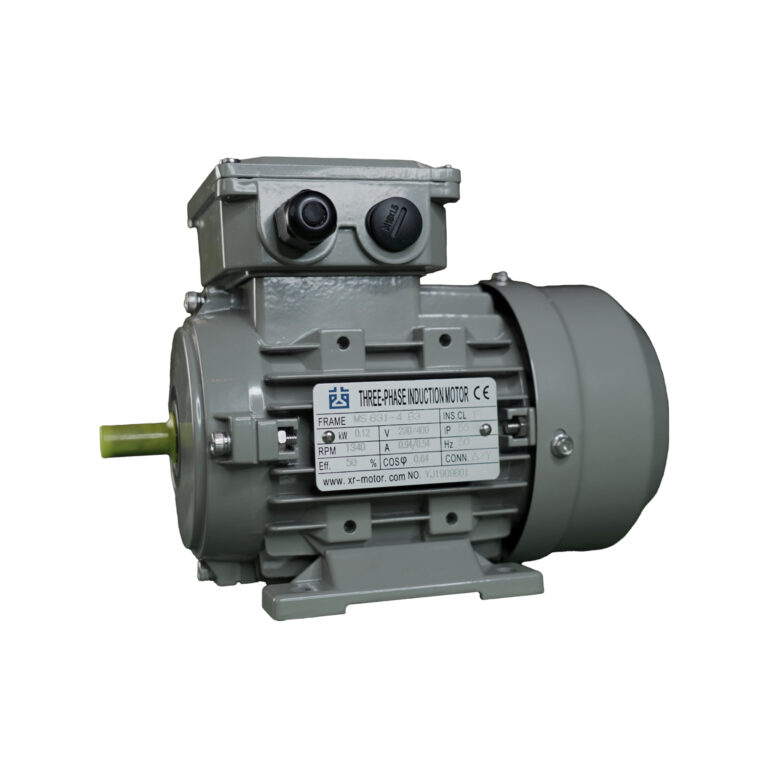
DAYOU MOTOR supplies induction motors for different pole numbers, frequencies, voltages, speeds, and VFD applications.
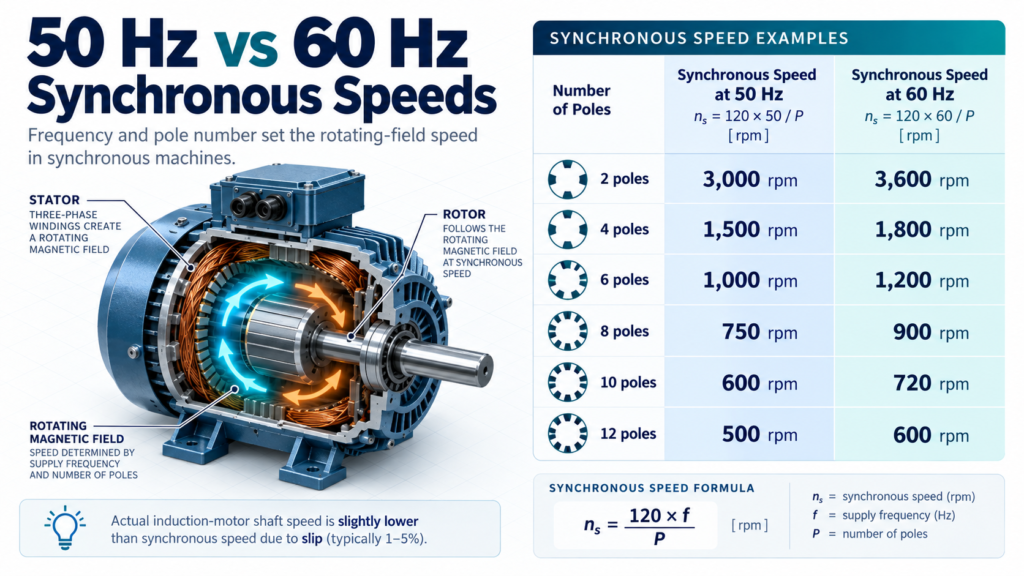
Synchronous speed formula
Calculate synchronous speed by multiplying frequency by 120 and dividing by the total number of poles:
Synchronous speed = 120 × frequency ÷ number of poles
Frequency is measured in hertz, and speed is measured in RPM. Common motors have 2, 4, 6, 8, 10, or 12 poles.
The formula can also use pole pairs:
Synchronous speed = 60 × frequency ÷ number of pole pairs
50 Hz motor examples
At 50 Hz:
- 2 poles: 3000 RPM
- 4 poles: 1500 RPM
- 6 poles: 1000 RPM
- 8 poles: 750 RPM
- 10 poles: 600 RPM
- 12 poles: 500 RPM
For a four-pole, 50 Hz motor:
120 × 50 ÷ 4 = 1500 RPM
This is the speed of the rotating magnetic field. A standard induction motor may have a loaded shaft speed of about 1450–1480 RPM.
A 50 Hz motor for European pump OEMs should therefore be selected according to actual shaft speed, load, power, and slip.
60 Hz motor examples
At 60 Hz:
- 2 poles: 3600 RPM
- 4 poles: 1800 RPM
- 6 poles: 1200 RPM
- 8 poles: 900 RPM
- 10 poles: 720 RPM
- 12 poles: 600 RPM
A four-pole induction motor may be called an 1800 RPM motor, although its actual full-load speed is slightly lower.
Changing a motor from 50 Hz to 60 Hz requires checking voltage, winding design, cooling, load power, and mechanical speed limits.
Actual speed and slip
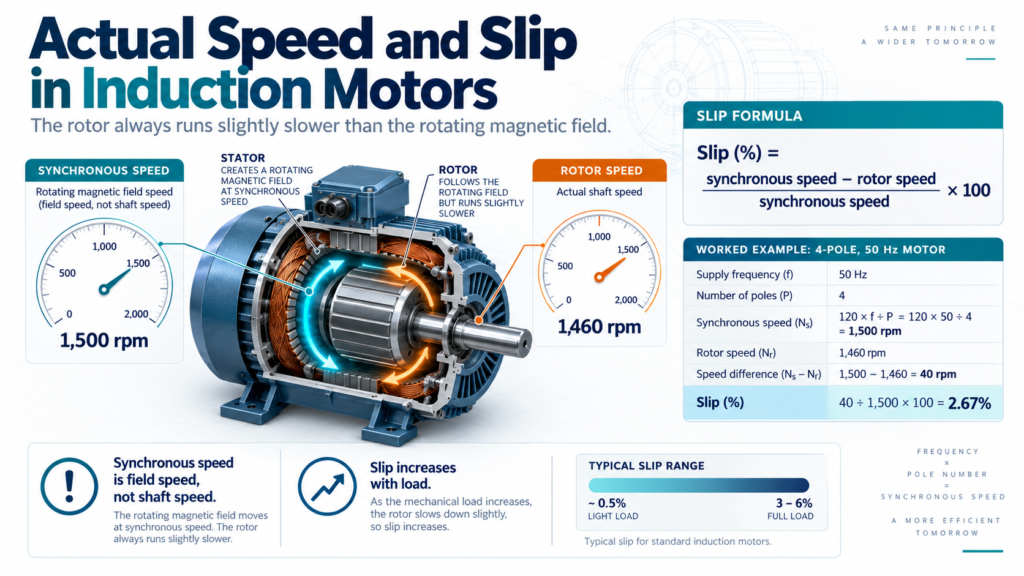
Synchronous speed describes the stator’s rotating magnetic field, not the actual shaft speed of an induction motor.
Slip is calculated as:
Slip (%) = (synchronous speed − rotor speed) ÷ synchronous speed × 100
For a four-pole, 50 Hz motor running at 1460 RPM:
- Synchronous speed: 1500 RPM
- Speed difference: 40 RPM
- Slip: 40 ÷ 1500 × 100 ≈ 2.67%
Slip increases as load increases. Actual speed also depends on motor design, voltage, temperature, rated power, and operating conditions.
VFD frequency and motor speed
When a motor is controlled by a VFD, use the VFD output frequency in the formula.
For a four-pole motor:
- At 30 Hz: 120 × 30 ÷ 4 = 900 RPM
- At 40 Hz: 120 × 40 ÷ 4 = 1200 RPM
A VFD motor for Southeast Asian factories should also be checked for slip, cooling, torque, current, and mechanical speed limits. At low speed, the shaft-mounted fan provides less cooling, so an independent fan may be needed for continuous high-torque operation.
Above base frequency, torque may decrease, and the motor, coupling, pump, fan, gearbox, or bearings may have maximum speed limits.
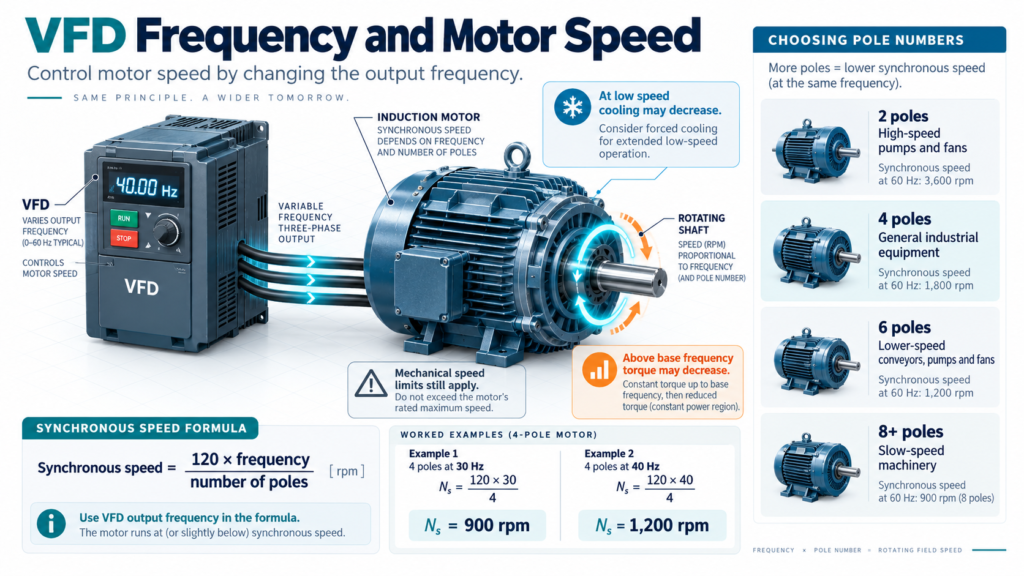
Choosing the pole number
More poles produce lower speed and higher torque at the same power.
Typical applications include:
- 2 poles: high-speed pumps, fans, and machine tools
- 4 poles: general industrial equipment
- 6 poles: lower-speed conveyors, pumps, and fans
- 8 or more poles: slow-speed machinery
Starting torque depends on rotor design, winding design, voltage, starter type, and load—not only on pole number.
An IEC motor supplier in China for South American projects should confirm whether the application uses 50 Hz or 60 Hz before selecting the motor.
Rearranging the formula
To estimate pole number:
Pole number = 120 × frequency ÷ required synchronous speed
For 1000 RPM at 50 Hz:
120 × 50 ÷ 1000 = 6 poles
To calculate frequency:
Frequency = synchronous speed × pole number ÷ 120
For 1200 RPM with four poles:
1200 × 4 ÷ 120 = 40 Hz
The motor and driven equipment must still be suitable for the selected frequency.
Common mistakes
- Using total poles with the pole-pair formula
- Treating synchronous speed as actual shaft speed
- Ignoring the difference between 50 Hz and 60 Hz
- Using grid frequency instead of VFD output frequency
- Ignoring the speed limits of pumps, fans, couplings, gearboxes, or bearings
- Assuming induction motor speed remains constant under all loads
Motor selection requirements
Speed is only one selection factor. Also confirm:
- Power and torque
- Load inertia
- Voltage and frequency
- Starting method
- Duty cycle
- VFD range
- Mounting and shaft dimensions
- IP protection
- Ambient temperature and altitude
- Efficiency
- Bearing and shaft loads
Frequently asked questions
What is the synchronous speed of a four-pole motor at 50 Hz?
It is 1500 RPM. The actual loaded speed of an induction motor is slightly lower.
What is the synchronous speed at 60 Hz?
A two-pole motor runs at 3600 RPM, a four-pole motor at 1800 RPM, a six-pole motor at 1200 RPM, and an eight-pole motor at 900 RPM.
Why does an induction motor run below synchronous speed?
The speed difference induces rotor current and allows the motor to produce torque.
Can a VFD make a four-pole motor run exactly at 1500 RPM?
A VFD controls frequency, but open-loop operation still includes slip. Precise speed may require encoder feedback or closed-loop control.
Does a synchronous motor have slip?
During normal operation, its rotor follows the rotating magnetic field without induction-motor slip.
Conclusion
The synchronous speed formula shows the relationship between frequency, pole number, and rotating-field speed. For induction motors, actual shaft speed must also account for slip.
DAYOU MOTOR supplies motors for 50 Hz, 60 Hz, fixed-speed, and VFD applications. Providing the required speed, load, voltage, frequency, and installation conditions helps ensure proper motor selection.