


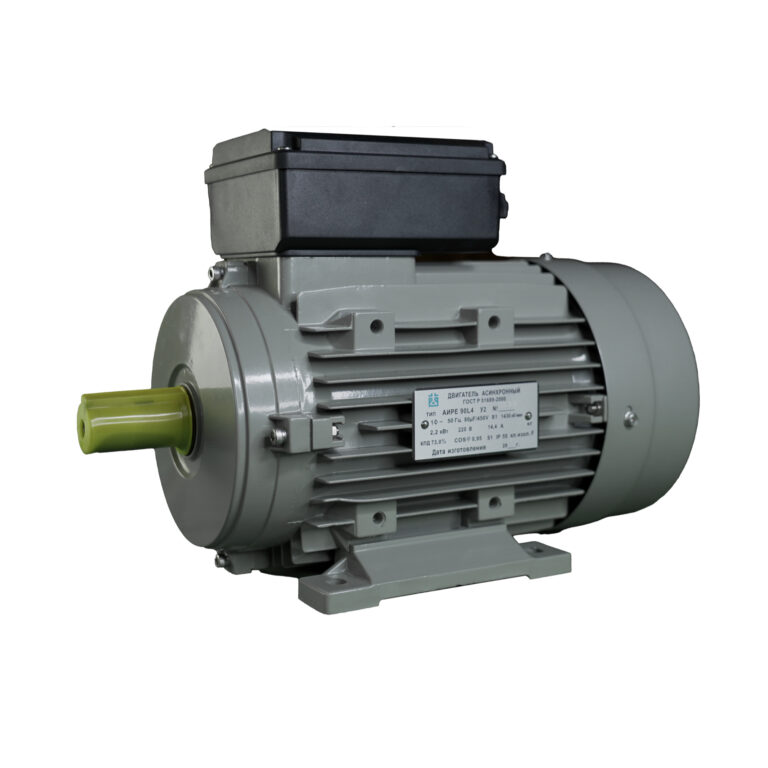
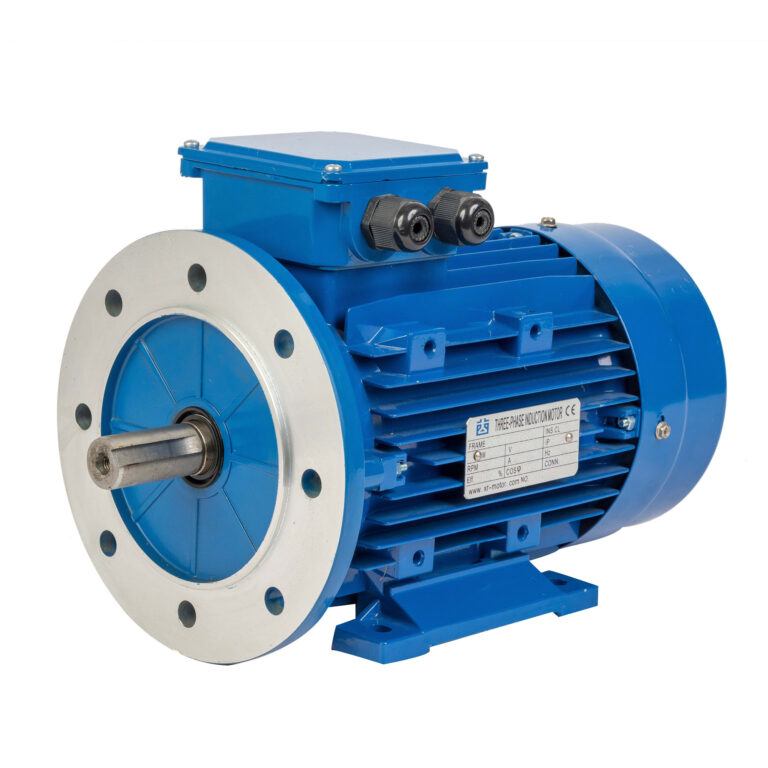
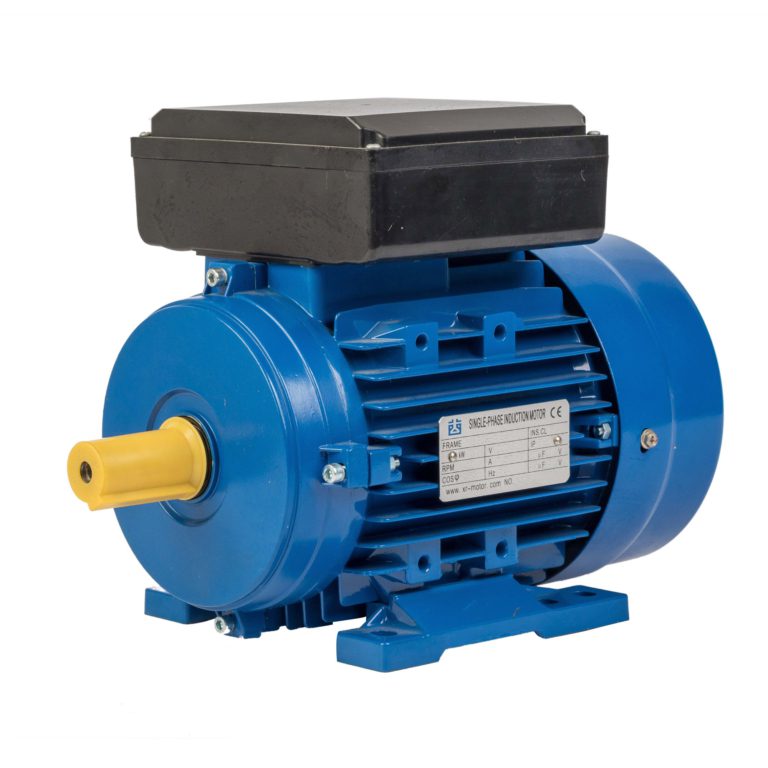
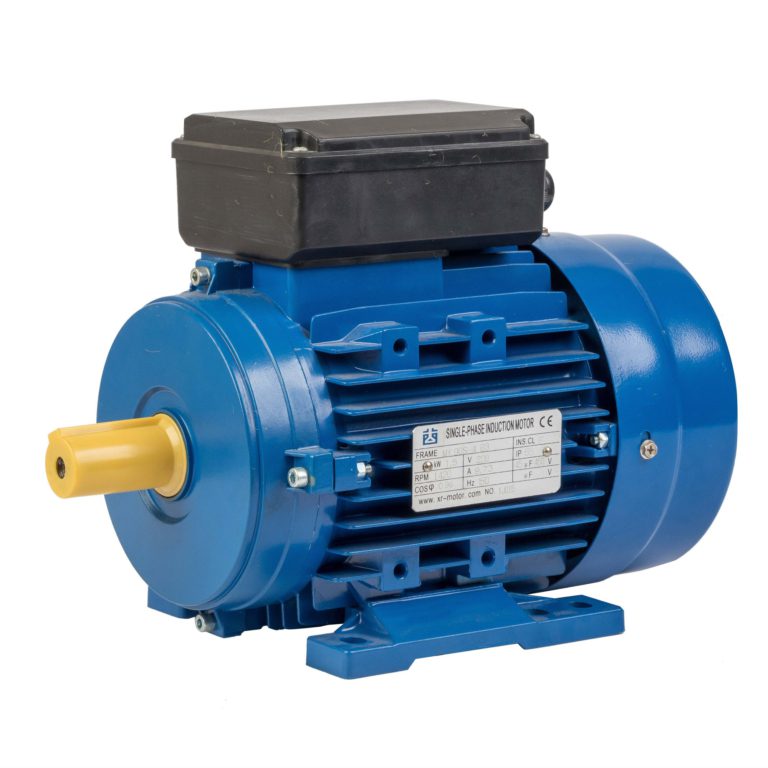
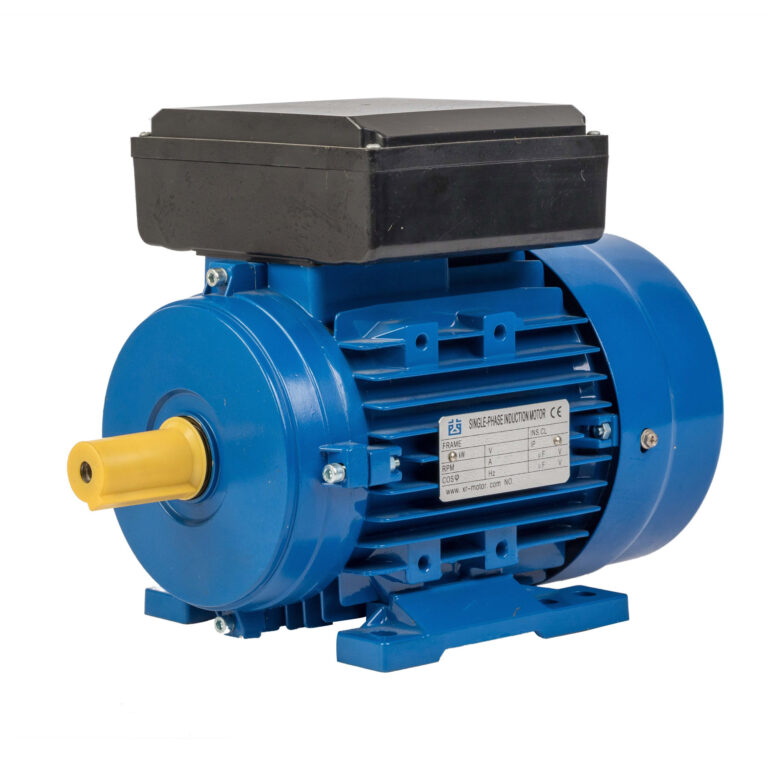
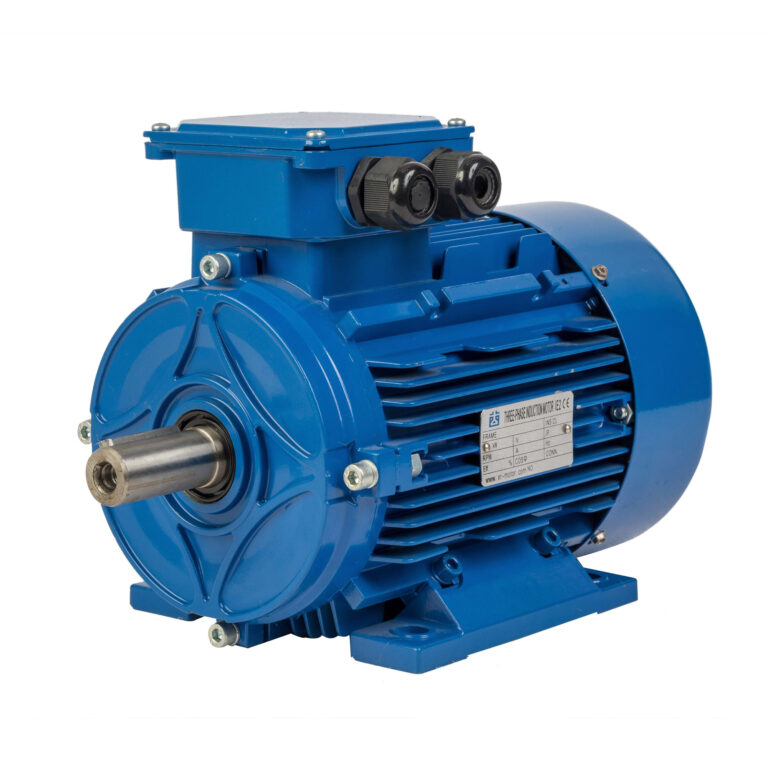
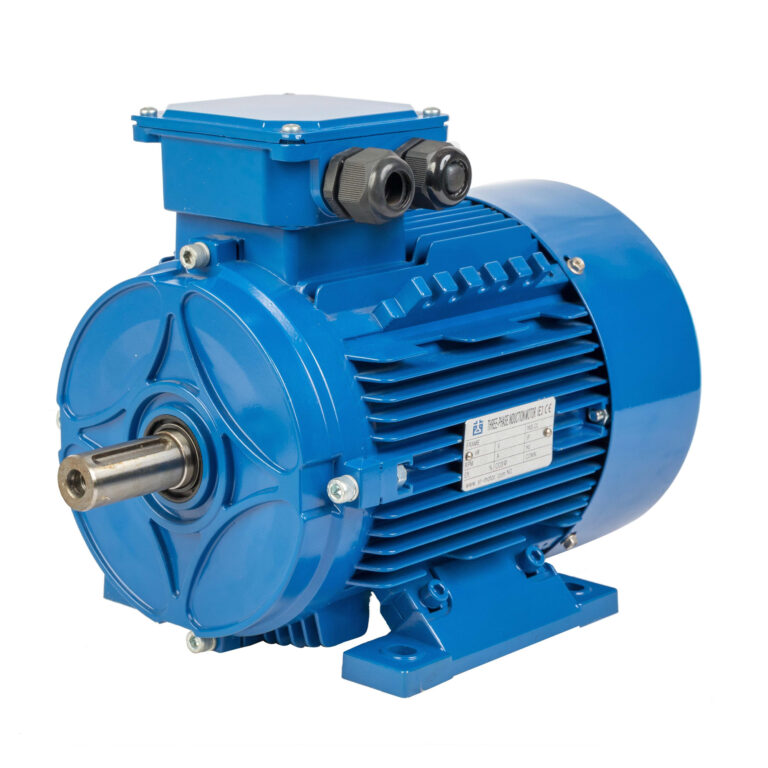
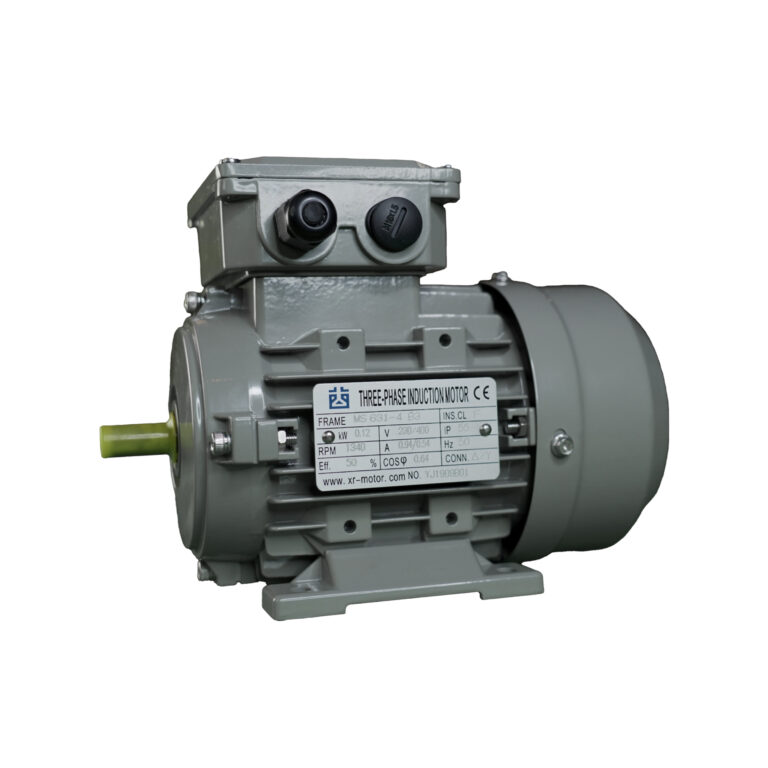
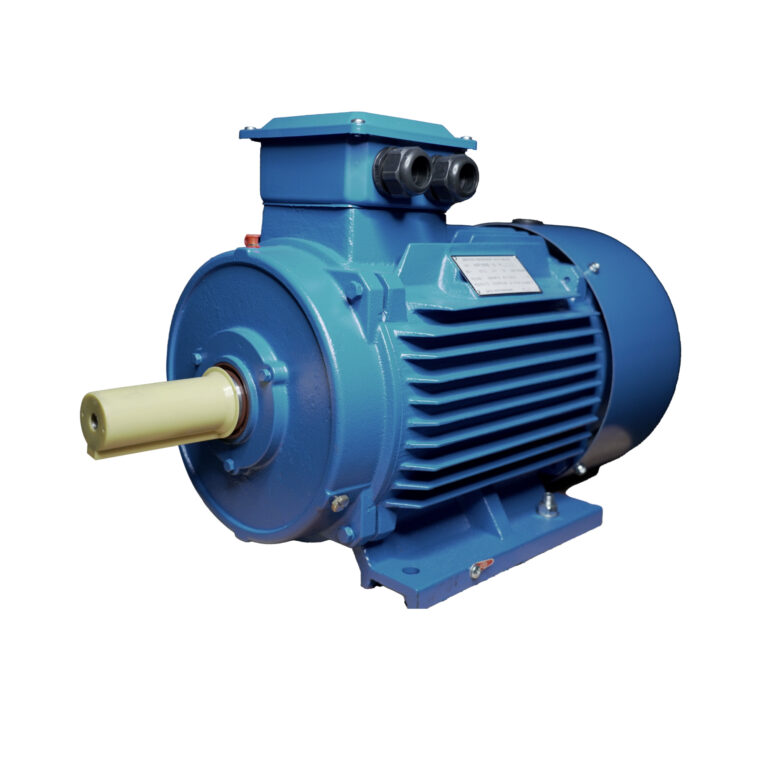
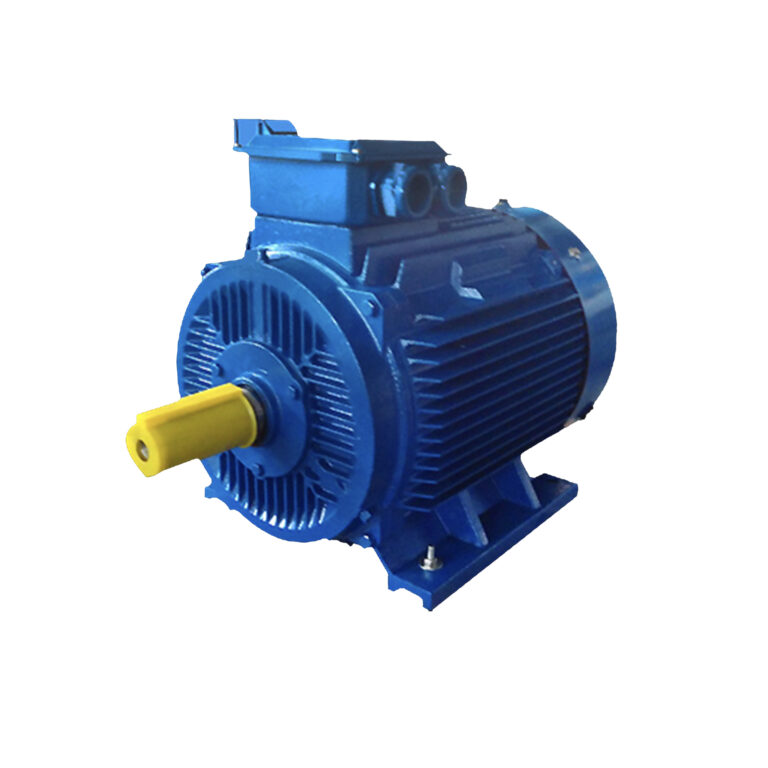
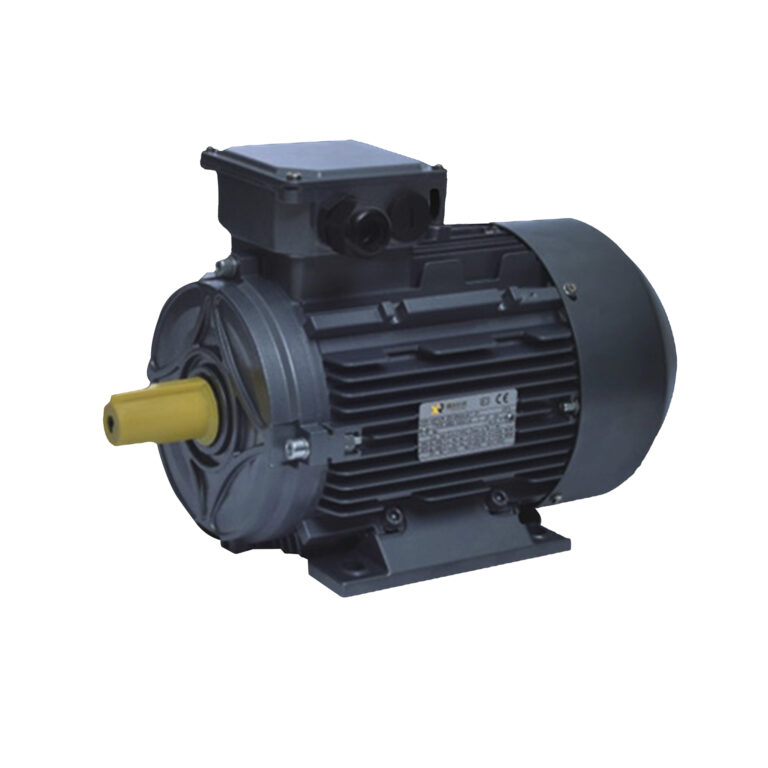
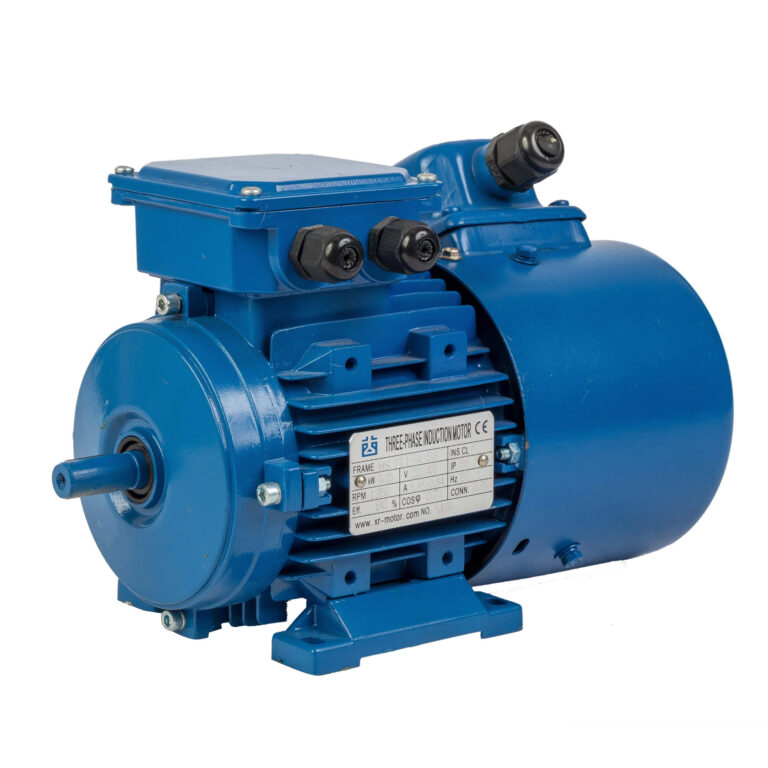
AC motors are widely used as primary power components in factory automation, HVAC equipment, conveyor systems, packaging machinery, and a wide range of mechanical transmission setups. In many of these environments, the motor is required to operate in both forward and reverse directions. As a result, wiring, adjusting, and verifying the reverse function has become a routine task for installation, commissioning, and maintenance teams.
Even though most AC motors are factory-configured for a default rotation direction, many models can safely run in reverse provided the wiring is set correctly. For engineers, electricians, and service technicians, understanding how motor rotation is determined—and how to reverse it safely—is an essential part of working with industrial power systems.
This article consolidates practical knowledge from real field applications, covering the methods used to reverse different types of AC motors, wiring considerations, and safety points that should never be ignored during commissioning.
1.What Determines the Rotation Direction of an AC Motor?
Before attempting any wiring adjustments, it is important to understand what actually makes the motor rotate clockwise or counterclockwise.
1.1 Single-Phase AC Motors (PSC, Split-Phase, Capacitor-Start)
Single-phase motors rely on two windings—a main winding and an auxiliary (or start) winding. The starting torque and rotation direction come from the phase difference between these two windings.
Reversal principle:
Reverse the current direction in the auxiliary winding.
If the auxiliary winding leads the main winding, the rotor develops a rotating field toward one direction. Once the current polarity of the auxiliary winding is swapped, the field direction reverses and the motor rotates the opposite way.
Important:
Some household-grade or appliance-specific single-phase motors are not reversible due to structural limitations. Always refer to the nameplate or wiring diagram before rewiring.
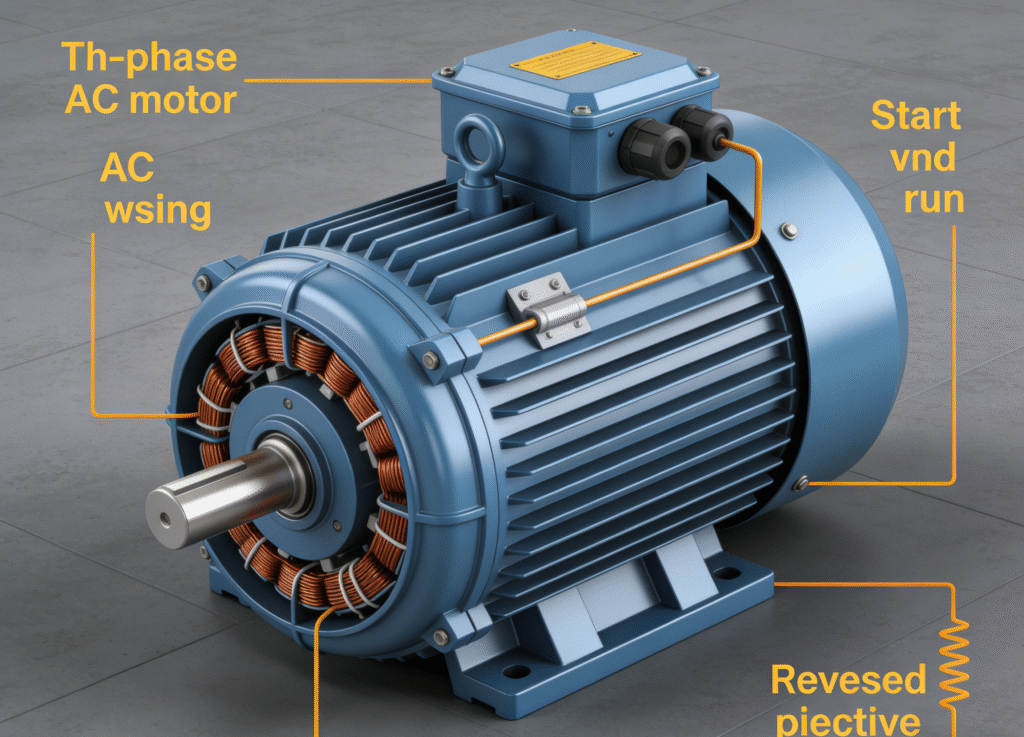
1.2 Three-Phase AC Motors
Three-phase induction motors are the simplest to reverse.
Reversal principle:
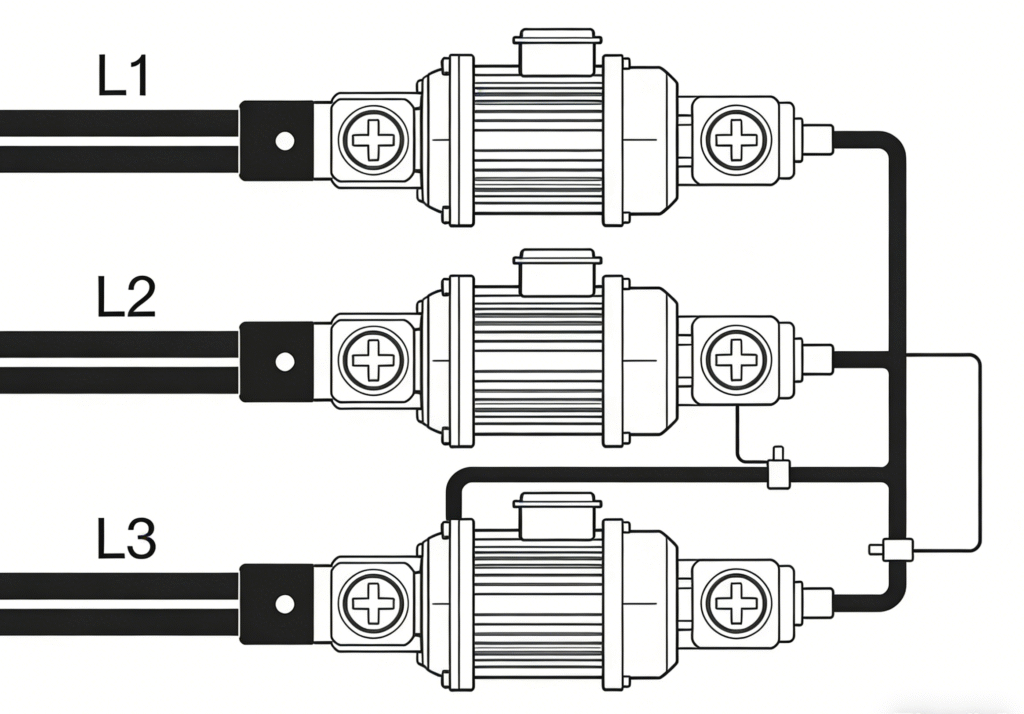
Swap any two of the three incoming phase lines (L1, L2, L3).
It does not matter which two lines are swapped—the magnetic field sequence immediately reverses and the motor turns in the opposite direction.
2.Reverse Rotation Methods for Different AC Motor Types
2.1 Reversing the Direction of a Three-Phase Motor
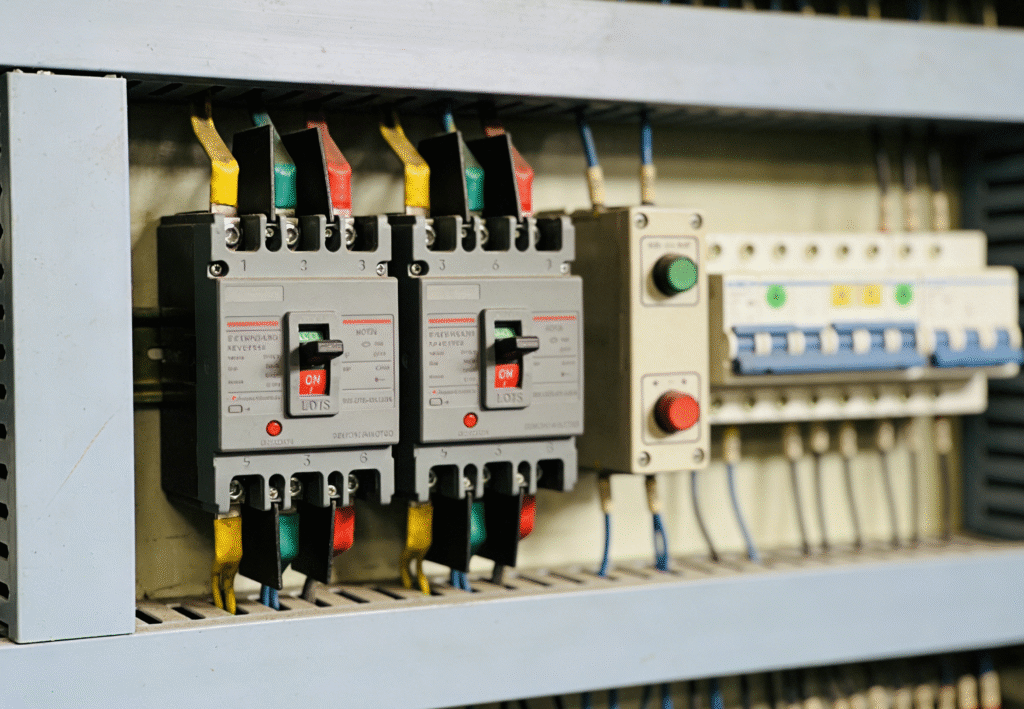
In industrial environments, reversing is usually achieved through a forward–reverse starter circuit consisting of:
- A forward contactor
- A reverse contactor
- Mechanical interlock
- Electrical interlock
- Thermal overload relay
The interlock system ensures that only one contactor is energized at any given moment, preventing phase-to-phase short circuits.
2.2 Reversing the Direction of a Single-Phase Motor
Changing the rotation of a single-phase motor cannot be done by swapping the line and neutral wires. The supply frequency remains the same, and the main winding does not define rotation direction.
Correct method:
Reverse the wiring of the auxiliary (start) winding.
General steps include:
- Identify the terminal pairs:
- T1, T2 → Main winding
- T3, T4 → Auxiliary winding
- T1, T2 → Main winding
- Swap the T3 and T4 connections.
- If the motor uses a capacitor, confirm the capacitor wiring per the schematic.
Safety reminder:
Attempting to reverse a non-reversible motor can lead to overheating, repeated failed starts, or permanent insulation damage.
3.Key Considerations During Wiring
3.1 Always Follow the Motor’s Wiring Diagram
The correct diagram is usually located on:
- The terminal box cover
- The motor nameplate
- The product manual
Dayou Motor products include a complete schematic to reduce wiring errors and simplify commissioning.
3.2 Identifying Terminal Markings Correctly
Three-phase motors:
- U1, V1, W1 → Input terminals
- U2, V2, W2 → Output terminals
Supported configurations: Delta (Δ) and Star (Y)
Single-phase motors:
- T1/T2 → Main winding
- T3/T4 → Auxiliary winding
- C → Capacitor terminal
3.3 Using Appropriate Components for Reversal
Component selection depends on power level and application environment:
- Small motors: DPDT (Double-Pole Double-Throw) reversing switch
- Industrial machinery: Forward–Reverse contactor set
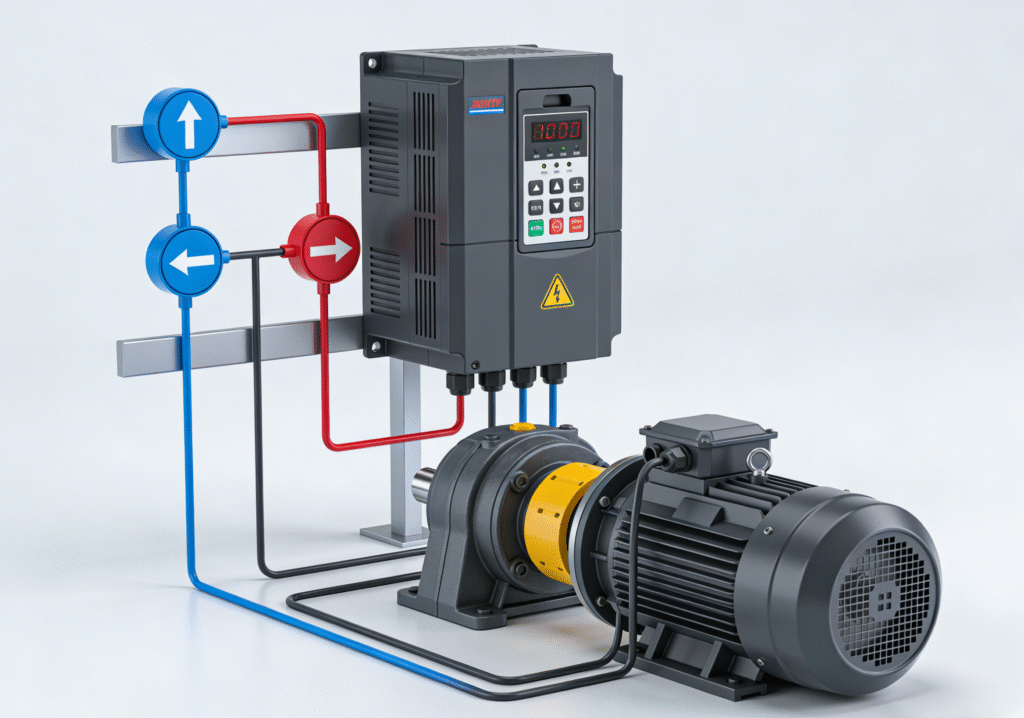
- Precision control: Variable Frequency Drive (VFD)
3.4 Providing Proper Protection + Overload Control
Protection components recommended:
- Thermal overload relay
- Motor protection breaker
- Phase-loss or phase-sequence protector
- Soft starter or VFD for smoother transitions
These devices play a major role in preventing wiring mistakes, unexpected load changes, and system failures.
4.Safety Precautions When Reversing an AC Motor
Reversing a motor is not only an electrical operation but also a mechanical one. Below are essential safety points.
4.1 Always Disconnect Power Before Wiring (LOTO Required)
Accidental energizing during wiring is one of the most common causes of workplace incidents.
4.2 Avoid Forcing Reversal While the Motor is Running
Unless controlled by a VFD, forcing reversal under load can result in:
- High current spikes
- Gearbox or coupling shock
- Belt slip or mechanical failure
- Rotor bar stress
Always allow the rotor to come to a full stop before switching direction.
4.3 Confirm Whether the Motor is Designed for Reversal
Certain types cannot run backward, such as:
- Shaded-pole motors
- Special-purpose appliance motors
- Motors with fixed mechanical bias
If the nameplate does not indicate reversibility, verify with the manufacturer.
4.4 Run the Motor Without Load to Confirm Direction
This prevents equipment damage in case the rotation direction is incorrect.
5.Using a VFD for Reversal—Why It Is Often the Best Option
Modern industrial equipment often uses Variable Frequency Drives for motor control, especially when frequent reversing is required.
Advantages include:
- Smooth acceleration and deceleration
- Minimal mechanical shock during direction change
- Built-in motor protection functions
- Programmable speed and direction logic
- Improved service life for motors and connected mechanisms
For many production lines, upgrading to VFD control delivers better long-term reliability and easier maintenance.
6.Typical Applications Requiring Reversible Motors
Reversal functions are commonly required in:
- Bidirectional conveyor lines
- Lifting, hoisting, and positioning systems
- Feeding and clamping mechanisms in packaging equipment
- HVAC damper actuation systems
- Industrial mixers and agitators
- Mechanical positioning and automation systems
Many systems rely on reversible motors to achieve production flexibility.
7.Common Problems Encountered After Reversal and How to Troubleshoot
7.1 Single-Phase Motor Hums But Does Not Start
Likely cause: Auxiliary winding polarity is incorrect or disconnected.
Solution: Check T3/T4 wiring.
7.2 Three-Phase Motor Starts Randomly in Either Direction
Likely cause: Unstable phase sequence from the power supply.
Solution: Install a phase-sequence relay.
7.3 Stronger Vibration After Reversal
Likely cause: The mechanical system was designed for one primary direction.
Solution: Check couplings, alignment, and load path.
7.4 Motor Overheating After Reversal
Likely cause: The motor model is not rated for reverse operation, or the load increases significantly when reversed.
Solution: Check nameplate data and evaluate the load mechanism.